Managing Work From Home Stress: Creating Balance in Remote Work

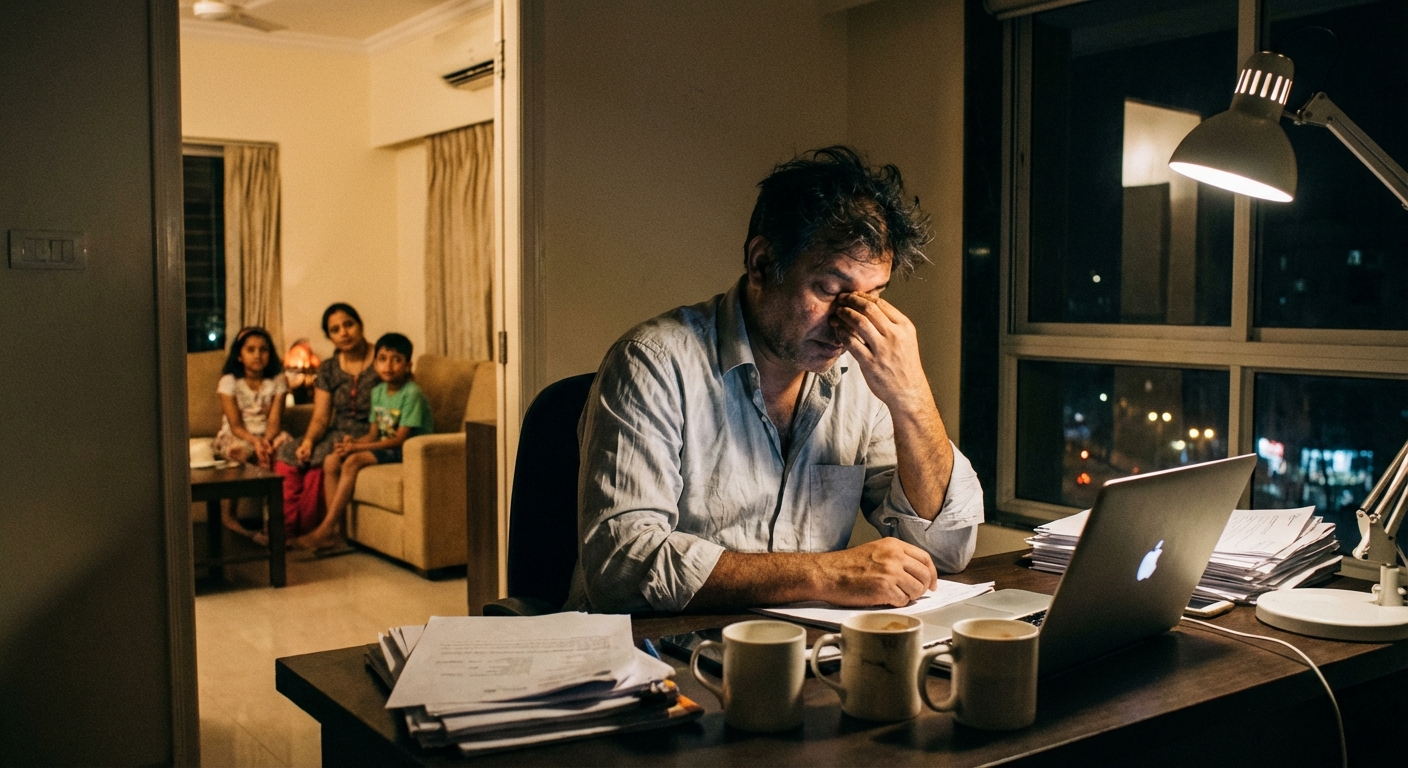
When Priya first came to my Hyderabad clinic, she seemed puzzled by her own distress. "I should be grateful," she told me, fidgeting with her dupatta. "No commute, no office politics, flexible hours. But I have never felt more exhausted in my life." Priya, a 34-year-old content strategist for a multinational company, had been working from home for over two years. On paper, her life looked ideal. In reality, she was experiencing what I have come to recognize as a distinct and increasingly common condition: remote work burnout.
Her story is far from unique. Since the pandemic fundamentally transformed how India works, I have seen a steady stream of professionals struggling with the hidden challenges of working from home. The promise of remote work was freedom, flexibility, and better quality of life. For many, the reality has been blurred boundaries, isolation, and a sense of never truly being "off" from work.
In my fifteen years as a psychologist, I have learned that understanding a problem is the first step toward solving it. Today, I want to share insights from my clinical experience working with remote professionals, offering practical strategies to create genuine balance and protect your mental health while working from home.
The Unique Psychological Challenges of Remote Work
Remote work is not simply "office work done at home." It represents a fundamental restructuring of how we separate and integrate different aspects of our lives. To manage it effectively, we must first understand why it creates such distinct psychological pressures.
The Disappearing Boundary
In traditional office settings, physical transitions create psychological boundaries. The commute to work, however frustrating in Hyderabad traffic, served as a mental buffer zone. Walking into the office signaled "work mode." Leaving it signaled "personal time." These transitions, which we once took for granted, were actually performing important psychological functions.
When your bedroom becomes your boardroom, these natural boundaries dissolve. I see this regularly in my practice. Vikram, a 42-year-old finance manager, described it perfectly: "I used to leave work at office. Now work lives in my house. It follows me to breakfast. It sits with me at dinner. Even when I am not working, I am thinking about the laptop sitting on my desk, waiting."
This boundary dissolution leads to what psychologists call "role blurring"—the inability to clearly separate your identity as a professional from your identity as a family member, a partner, a person with needs and interests beyond work.
The Paradox of Availability
Remote work often creates an unspoken expectation of constant availability. Without the visible cues of leaving the office, many professionals feel pressure to prove they are working by responding to messages immediately, regardless of the hour.
Sunita, a 38-year-old HR professional, shared her experience: "My manager knows I am at home. If she messages at 9 PM, she expects a response. After all, what else am I doing? I cannot say I was commuting home." This invisible pressure leads to workdays that stretch far beyond traditional hours, with evening and weekend interruptions becoming normalized.
The irony is profound: technology that promised freedom has created a new form of captivity.
Social Isolation and Its Impact
Humans are inherently social beings. The casual conversations by the water cooler, the lunch with colleagues, the shared jokes and frustrations—these were not mere distractions from work. They were essential sources of social connection and support.
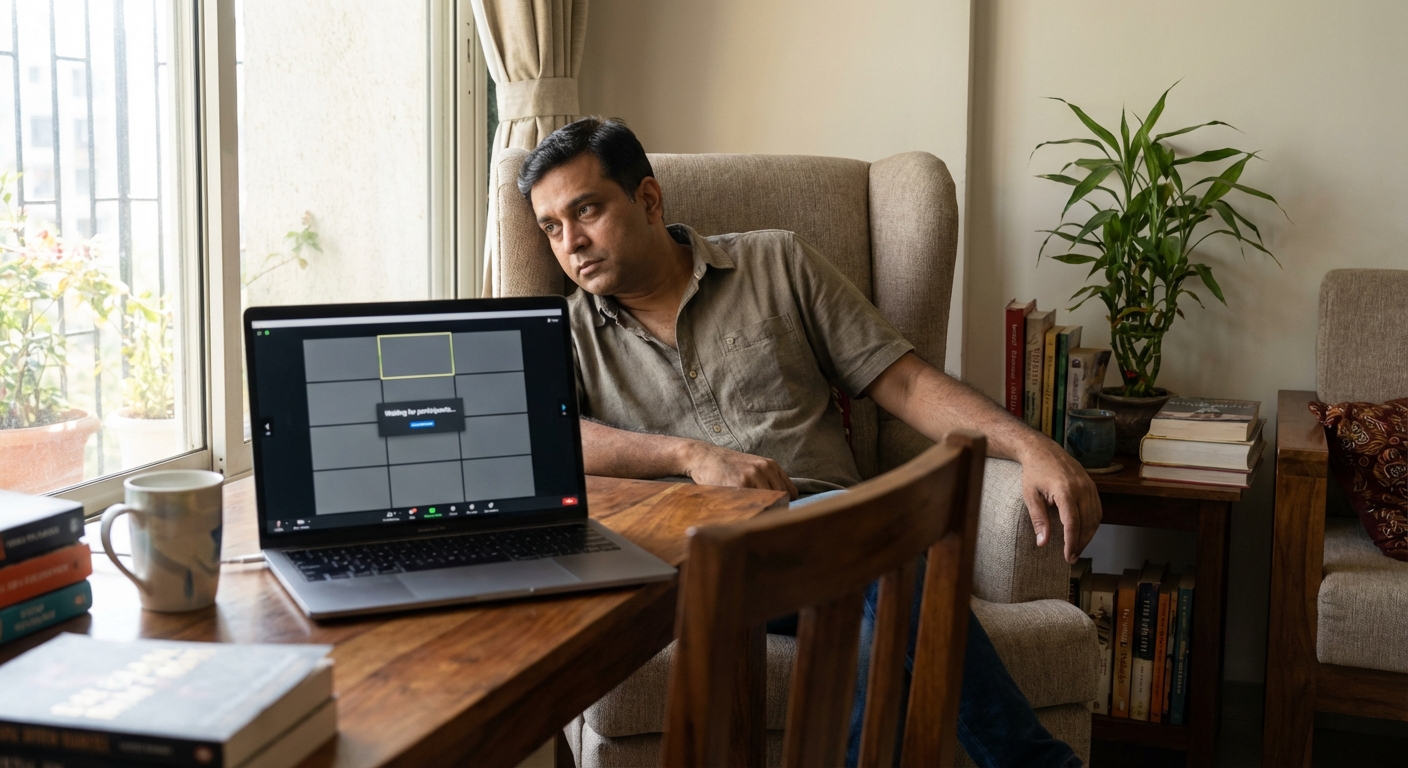
Remote workers, particularly those living alone or in nuclear families without extended support systems, often experience significant social isolation. This isolation is not always dramatic or obvious. It manifests as a subtle but persistent sense of disconnection, a feeling of being alone in one's struggles.
Recognizing Remote Work Stress: The Warning Signs
Before we discuss solutions, it is important to recognize when remote work is affecting your mental health. In my clinical experience, these are the common warning signs I ask clients to watch for.
Physical symptoms often appear first: persistent fatigue that sleep does not cure, headaches and eye strain beyond normal screen-related discomfort, disrupted sleep patterns, and unexplained aches or tension, particularly in the neck and shoulders.
Emotional signs include irritability with family members, especially around work interruptions; feelings of dread when logging in for work; anxiety about falling behind or being perceived as unproductive; a sense of emptiness or lack of fulfillment despite achieving work goals; and difficulty experiencing joy in previously pleasurable activities.
Behavioral changes are also telling: working increasingly longer hours without corresponding productivity gains; neglecting personal hygiene or appearance; withdrawing from social connections, including virtual ones; difficulty focusing or completing tasks; and using food, alcohol, or entertainment as primary coping mechanisms.
If you recognize several of these signs in yourself, please know that this is not a personal failing. It is a signal that your current work situation requires adjustment.
Creating Sustainable Balance: Practical Strategies
Based on my work with hundreds of remote professionals, I have developed a framework of strategies that create lasting change. These are not quick fixes but foundational practices that transform your relationship with remote work.
Establishing Physical and Temporal Boundaries
The most effective intervention I recommend is creating clear physical and temporal boundaries, even when working from home.
Physical boundaries mean designating a specific space for work, ideally a separate room, but even a particular corner or desk will serve. This space is for work only. You do not browse social media here. You do not watch television here. When you leave this space, you leave work behind.
Anand, a software developer I worked with, lived in a small one-bedroom apartment. He created his boundary using a simple folding screen that he would open when beginning work and close when finishing. "That screen became my office door," he explained. "Closing it at the end of the day feels like leaving the office."
Temporal boundaries are equally important. Establish fixed working hours and communicate them clearly to your team. Begin and end work at consistent times. Create transitional rituals that signal the start and end of your workday—perhaps a morning walk before logging in, or a specific routine of closing applications and shutting down your laptop to end the day.
The Art of Strategic Disconnection
In a culture of constant connectivity, intentional disconnection is revolutionary. I recommend my clients practice what I call "strategic disconnection"—deliberate periods when you are completely unavailable for work.
This requires both personal discipline and clear communication with colleagues. Set expectations by informing your team about your available hours. Use email autoresponders during off-hours. Turn off work notifications on your phone after a designated time.

Kavitha, a project manager who struggled with disconnection, found success with a simple rule: her laptop stayed in her home office after 7 PM. If something urgent arose, her team knew to call her phone. "In six months, I received exactly two such calls," she reported. "Everything else that felt urgent at the time turned out to be perfectly manageable the next morning."
Maintaining Social Connection
Combating isolation requires intentional effort. Schedule regular virtual coffee chats with colleagues, not about work but simply to connect. Maintain friendships outside work, meeting in person when possible. If you live alone, consider working occasionally from a cafe or co-working space for the ambient social presence.
I also recommend that remote workers pay special attention to their relationships at home. Working from home changes family dynamics. Spouses may feel you are always around but never present. Children may struggle to understand why they cannot interrupt you.
Have open conversations with family members about your work situation. Establish signals for when you can be interrupted and when you need focus time. And crucially, when you are not working, be fully present with your family—not partially present while mentally reviewing your inbox.
Protecting Your Physical Health
Remote work often leads to dramatically reduced physical movement. The walk to the office, the trips to meeting rooms, even the journey to the cafeteria—all eliminated. This sedentary pattern has significant mental health implications, as physical activity directly influences mood and cognitive function.
Build movement into your day deliberately. Take calls while walking. Use a standing desk for portions of your work. Schedule regular breaks for stretching or brief exercise. Many of my clients have found that a morning walk before starting work serves dual purposes: it provides exercise and creates a transitional ritual replacing the commute.
Pay attention to ergonomics as well. Many home setups involve poor posture sustained for hours, leading to chronic pain that compounds stress. Invest in a proper chair, position your screen at eye level, and ensure adequate lighting.
Restructuring Your Workday
Traditional office schedules may not be optimal for remote work. One advantage of working from home is the potential for flexibility—use it wisely.
Identify your peak productivity hours and schedule demanding tasks during these periods. Build in regular breaks; research suggests working in focused blocks of 90 minutes followed by short breaks is more effective than continuous work. Consider techniques like time-blocking to create structure without rigidity.
Rajan, a content writer, restructured his day based on his natural rhythms. He works intensively from 9 AM to 1 PM, takes a proper lunch break, handles meetings and administrative tasks from 2 PM to 5 PM, and keeps evenings completely free. "I produce better work in those focused morning hours than I did in full days of scattered effort at the office," he told me.

When to Seek Professional Help
Self-help strategies are valuable, but they have limits. I encourage you to seek professional support if your stress persists despite implementing these strategies, if you experience symptoms of depression or anxiety, if your relationships are suffering significantly, if you find yourself relying on substances to cope, or if you feel unable to function effectively in your daily life.
Remote work stress, when unaddressed, can develop into more serious conditions including clinical depression, generalized anxiety disorder, and burnout syndrome. Early intervention makes recovery faster and more complete.
A New Relationship with Remote Work
The shift to remote work is not temporary. For millions of Indian professionals, this is the new reality of professional life. The question is not whether to work remotely, but how to do so in a way that supports rather than undermines your well-being.
I believe this is possible. I have seen clients transform their remote work experience from a source of chronic stress to a genuine improvement in their quality of life. It requires intentionality, boundary-setting, and often some trial and error to find what works for your specific situation.

Priya, whom I mentioned at the beginning, worked with me for four months. Today, she has established firm boundaries around her work hours, created a dedicated office space in her apartment, and rebuilt social connections she had let fade. She still works from home—but she no longer lives at work.
"I finally feel like I have a life again," she told me. "Remote work stopped being a trap and became what it was supposed to be: a tool that serves my life, not the other way around."
If you are struggling with remote work stress and would like personalized guidance, I invite you to visit my practice in Hyderabad. Together, we can develop strategies tailored to your unique circumstances, your family situation, and your professional demands. You do not have to navigate this alone.
Your mental health is not a luxury that can wait until work calms down. It is the foundation that makes meaningful work possible.
---Sudheer Sandra is a licensed psychologist and career counselor based in Hyderabad, India, with over 15 years of clinical experience. He specializes in anxiety, depression, relationship issues, and career counseling, helping professionals navigate the complex intersection of work demands and personal well-being.