Career Planning for Women Returning to Work After a Break


The decision to return to work after a career break is one of the most significant transitions a woman can undertake. Whether the break was for raising children, caring for elderly parents, managing health challenges, or pursuing personal goals, the journey back to professional life comes with its unique set of psychological and practical challenges. As a career counselor and psychologist, I have had the privilege of guiding hundreds of women through this transformative phase, and I want to share insights that can help make this journey smoother and more fulfilling.
Understanding the Psychological Landscape
The Weight of Self-Doubt
When Priya Mehta (name changed), a 38-year-old former marketing manager, walked into my clinic in Hyderabad after a seven-year career break, her first words were, "I feel like the world has moved on without me." This sentiment echoes what many women experience - a profound sense of displacement and self-doubt that can feel overwhelming.
The psychological impact of a career break often includes:
- Identity confusion: Many women struggle with questions like "Who am I beyond being a mother or caregiver?"
- Impostor syndrome: The fear of being "found out" as inadequate or outdated
- Anxiety about competence: Worrying whether skills learned years ago are still relevant
- Fear of judgment: Concern about how potential employers will perceive the gap
The Grief of Lost Professional Identity
What many women do not anticipate is the grief associated with their previous professional identity. Sunita Krishnan (name changed), a former software engineer who took a five-year break, described feeling like she was "mourning the person I used to be." This grief is legitimate and deserves acknowledgment. The confident professional who once navigated corporate corridors may feel like a distant memory, and reconciling that past self with the present requires emotional processing.

Rebuilding Confidence: A Psychological Framework
Cognitive Restructuring
One of the most powerful tools in rebuilding confidence is cognitive restructuring - the process of identifying and challenging negative thought patterns. When Kavitha Rao (name changed) told me, "No one will hire someone who has been out of the industry for six years," we worked together to examine the evidence for and against this belief.
Here is a practical exercise I recommend:
1. Write down your negative belief (e.g., "My skills are obsolete") 2. List evidence supporting this belief (be honest but fair) 3. List evidence against this belief (include transferable skills, recent learning, life experiences) 4. Create a balanced statement (e.g., "While some technical skills may need updating, my core competencies in communication, problem-solving, and leadership have only strengthened through life experiences")
Recognizing Transferable Skills
Career breaks, particularly those involving caregiving, develop remarkable skills that are highly valued in the workplace:
- Crisis management: Handling childhood emergencies or elder care crises
- Negotiation: Managing family dynamics and children's needs
- Multitasking and prioritization: Running a household requires executive function skills
- Emotional intelligence: Developed through nurturing relationships
- Budget management: Household financial planning
- Conflict resolution: Mediating between family members

Practical Steps for Re-entering the Workforce
Step 1: Skills Assessment and Gap Analysis
Before beginning your job search, conduct an honest assessment of:
- Technical skills: Which need updating? Which remain strong?
- Industry knowledge: What has changed in your field?
- Professional network: Who can you reconnect with?
- Digital literacy: Are you comfortable with current workplace technologies?
Step 2: Strategic Upskilling
The good news is that learning opportunities have never been more accessible. Consider:
- Online courses: Platforms like Coursera, LinkedIn Learning, and Udemy offer flexible learning
- Professional certifications: Many can be completed in weeks or months
- Volunteer work: Gain recent experience while contributing to causes you care about
- Freelance projects: Build a portfolio and ease back into professional work
Step 3: Network Reactivation
Your professional network is one of your most valuable assets. Many women hesitate to reach out after a long break, fearing judgment or awkwardness. However, most professionals are more supportive than we expect.
Start with:
- LinkedIn profile update and reconnection
- Industry association events
- Alumni networks
- Women's professional groups (many specifically support returnees)
Step 4: Consider Returnship Programs
Many companies now offer "returnship" programs - structured opportunities for professionals returning after career breaks. In India, companies like Tata, Infosys, and HCL have established programs specifically designed for women re-entering the workforce.
Step 5: Prepare Your Narrative
One of the most important aspects of job searching after a break is how you frame your story. Rather than apologizing for your gap, present it confidently:
- Acknowledge the break honestly
- Highlight what you learned and how you grew
- Emphasize your enthusiasm and commitment to returning
- Focus on what you bring to the table now

Navigating Work-Life Balance in Your New Chapter
Setting Realistic Expectations
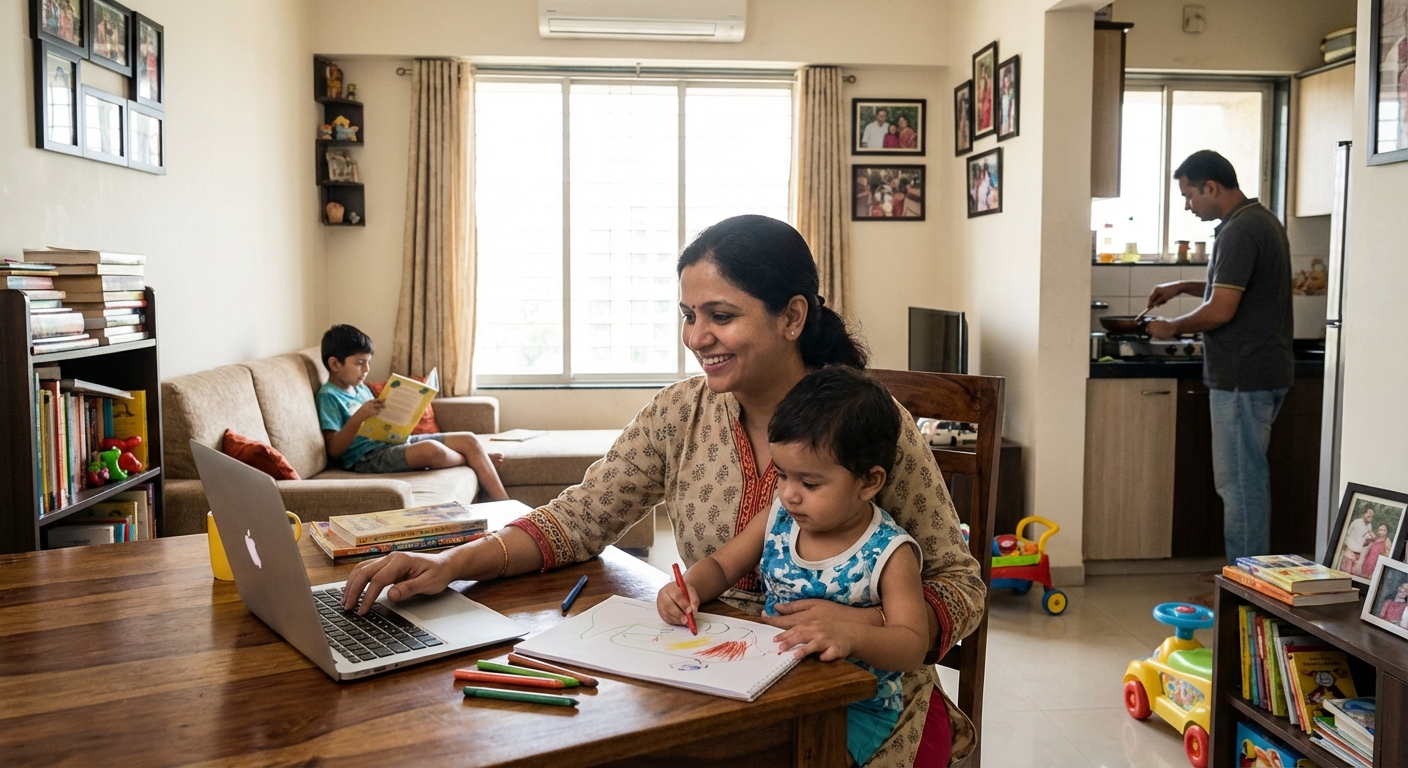
The return to work often coincides with ongoing family responsibilities. It is essential to set realistic expectations for yourself and communicate clearly with your family about the changes ahead.
Ananya Reddy (name changed), who returned to work as a financial analyst after a four-year break, shared that her biggest challenge was not the work itself but managing her own expectations. "I wanted to be the perfect employee and the perfect mother simultaneously. It took me months to accept that good enough could be good enough."
Building Support Systems
Success in balancing work and personal life requires support systems:
- Family involvement: Have open conversations about shared responsibilities
- Professional childcare or eldercare: Invest in reliable support
- Workplace flexibility: Negotiate arrangements that work for your situation
- Self-care routines: Maintain practices that support your mental health
Managing Guilt
Many women returning to work struggle with guilt - guilt about time away from family, guilt about not being fully present at work, guilt about needing help. This guilt, while common, is not productive.
I encourage my clients to reframe their perspective: by pursuing meaningful work, you are modeling resilience, ambition, and self-fulfillment for your children. You are demonstrating that women can have multifaceted lives that include both caregiving and professional achievement.
The Emotional Journey: What to Expect
The First Few Months
The initial period of return can be emotionally intense. You may experience:
- Exhaustion: Both physical and mental, as you adjust to new routines
- Overwhelm: Processing new information while managing existing responsibilities
- Self-doubt: Comparing yourself to colleagues who did not take breaks
- Joy and fulfillment: Rediscovering professional satisfaction
Finding Your Rhythm
Most women I have worked with report that it takes approximately six months to a year to find their new rhythm. This is not a failure; it is a realistic timeline for a significant life transition.
Special Considerations for the Indian Context
Women returning to work in India face some unique challenges and opportunities:
- Family dynamics: Extended family involvement can be both supportive and complicated
- Cultural expectations: Navigating traditional expectations while pursuing professional goals
- Growing opportunities: India's economy is increasingly recognizing the value of returning professionals
- Support communities: Organizations like SHEROES, JobsForHer, and various women's forums offer specific support
When to Seek Professional Support
While this transition is challenging for everyone, some situations benefit from professional psychological support:
- If anxiety about returning to work is paralyzing and persistent
- If depression symptoms emerge during the transition
- If relationship strain becomes significant
- If you are struggling to make decisions despite adequate information
- If past workplace trauma is resurfacing
Moving Forward with Confidence
The decision to return to work after a break is not just about employment; it is about reclaiming a part of your identity, contributing your unique talents to the world, and modeling possibility for others who may follow your path.
Remember that your career break has not diminished your value - it has added dimensions to who you are as a professional. The empathy, resilience, and perspective you have gained are assets that no training program can provide.
As you embark on this journey, be patient with yourself, celebrate small victories, and know that the path may not be linear, but it is absolutely achievable.
---If you are a woman considering or navigating a return to work after a career break and would like professional support, I invite you to schedule a consultation at my practice in Hyderabad. Together, we can address the psychological challenges, develop practical strategies, and create a personalized plan for your successful transition. With over 15 years of experience in career counseling and clinical psychology, I am committed to helping you rediscover your professional confidence and build a fulfilling career path.
Contact my clinic to schedule an appointment and take the first step toward your professional renewal.