Understanding Depression: Signs, Causes, and Paths to Recovery


In my fifteen years of practicing psychology in Hyderabad, I have learned that depression rarely announces itself with a dramatic entrance. It creeps in quietly—a persistent tiredness that sleep cannot cure, a heaviness in the chest that has no medical explanation, a gradual fading of colors from a life that once felt vibrant.
I remember when Rahul (name changed) first walked into my clinic. He was a successful IT professional in his early thirties, well-respected at his company, with a loving family. "There's nothing wrong with my life," he told me, confusion evident in his voice. "So why do I feel like I'm drowning?"
This is a conversation I have had hundreds of times. And if you are reading this, perhaps you or someone you love is asking the same question.
Today, I want to share what I have learned about depression—not just from textbooks and research papers, but from sitting across from countless individuals who have trusted me with their struggles and their healing.
The Silent Epidemic in Our Homes
According to the World Health Organization, India accounts for nearly 15% of the global mental health burden, with depression affecting over 56 million Indians. Yet, despite these staggering numbers, we rarely discuss it openly. In many Indian households, mental health remains that uncomfortable topic we dance around during family gatherings.
I have seen this firsthand. Families bring their loved ones to me only after months, sometimes years, of suffering. "We thought it was just laziness," they say. Or, "We believed getting married would solve everything." Or my personal favorite, "We took him to the temple, but even that did not help."
Let me be clear: there is no shame in depression. It is not a character flaw. It is not a sign of weak faith. And it is certainly not something that marriage, a new job, or a vacation can simply fix.
Depression is a legitimate medical condition that affects the brain, the body, and the spirit. And like any medical condition, it deserves proper attention, understanding, and treatment.
Recognizing the Signs: When Sadness Becomes Something More

Everyone experiences sadness. Feeling low after a disappointment, grieving a loss, or having a difficult week is entirely normal. But depression is different. It persists. It interferes. It transforms.
In my practice, I look for these key signs:
Persistent Low Mood: A sadness that lasts for weeks, not days. One of my clients, Priya (name changed), described it as "feeling like there's a gray film over everything. Even good things don't feel good anymore."
Loss of Interest: Activities that once brought joy—whether it is cricket on Sunday, cooking your favorite dish, or spending time with friends—suddenly feel meaningless or exhausting.
Physical Symptoms: Depression lives in the body too. Unexplained fatigue, changes in appetite (eating too much or too little), sleep disturbances, and even physical aches and pains can all be manifestations of depression.
Difficulty Concentrating: Many of my clients report feeling like their brain is "foggy." Simple decisions become overwhelming. Work performance suffers.
Withdrawal from Loved Ones: The inclination to isolate, to cancel plans, to stay in bed rather than face the world.
Feelings of Worthlessness: Harsh self-criticism, excessive guilt, and a persistent sense that you are a burden to others.
Thoughts of Death or Self-Harm: This is always serious and requires immediate professional attention.
If you recognize five or more of these symptoms persisting for two weeks or longer, I urge you to seek professional help. This is not about being dramatic—it is about being proactive with your mental health.
Understanding the Causes: It Is Never Just One Thing

One question I am frequently asked is, "What causes depression?" The honest answer is that it is almost never a single factor. Depression typically emerges from a complex interplay of biological, psychological, and social elements.
Biological Factors: Research has shown that depression involves changes in brain chemistry, particularly neurotransmitters like serotonin, dopamine, and norepinephrine. Genetics also play a role—if depression runs in your family, you may be more susceptible.
Psychological Factors: Our thought patterns, coping mechanisms, and early life experiences shape our vulnerability to depression. Perfectionism, chronic self-criticism, and difficulty processing emotions can all contribute.
Social and Environmental Factors: This is where I see the unique pressures of Indian society come into play. The relentless academic pressure on our children, the competitive job market, family expectations around marriage and career, financial stress, and the isolation of nuclear family living—all of these can contribute to depression.
I once worked with a young woman, Anjali (name changed), who developed severe depression after her arranged marriage. She was living in a joint family, far from her parents, struggling to meet everyone's expectations while suppressing her own needs. Her depression was not a personal failing—it was her mind and body responding to an overwhelming situation with inadequate support.
Life Events: Major transitions, losses, trauma, chronic illness, and relationship difficulties can all trigger depressive episodes, particularly in those who may already be vulnerable.
Understanding these causes is important because it helps remove the blame. You did not choose depression. And understanding its roots can help guide effective treatment.
The Path to Recovery: Hope Is Real

Here is what I want you to know: depression is treatable. Recovery is possible. I have witnessed it countless times.
But recovery is rarely a straight line. It is more like a winding path—there will be good days and difficult days. Progress may feel slow. That is normal.
Here are the approaches that I have seen work most effectively:
Professional Support
Psychotherapy: Approaches like Cognitive Behavioral Therapy (CBT) have robust research supporting their effectiveness for depression. In my practice, I often combine CBT with other approaches, tailoring treatment to each individual's needs. Therapy provides a safe space to understand your patterns, develop coping skills, and process underlying issues.
Medication: For moderate to severe depression, antidepressant medication can be genuinely life-changing. I have seen clients resist medication due to fears about becoming "dependent" or concerns about what others might think. Let me address this directly: taking medication for depression is no different from taking medication for diabetes or hypertension. It is treating a medical condition. Many of my clients use medication as a support while they build other coping skills, eventually tapering off under medical supervision.
Combination Approach: Research consistently shows that the combination of therapy and medication, when appropriate, often produces the best outcomes for moderate to severe depression.
Lifestyle Foundations
While professional treatment is crucial, certain lifestyle factors create a foundation for mental health:
Movement: Exercise is one of the most powerful natural antidepressants we have. Even a daily 30-minute walk can make a significant difference. I often recommend starting small—even ten minutes of movement is better than none.
Sleep Hygiene: Depression and sleep have a bidirectional relationship. Poor sleep worsens depression, and depression disrupts sleep. Establishing consistent sleep routines can help break this cycle.
Nutrition: Emerging research on the gut-brain connection suggests that what we eat affects our mental health. A balanced diet rich in vegetables, fruits, whole grains, and adequate protein supports brain function.
Social Connection: Depression tells us to isolate. Recovery requires us to resist that urge. Even when it feels impossible, maintaining some social connection—even a brief phone call with a trusted friend—can help.
Building Your Support System
In our culture, we often try to handle everything within the family. While family support is valuable, it is not always sufficient, and sometimes family dynamics are part of the problem.
I encourage my clients to build a diverse support system: perhaps a trusted friend, a support group, a spiritual guide if that resonates with you, and certainly a mental health professional.
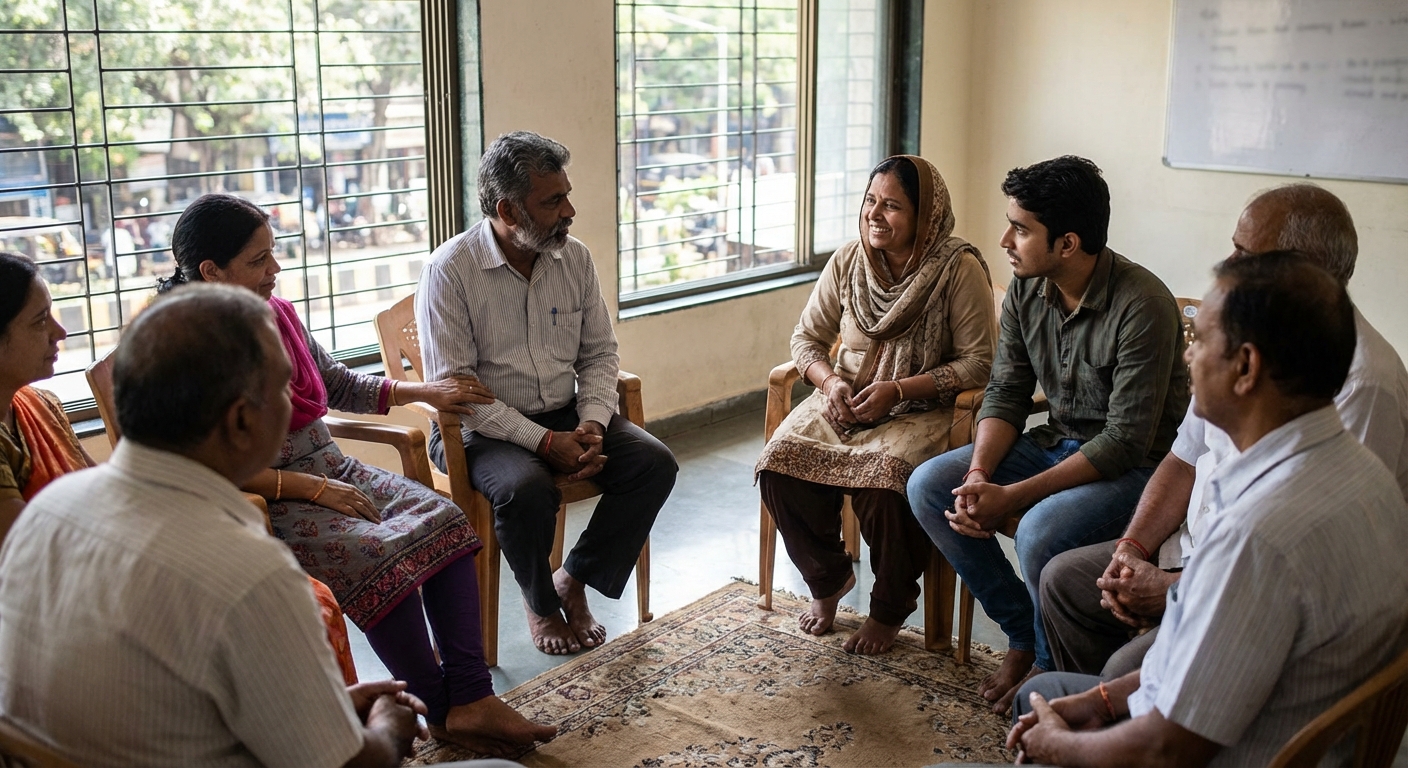
Addressing the Stigma: A Personal Reflection
Fifteen years ago, when I began my practice in Hyderabad, discussing mental health was far more taboo than it is today. I have seen parents who would drive their children to my clinic in another part of the city, terrified that neighbors might see them visiting a psychologist.
Things are changing. More people are speaking openly about their mental health journeys. Celebrities, athletes, and public figures are sharing their experiences with depression. This matters.
But stigma still exists, and I want to speak directly to those who feel ashamed: Your mental health struggles do not define you. Seeking help is a sign of courage, not weakness. And you deserve support just as much as anyone with any other health condition.
To families: if your loved one opens up about feeling depressed, please do not dismiss it. Do not tell them to "think positive" or "count their blessings." Listen. Validate. And help them find professional support.
When to Seek Help Immediately
If you or someone you know is experiencing thoughts of suicide or self-harm, please seek help immediately. In India, you can contact:
- iCall: 9152987821
- Vandrevala Foundation: 1860-2662-345
- NIMHANS: 080-46110007
A Final Word: You Are Not Alone
Depression can make you feel profoundly alone, even in a room full of people. But I want you to know that millions of people have walked this path before you, and many have found their way to the other side.
Recovery is possible. Healing happens. And you deserve to feel better.
If you have recognized yourself in this article, I gently encourage you to take one small step today. Perhaps it is calling a trusted friend. Perhaps it is making an appointment with a mental health professional. Perhaps it is simply acknowledging to yourself that what you are experiencing is real and deserves attention.
Whatever step you take, know that it is a step toward healing.
---If you are in Hyderabad and would like to discuss what you are experiencing, I am here to help. My practice offers a warm, confidential, and non-judgmental space where we can work together to understand your struggles and find a path forward. I offer both in-person sessions at my Hyderabad clinic and online consultations for those who prefer the comfort of their own space.
Remember: asking for help is the first step on the path to recovery.
---Sudheer Sandra is a licensed psychologist and career counselor based in Hyderabad, India, with over 15 years of clinical experience. He specializes in treating depression, anxiety, and stress-related disorders while also helping individuals navigate career transitions and professional challenges. Sudheer is passionate about making mental health care accessible and reducing stigma around psychological support in Indian communities.