Self-Care for Busy Professionals: Practical Strategies That Actually Work


"I know I should take better care of myself, but when? Between client meetings, deadlines, and family responsibilities, there's simply no time left for me."
This sentiment, shared by Priya, a 38-year-old IT project manager from HITEC City, echoes what I hear daily in my Hyderabad practice. After fifteen years of working with professionals across industries—from software engineers pulling all-nighters to doctors managing back-to-back surgeries, from startup founders to corporate executives—I've come to understand that the self-care crisis among Indian professionals isn't about laziness or lack of awareness. It's about a fundamental disconnect between what we're told self-care looks like and what actually works in our demanding, culturally complex lives.
Why Self-Care Isn't Selfish: The Professional's Dilemma
In our Indian context, we've been raised with values of sacrifice, duty, and putting others first. These are beautiful values that build strong families and communities. But somewhere along the way, many of us internalized the message that caring for ourselves is somehow self-indulgent or weak.
Let me share something I've observed repeatedly: the professionals who neglect self-care don't just hurt themselves—they eventually become less effective at the very responsibilities they're sacrificing their wellbeing for. Rahul, a 45-year-old cardiologist I worked with, put it perfectly after his own health scare: "I spent years telling patients to manage stress and sleep properly while I was surviving on four hours of sleep and chai. The irony wasn't lost on me when I ended up in my own emergency room."
Research consistently shows that chronic stress without adequate recovery leads to decreased cognitive function, impaired decision-making, reduced creativity, and weakened immunity. For professionals, this translates directly to diminished work quality, strained relationships, and eventually, burnout.
Recognizing When You Need to Prioritize Self-Care
Before we dive into strategies, let's address the warning signs. In my practice, I've noticed that many professionals don't recognize they're running on empty until they hit a wall. Watch for these indicators:
Physical signs: Persistent fatigue despite adequate sleep, frequent headaches, unexplained aches, digestive issues, getting sick more often than usual, or significant changes in appetite or weight.
Emotional signs: Increased irritability with family and colleagues, feeling detached or numb, crying more easily or feeling unable to cry at all, persistent anxiety or a sense of dread about ordinary activities.
Behavioral signs: Withdrawing from social activities you once enjoyed, relying increasingly on caffeine, alcohol, or comfort food to get through the day, difficulty concentrating, making more mistakes than usual, procrastinating on tasks that previously came easily.
Mental signs: Constant negative self-talk, difficulty making decisions, feeling trapped or hopeless, loss of motivation or purpose.
Meera, a 42-year-old bank manager, came to see me only after her daughter asked why she "never smiled anymore." She had normalized exhaustion to such an extent that she couldn't see how much she had changed.
Common Barriers to Self-Care in the Indian Professional Context
Understanding what stops us from caring for ourselves is the first step toward change. Here are the barriers I encounter most frequently:
The "busy badge of honor": Our professional culture often equates busyness with importance and worth. Admitting you need rest can feel like admitting weakness.
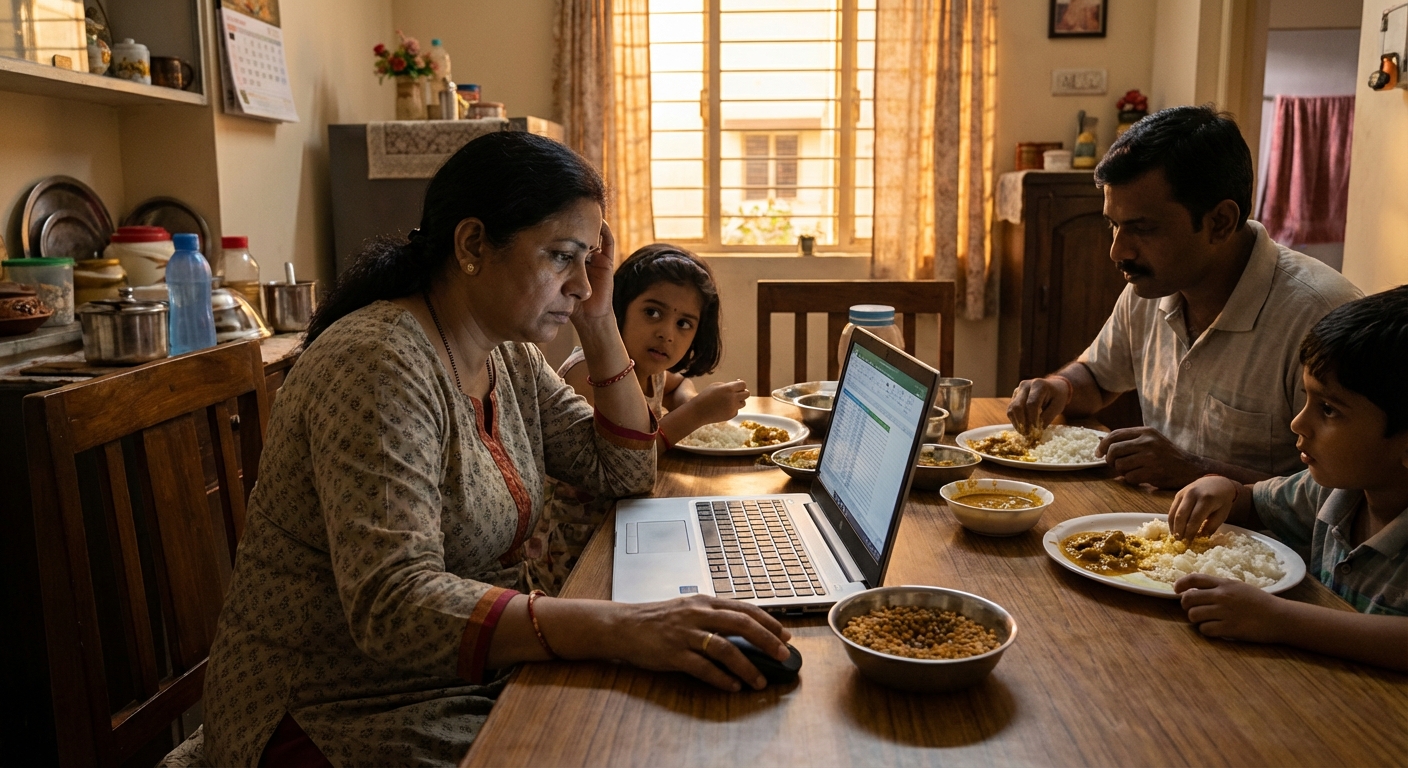
Family expectations: Many professionals, especially women, carry the double burden of workplace performance and household management. Taking time for yourself can feel like stealing from your family.
Financial pressures: EMIs, children's education, aging parents—the financial responsibilities of middle-class Indian professionals are immense. Self-care can feel like an unaffordable luxury.
Guilt and conditioning: Years of being told that your needs come last create deep-seated guilt around self-prioritization.
Lack of practical knowledge: Most self-care advice assumes you have hours of free time, access to expensive resources, or live in a context very different from urban India.
Micro Self-Care: The Five-Minute Revolution
Here's where I'm going to challenge the conventional self-care narrative. You don't need an hour of meditation, a spa day, or a week-long retreat to practice meaningful self-care. What you need is consistency in small moments.
The breathing reset (2 minutes): Between meetings, before you pick up your phone, or when you feel stress rising—close your eyes and take ten slow, deep breaths. This activates your parasympathetic nervous system and reduces cortisol. Vikram, a startup founder I work with, does this in his car before entering his office each morning. He calls it his "transition ritual."
The gratitude pause (1 minute): Before your first bite of each meal, pause to notice three things you're grateful for. This isn't just feel-good advice; research shows gratitude practices physically change brain structure over time.
The body scan (3 minutes): Once a day, close your eyes and mentally scan from head to toe, noticing areas of tension. Simply acknowledging physical stress often begins to release it.
The nature moment (5 minutes): Step outside, notice the sky, feel the air on your skin. Even in the middle of Hyderabad's busiest IT parks, there's sky above you. Connecting with nature, even briefly, reduces stress hormones.
The connection minute (1 minute): Send a genuine message to someone you care about. Not about work or logistics—just "I was thinking of you." Social connection is one of the strongest predictors of wellbeing.
Physical Self-Care: Working With Your Body, Not Against It
Sleep: The Non-Negotiable Foundation
I'm going to be direct: no amount of other self-care will compensate for chronic sleep deprivation. The "I'll sleep when I'm dead" mentality is quite literally bringing that day closer.
For busy professionals, I recommend:
- Protect your last hour: No screens, no work discussions, no intense mental activity in the hour before bed. This is sacred time for your nervous system to downshift.
- Consistent wake time: Even more important than bedtime, waking at the same time daily regulates your circadian rhythm.
- Cool, dark, quiet: Invest in blackout curtains and keep your bedroom cool. These small environmental changes significantly improve sleep quality.
Movement: Integration Over Intensity
Forget the pressure to hit the gym for an hour daily. Research shows that movement integrated throughout the day is often more beneficial than a single intense session followed by nine sedentary hours.
Practical strategies:
- Take walking meetings when possible
- Use a standing desk for part of your day
- Set an hourly alarm to stand and stretch for just two minutes
- Take the stairs mindfully, treating each step as a moment of presence
- Do simple desk yoga—neck rolls, shoulder shrugs, wrist rotations

Nutrition: Practical Over Perfect
I'm not going to give you an elaborate diet plan. Instead, here are principles that work for busy Indian professionals:
- Don't skip meals: Your brain needs consistent fuel. A skipped meal leads to poor decisions later, both about food and everything else.
- Prepare simple, wholesome options: Sunday meal prep of basic dal, sabzi, and rice takes two hours and provides weekday lunches far superior to daily takeout.
- Hydrate intentionally: Keep water at your desk. Often what feels like fatigue or hunger is dehydration.
- Be mindful of the fourth coffee: Caffeine has a half-life of six hours. That 4 PM chai is still affecting your sleep at 10 PM.
Emotional Self-Care: Boundaries and Connections
The Art of Boundaries
In a culture that values relationship harmony, boundaries can feel foreign or even rude. But boundaries aren't walls—they're the clear markers that help relationships function sustainably.
At work: Learn to say, "I can take this on, but something else will need to be deprioritized. What should that be?" This isn't refusing work; it's being honest about capacity.
At home: Communicate your needs clearly. "I need 20 minutes alone when I get home before I can be fully present with everyone." Most families, when they understand the why, will support this.
With yourself: Notice when you're betraying your own boundaries through people-pleasing, overcommitting, or saying yes when you mean no.
Deepak, a 50-year-old business owner, struggled with boundaries until he reframed them: "I realized that every time I said yes when I meant no, I was being dishonest. And I pride myself on integrity."
Nurturing Relationships That Matter
Ironically, busy professionals often neglect the relationships that actually recharge them while maintaining draining ones out of obligation.
- Audit your relationships: Who leaves you feeling energized? Who depletes you? Be intentional about where you invest your limited social energy.
- Schedule connection: It sounds unromantic, but if it's not on the calendar, it doesn't happen. Schedule regular time with people who matter.
- Be present when present: When you're with loved ones, be with them. Phone away, attention focused. Thirty minutes of true presence outweighs hours of distracted togetherness.
Mental Self-Care: Rest, Creativity, and Growth
The Difference Between Rest and Leisure
Scrolling social media, watching TV, or online shopping might be leisure, but they're not rest. True rest involves activities that genuinely restore your mental energy.
Restorative activities might include:
- Being in nature
- Meditation or prayer
- Reading fiction
- Creative hobbies with no performance pressure
- Meaningful conversation
- Simply sitting quietly

Making Room for Creativity and Play
When did you last do something purely for the joy of it? Not for productivity, not for your resume, not to achieve any goal—just because it felt good?
Adult play and creativity aren't luxuries. They're essential for mental health, stress recovery, and ironically, professional innovation. Many breakthrough ideas come when we step away from the problem.
Ideas for busy professionals:
- Doodling during calls (if appropriate)
- Playing a musical instrument for even ten minutes
- Cooking something new without a deadline
- Playing with children or pets with full presence
- Any hobby that puts you in "flow state"
Learning and Growth
Humans have an intrinsic need for growth. When we stagnate, we suffer. But growth doesn't mean more professional certifications (unless those genuinely excite you).
Consider learning something completely unrelated to your work: a language, a craft, a sport. This kind of learning refreshes parts of your brain that professional development can't touch.
Creating Sustainable Self-Care Routines
The key word is sustainable. Grand plans fail. Small, consistent practices succeed.
Start ridiculously small: Want to meditate? Start with one minute, not thirty. Want to exercise? Start with one stretch, not an hour. Success builds on success.
Anchor to existing habits: Attach new practices to things you already do. Deep breathing while your computer starts up. Gratitude while brushing your teeth. Stretching while waiting for chai to boil.
Plan for failure: You will miss days. Don't let one missed day become a missed week. Plan in advance: "When I miss a day, I will simply begin again the next day without self-judgment."
Review and adjust: Monthly, assess what's working. Self-care isn't one-size-fits-all, and what works for you might change over time.
Self-Care vs. Self-Indulgence: A Clarification
I want to address a concern I often hear from Indian professionals: "Isn't this all a bit self-indulgent? What about our responsibilities?"
Self-care and self-indulgence are not the same thing. Self-indulgence often involves avoiding discomfort in ways that create more problems—binge-watching to avoid dealing with stress, comfort eating to numb emotions, retail therapy that adds financial pressure.
True self-care sometimes involves doing harder things: having a difficult conversation, going to bed early instead of watching another episode, choosing a walk over scrolling. It's about building a sustainable foundation from which you can serve your responsibilities more effectively.
Think of it this way: a car needs fuel and maintenance to serve its purpose. That's not indulging the car; it's basic functioning. You are not a machine, but the principle applies.

When Self-Care Isn't Enough
Sometimes, despite our best efforts, we need more support than self-care alone can provide. This isn't failure; it's wisdom.
Consider seeking professional help if:
- Self-care practices don't seem to make a difference
- You're experiencing persistent depression or anxiety
- Past trauma is affecting your present functioning
- You're using substances to cope
- Relationships are consistently struggling
- You're having thoughts of self-harm
Moving Forward: Your Invitation
If you've read this far, something in you is ready for change. That recognition is the first step.
You don't need to implement everything at once. Choose one small practice from this article—something that resonated with you—and commit to it for the next week. Just one thing, done consistently.
And if you're finding that the demands of your professional life are consistently overwhelming your capacity to care for yourself, I invite you to have a conversation about it. At my practice in Hyderabad, I work with professionals just like you—people who are successful by external measures but struggling internally, people who want to build sustainable lives that include both achievement and wellbeing.
You've spent years learning how to succeed professionally. Perhaps it's time to learn how to thrive personally as well.
Because here's what I've learned in fifteen years of this work: the professionals who eventually find balance aren't the ones who work less or achieve less. They're the ones who learn to care for themselves as diligently as they care for their responsibilities.
You deserve that. Your family deserves the best version of you. And it all begins with the radical act of deciding that your wellbeing matters.
---If you're ready to explore what sustainable self-care might look like in your specific situation, I'm here to help. Feel free to reach out to schedule a consultation at my Hyderabad practice. Remember, taking the first step toward caring for yourself isn't selfish—it's essential.
---About the Author
Sudheer Sandra is a clinical psychologist based in Hyderabad with over 15 years of experience helping professionals, families, and individuals navigate life's challenges. He specializes in workplace mental health, stress management, relationship counseling, and helping high-achievers build sustainable lives. His approach combines evidence-based psychological practices with a deep understanding of Indian cultural contexts. When not in session, Sudheer enjoys reading, spending time with his family, and advocating for mental health awareness in professional communities across India.