Your Mental Health Journey: When and How to Seek Professional Help


In my fifteen years of practice as a psychologist in Hyderabad, I have witnessed a remarkable shift in how people view mental health. Yet, despite growing awareness, many individuals still struggle with one fundamental question: "Do I really need professional help, or can I handle this on my own?"
This question came to me recently from Priya, a 34-year-old IT professional who had been experiencing persistent anxiety for over a year. "I keep thinking it will go away," she told me during our first session. "Everyone has stress, right? I did not want to make a big deal out of nothing."
Priya's hesitation is not unique. It reflects a broader cultural narrative that often discourages us from acknowledging our mental health needs. Today, I want to address this directly and provide you with a comprehensive guide to understanding when and how to seek professional mental health support.
Recognizing the Signs: When Should You Consider Professional Help?
Mental health exists on a spectrum, and not every difficult emotion requires professional intervention. However, there are clear indicators that suggest speaking with a mental health professional could be beneficial.
Persistent Changes in Mood or Behavior
When feelings of sadness, anxiety, or irritability persist for weeks rather than days, it warrants attention. Rajesh, a 28-year-old bank employee, initially dismissed his low mood as "just work stress." It was only when his wife noticed he had stopped playing cricket with his friends—something he had loved for years—that he considered seeking help. These sustained changes in interests, energy levels, or emotional baseline often signal underlying concerns.
Impact on Daily Functioning
Ask yourself: Is your emotional state affecting your work, relationships, or daily responsibilities? When Meera, a 42-year-old teacher, found herself unable to prepare lesson plans because intrusive thoughts consumed her attention, she recognized something had shifted. Professional help becomes important when mental health challenges begin interfering with your ability to function in roles that matter to you.
Physical Symptoms Without Medical Cause
The mind and body are deeply connected. Unexplained headaches, digestive issues, chronic fatigue, or sleep disturbances—after ruling out medical causes—often have psychological roots. Many of my clients initially visit multiple physicians before recognizing that their symptoms may be stress-related.
Difficulty Coping with Life Transitions
Major life changes—marriage, parenthood, career shifts, loss, relocation, or retirement—can overwhelm our usual coping mechanisms. There is no shame in seeking support during these transitions. In fact, it demonstrates wisdom and self-awareness.
Thoughts of Self-Harm or Hopelessness
If you experience thoughts of hurting yourself or feelings that life is not worth living, please reach out to a mental health professional immediately. These thoughts deserve urgent, compassionate attention from trained professionals.
Debunking Myths About Therapy in India
Despite progress, several myths about mental health treatment persist in our society. Let me address some common ones I encounter regularly.
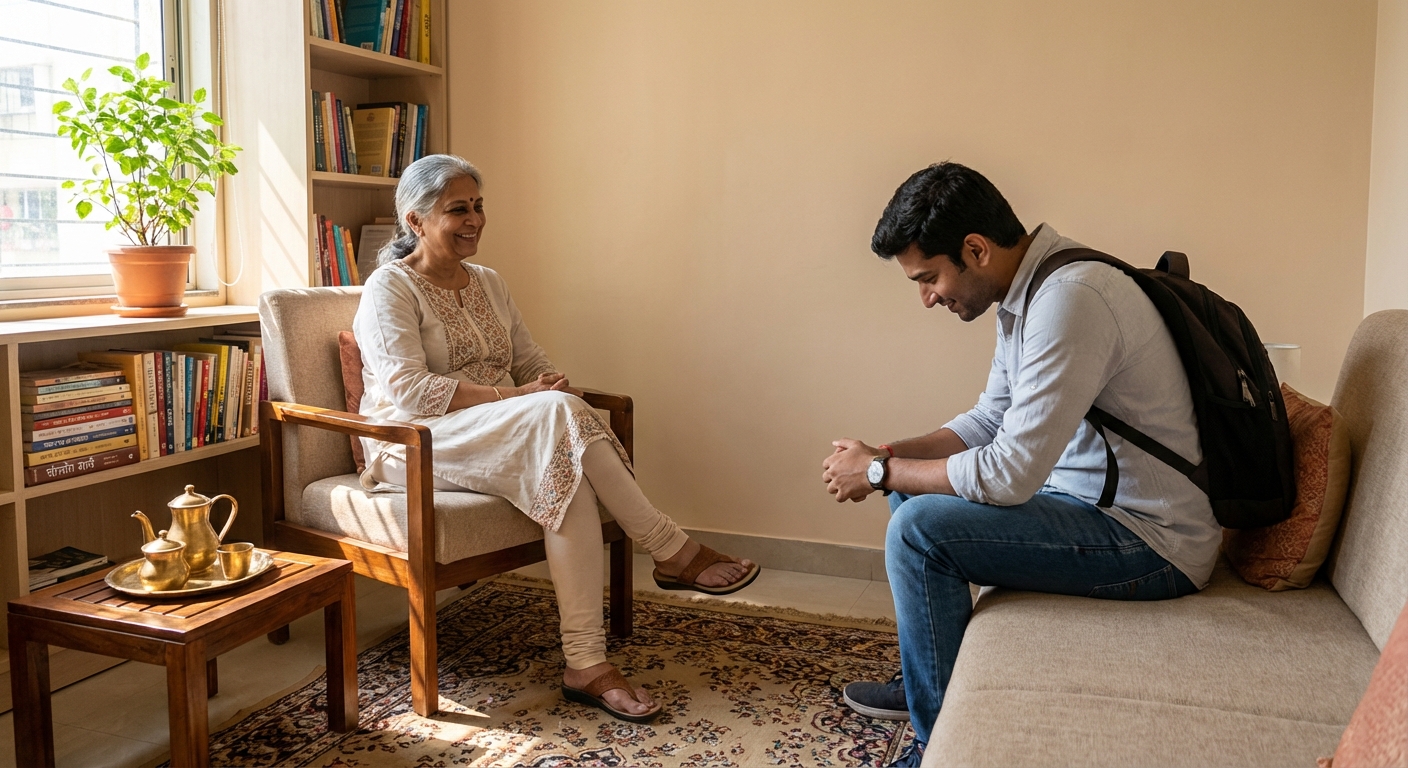
Myth: "Therapy is only for people with serious mental illness."
Reality: Therapy serves anyone seeking to understand themselves better, navigate challenges, or improve their quality of life. You do not need a diagnosis to benefit from professional support.
Myth: "Seeking help means I am weak or unable to handle my problems."
Reality: Recognizing when you need support and taking action requires tremendous courage and self-awareness. It is a sign of strength, not weakness.
Myth: "Talking to friends and family is enough."
Reality: While social support is valuable, trained professionals offer evidence-based interventions, objective perspectives, and confidentiality that personal relationships cannot always provide.
Myth: "Therapy means taking medication."
Reality: Psychologists and counselors provide talk therapy without prescribing medication. If medication is recommended, it would be by a psychiatrist, and you always have the choice to discuss alternatives.
Myth: "My problems are not serious enough for therapy."
Reality: There is no minimum threshold of suffering required to seek help. If something troubles you, it matters.
Understanding Your Options: Types of Mental Health Professionals
Navigating the mental health landscape can feel overwhelming. Here is a simplified guide to different professionals you might encounter:
Psychiatrists are medical doctors specializing in mental health. They can diagnose mental health conditions, prescribe medication, and provide medical management. In India, psychiatrists typically hold an MD or DPM qualification.
Clinical Psychologists hold doctoral degrees (PhD or MPhil in Clinical Psychology) and are trained in psychological assessment and evidence-based therapies. They cannot prescribe medication but provide comprehensive psychological treatment.
Counseling Psychologists focus on helping individuals cope with life challenges, transitions, and emotional difficulties. They often hold master's degrees with specialized training.
Counselors and Psychotherapists provide talk therapy and may have various certifications and training backgrounds. It is important to verify their qualifications and training.
For many people, starting with a psychologist or counselor makes sense, with referral to a psychiatrist if medication might be helpful.
What to Expect in Your First Session
The unknown can feel frightening. Let me demystify what typically happens in an initial therapy session.
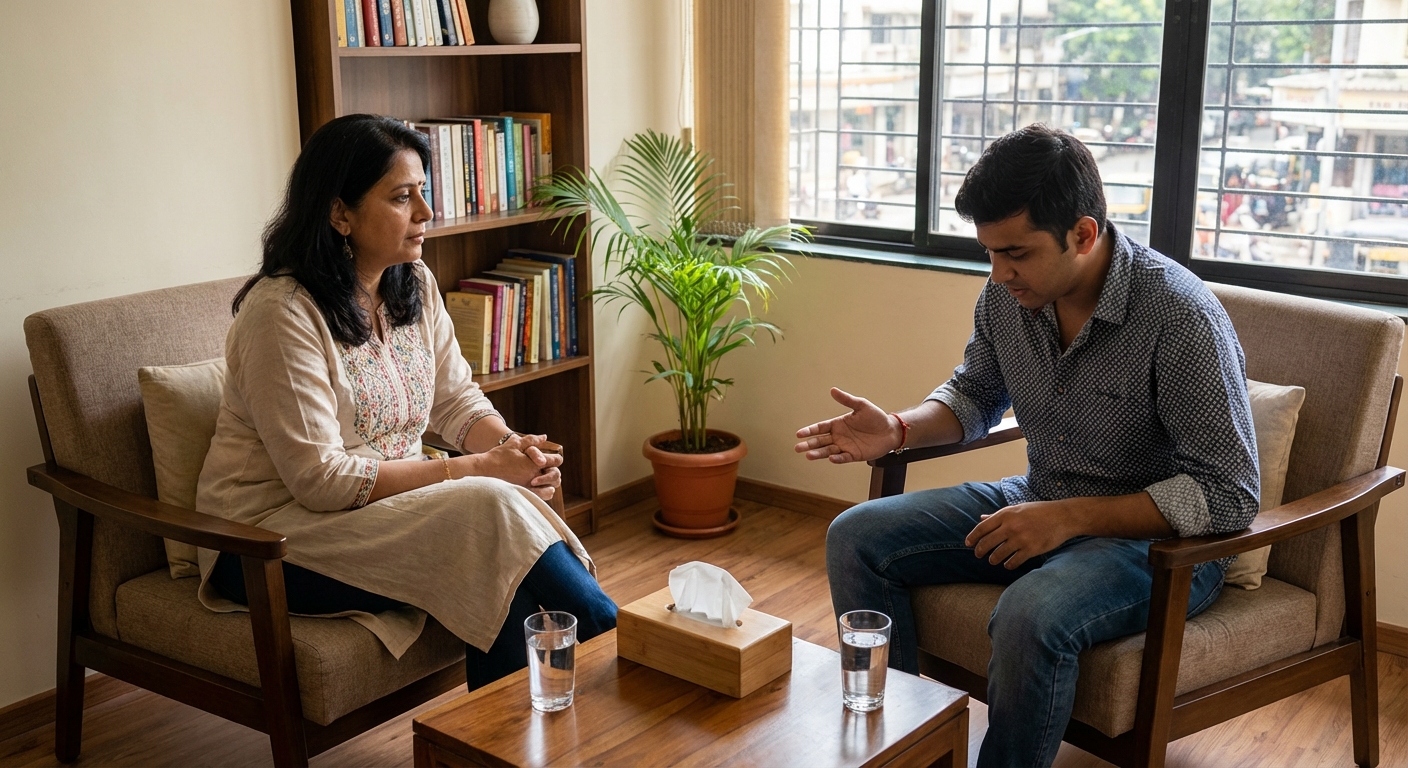
Your first appointment—often called an intake session—is primarily about getting to know each other. I typically begin by explaining confidentiality, discussing the therapeutic process, and answering any questions you might have.
You will be asked about what brings you to therapy, your personal history, family background, current life circumstances, and goals for treatment. This is not an interrogation but a conversation. You share what you feel comfortable sharing.
Ananya, a 26-year-old graduate student, told me she spent the week before her first session convinced she would "fail" at therapy. "I did not know how to be a good client," she laughed afterward. There is no right or wrong way to be in therapy. Your therapist's job is to create a safe space for you to be authentically yourself.
Finding the Right Therapist for You
The therapeutic relationship is one of the strongest predictors of successful outcomes. Finding the right fit matters enormously.
Consider Your Preferences
Do you prefer a male or female therapist? Someone older or closer to your age? A therapist who shares your cultural or linguistic background? These preferences are valid and can influence your comfort level.
Research Their Approach
Different therapists use different methods—Cognitive Behavioral Therapy, Psychodynamic therapy, Humanistic approaches, and many others. A brief phone call or email inquiry about their approach can help you understand if it resonates with you.
Verify Credentials
In India, the Rehabilitation Council of India (RCI) registers clinical psychologists. Do not hesitate to ask about qualifications, training, and experience with concerns similar to yours.
Trust Your Instincts
After one or two sessions, reflect on how you felt. Did you feel heard? Did the therapist seem competent and caring? While therapy can feel uncomfortable at times, you should feel fundamentally safe with your therapist.
Preparing for Your First Appointment
A little preparation can help you make the most of your sessions.
Write Down Your Concerns
Before your appointment, jot down what you want to discuss. Anxiety can make us forget important points. A simple list can help.
Gather Relevant Information
If you have previous mental health treatment history, relevant medical information, or have been recommended by another professional, bring this information along.
Arrive With Realistic Expectations
Therapy is not a magic solution that works overnight. It is a process that requires time, effort, and patience. One session will not solve everything, but it can be the beginning of meaningful change.
Prepare Practical Questions
Consider asking about session frequency, duration of treatment, cancellation policies, and fee structure. Understanding practical aspects reduces uncertainty.
The Therapeutic Relationship: A Partnership for Healing
Effective therapy is a collaboration. Your therapist brings professional expertise; you bring knowledge of your own life and experiences. Together, you work toward your goals.
This relationship takes time to develop. Vikram, a 38-year-old entrepreneur, told me it took several sessions before he felt comfortable being fully honest. "I tested you," he admitted later. "I needed to know I could trust you with my real thoughts." This is completely normal and expected.
Good therapists welcome feedback. If something is not working, say so. If you need something different, ask. Your input helps shape the treatment to serve you better.
Cost and Accessibility: Navigating Practical Considerations
In India, mental health services vary widely in cost and accessibility. Here are some considerations:
Private Practice Costs
Therapy fees in urban centers like Hyderabad typically range from Rs. 1,500 to Rs. 5,000 per session, depending on the practitioner's experience and qualifications. Many therapists offer sliding scale fees based on financial circumstances.
Hospital and Institutional Services
Government hospitals and institutions like NIMHANS offer subsidized mental health services. District Mental Health Programs (DMHP) provide community-based services at lower costs.
Insurance Coverage
Some health insurance policies now cover mental health treatment. Check your policy or inquire with your insurer about coverage for psychiatric and psychological services.
Employee Assistance Programs
Many companies now offer EAPs that provide free, confidential counseling sessions to employees. Check if your workplace offers this benefit.

Online vs. In-Person Therapy: What Works for You?
The pandemic accelerated the adoption of teletherapy in India. Both formats have their place.
Online Therapy Advantages
- Accessibility for those in areas with limited mental health services
- Convenience for people with mobility challenges or busy schedules
- Comfort of receiving therapy from your own space
- Often more affordable than in-person sessions
- Easier to build rapport through physical presence
- No technology barriers or connectivity issues
- Complete privacy without concerns about household members overhearing
- Better suited for certain conditions requiring close observation
Encouraging a Loved One to Seek Help
If someone you care about is struggling, you may wonder how to encourage them to seek professional support without being pushy or judgmental.
Express Concern From a Place of Love
Use "I" statements: "I have noticed you seem stressed lately, and I am worried about you." Avoid accusations or diagnoses.
Share Information, Not Ultimatums
Provide information about mental health resources without demanding action. Respect their autonomy while making it clear you are there to support them.
Offer Practical Support
Offer to help research therapists, accompany them to appointments, or assist with logistics. Sometimes practical barriers feel insurmountable when someone is struggling.
Be Patient
Change happens at different paces for different people. Continue being supportive even if they are not ready immediately. Your consistent presence matters.

Taking the First Step
The journey toward mental wellness begins with a single step. That step might be making a phone call, sending an email, or simply acknowledging to yourself that you deserve support.
In my years of practice, I have seen countless individuals transform their lives through therapy—not because therapy fixed them, but because it helped them discover strengths and resources they did not know they possessed.
If you are in Hyderabad and considering therapy, I invite you to reach out for a consultation. My practice provides a safe, confidential space where we can explore your concerns together and determine the best path forward for your unique situation. Whether you choose to work with me or another professional, what matters most is that you take that brave first step.
Your mental health matters. Your well-being matters. You deserve support on this journey.
---About the Author
Sudheer Sandra is a licensed clinical psychologist based in Hyderabad with over 15 years of experience helping individuals navigate life's challenges. He specializes in anxiety, depression, relationship issues, and life transitions. Sudheer is committed to making mental health support accessible and reducing stigma in Indian communities. He offers both in-person sessions at his Hyderabad practice and online consultations for clients across India.
To schedule a consultation, please contact Sudheer's practice directly. Taking that first step toward mental wellness is an act of courage, and professional support is available when you are ready.