Recognizing and Recovering from Burnout: A Complete Guide


Last month, a senior IT professional walked into my Hyderabad office looking like a shadow of himself. Rajesh (name changed), a 38-year-old project manager at a leading tech company, had been working 14-hour days for three years straight. "I used to love solving complex problems," he told me, his voice flat. "Now I feel nothing. I go through the motions, but it's like I'm watching someone else live my life."
Rajesh's story is far from unique. In my fifteen years as a psychologist and career counselor, I have witnessed a dramatic increase in burnout cases, particularly among Indian professionals navigating the demands of our rapidly evolving work culture. The combination of global deadlines, constant connectivity, family expectations, and the pressure to "hustle" has created a perfect storm for chronic workplace exhaustion.
If you are reading this and feeling perpetually drained, disconnected from your work, or questioning your professional worth, I want you to know something important: burnout is not a character flaw or a sign of weakness. It is a legitimate occupational phenomenon recognized by the World Health Organization, and more importantly, it is recoverable.
Understanding Burnout: More Than Just Tiredness
Before we discuss recovery, let us first understand what burnout actually is. Many of my clients initially dismiss their symptoms as "just stress" or "normal work pressure." However, burnout is distinctly different from everyday exhaustion.
The psychologist Christina Maslach, whose research forms the foundation of our understanding of this condition, identifies three core dimensions of burnout:
Emotional Exhaustion
This goes beyond physical tiredness. You feel completely depleted of emotional resources. Simple tasks that once took minutes now feel like climbing mountains. One of my clients described it as "running on an empty tank but being forced to keep driving."
Depersonalization and Cynicism
You develop a detached, negative, or cynical attitude toward your work and colleagues. The enthusiasm you once had transforms into irritability. You might find yourself making sarcastic comments about projects you previously cared about or feeling indifferent to outcomes that would have once motivated you.
Reduced Professional Efficacy
Despite working harder, you accomplish less. Your productivity drops, creativity diminishes, and you begin doubting your competence. This often creates a vicious cycle where you work even longer hours to compensate, accelerating the burnout process.
The Warning Signs: What Your Mind and Body Are Telling You
In my practice, I have observed that burnout rarely arrives suddenly. It creeps in gradually, which is why so many professionals miss the early warning signs. Here are the signals I encourage my clients to watch for:
Physical Symptoms
- Chronic fatigue that sleep does not resolve
- Frequent headaches or muscle tension, particularly in the neck and shoulders
- Changes in appetite or sleep patterns
- Lowered immunity leading to frequent illnesses
- Unexplained aches and digestive issues
Emotional and Behavioral Signs
- Feeling detached from your work and colleagues
- Loss of motivation and enthusiasm
- Increased irritability with family and coworkers
- Difficulty concentrating or making decisions
- Procrastinating on important tasks
- Withdrawing from responsibilities

I remember working with Priya, a young doctor at a government hospital, who came to me after she realized she had stopped feeling empathy for her patients. "I became a doctor because I wanted to help people," she said, tears in her eyes. "Now I just want them to leave so I can finish my shift." This loss of connection with her core purpose was a clear indicator that burnout had taken hold.
Why Indian Professionals Are Particularly Vulnerable
Our cultural context creates unique challenges that I believe deserve acknowledgment. The concept of "work-life balance" often conflicts with traditional values that emphasize sacrifice, duty, and family reputation tied to professional success.
Many of my clients struggle with setting boundaries because saying "no" feels disrespectful to authority figures. The joint family system, while providing wonderful support, can also add layers of expectation and obligation. Add to this the competitive nature of our education and employment landscape, and you have a environment where overwork becomes normalized, even celebrated.
I have had clients tell me their parents question why they need rest when "everyone works this hard." This cultural backdrop makes recognizing and addressing burnout more complicated, but certainly not impossible.
The Path to Recovery: Evidence-Based Strategies
Now for the part you have been waiting for: how do we recover? Based on both psychological research and my clinical experience, here is a comprehensive approach:
1. Acknowledge and Accept
The first step is admitting that what you are experiencing is real and valid. I cannot emphasize this enough. Many clients spend months denying their burnout, which only prolongs suffering. When Rajesh finally accepted that he was burned out, not weak, everything changed. That acknowledgment opened the door to healing.
2. Conduct an Energy Audit
I ask my clients to keep a simple journal for one week, noting which activities energize them and which drain them. You might be surprised by what you discover. One client realized that his daily two-hour commute was not just inconvenient; it was a major contributor to his exhaustion. This insight led him to negotiate a hybrid work arrangement.

3. Establish Non-Negotiable Boundaries
This is perhaps the most challenging step for my Indian clients, but it is essential. Start small. Perhaps it means not checking work emails after 8 PM, or protecting your Sunday mornings for family. Communicate these boundaries clearly and consistently.
I often remind clients that boundaries are not selfish; they are self-preserving. You cannot pour from an empty cup, as the saying goes. When you protect your energy, you actually become more effective and present in all areas of life.
4. Reconnect with Your Purpose
Burnout often disconnects us from why we chose our profession in the first place. I guide clients through exercises to rediscover their core values and professional purpose. For Priya, the doctor I mentioned earlier, we explored what originally drew her to medicine. Reconnecting with those initial motivations helped reignite her passion.
Ask yourself: Beyond the salary, what meaningful contribution does my work make? How does it align with my personal values?
5. Prioritize Recovery Activities
Sleep is not a luxury; it is a biological necessity for mental health. Similarly, physical movement, time in nature, and genuine leisure are not indulgences but requirements for sustainable performance.
I encourage clients to schedule recovery activities with the same seriousness as work meetings. This might include:
- Regular exercise, even just a 30-minute walk
- Meditation or pranayama breathing exercises
- Hobbies completely unrelated to work
- Quality time with loved ones without digital distractions
- Adequate sleep of seven to eight hours
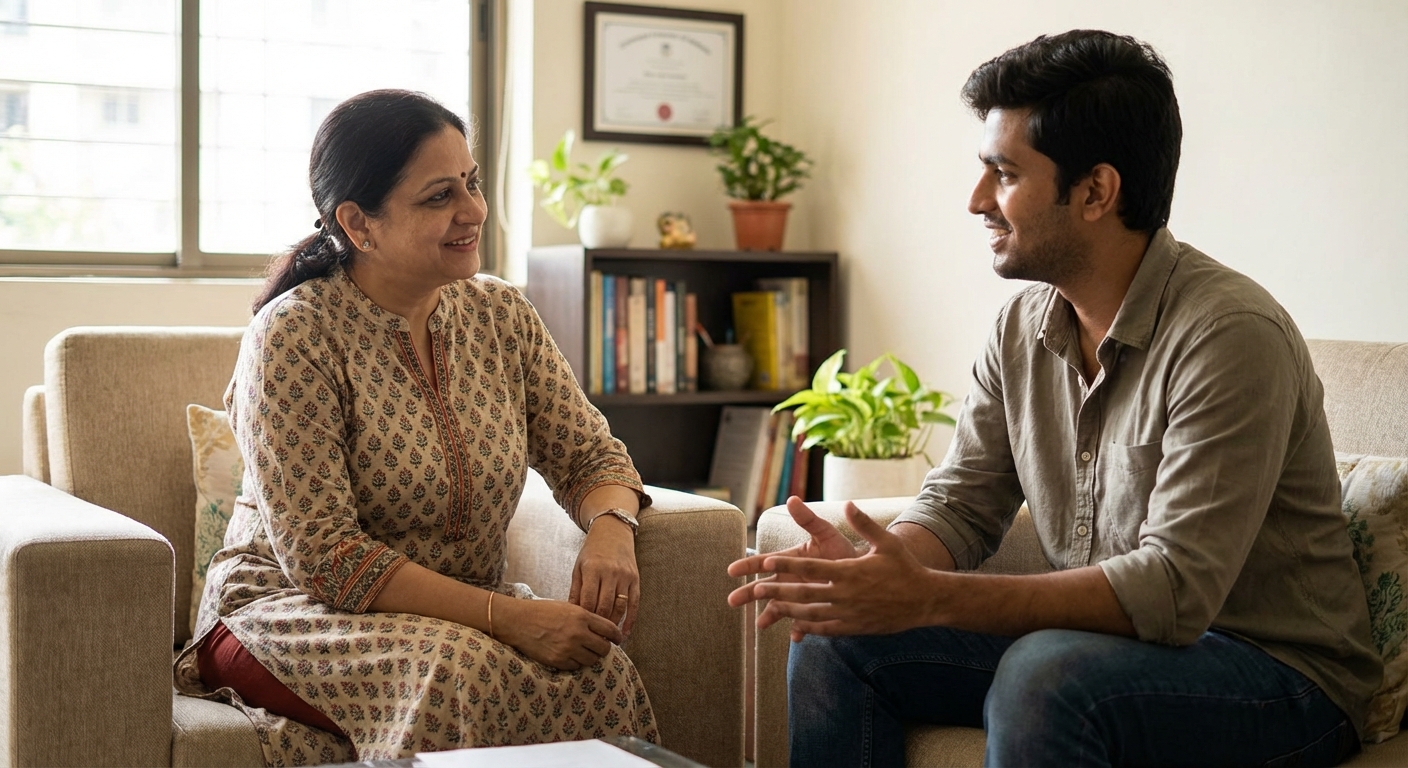
6. Seek Professional Support
There is no shame in asking for help. Just as you would consult a doctor for a physical ailment, consulting a psychologist or counselor for burnout is a sign of wisdom, not weakness.
In therapy, we can explore deeper patterns that might be contributing to your burnout, such as perfectionism, people-pleasing tendencies, or difficulty delegating. Sometimes burnout is connected to broader life questions about meaning and direction that benefit from professional guidance.
7. Consider Workplace Changes
Sometimes individual strategies are not enough because the workplace itself is toxic or structurally problematic. In such cases, we might explore:
- Having honest conversations with supervisors about workload
- Seeking internal transfers to different teams or roles
- Exploring whether the current organization aligns with your values
- In some cases, planning a career transition
Prevention: Building Burnout Resistance
Once you recover, prevention becomes crucial. Here are strategies I recommend for building long-term resilience:
Develop Early Warning Systems: Know your personal signs of impending burnout and take action at the first signals.
Build a Support Network: Cultivate relationships with colleagues, friends, and family who can provide perspective and support.
Practice Regular Self-Assessment: Monthly check-ins with yourself about your energy levels, motivation, and satisfaction.
Maintain Boundaries Consistently: It is easier to maintain boundaries than to rebuild them after they have been violated.
Invest in Skills Beyond Work: Having identity and competence outside your profession provides psychological insurance against work-related distress.

A Message of Hope
If you are currently struggling with burnout, I want to leave you with this: recovery is absolutely possible. I have witnessed hundreds of professionals reclaim their energy, rediscover their passion, and build sustainable careers that honor both their ambitions and their wellbeing.
The journey requires patience and commitment, but the destination is worth it. Rajesh, whom I mentioned at the beginning of this article, completed six months of therapy combined with significant lifestyle changes. Last week, he told me something that made my work feel worthwhile: "I finally feel like myself again. Not just surviving, but actually living."
You deserve that too.
Taking the First Step
If you recognize yourself in this article and feel ready to address your burnout, I encourage you to reach out for professional support. Sometimes, having an objective guide who understands both the psychological dimensions of burnout and the unique pressures of the Indian professional context can make all the difference.
At my practice in Hyderabad, I offer comprehensive assessments for burnout and personalized recovery plans that honor your professional goals while protecting your mental health. Whether you prefer in-person sessions or online consultations, taking that first step toward recovery is the most important decision you can make for your future self.
Remember, acknowledging you need help is not a sign of weakness; it is the first act of recovery.
---Sudheer Sandra is a licensed psychologist and career counselor based in Hyderabad, India, with over 15 years of experience helping professionals navigate workplace challenges, career transitions, and mental health concerns. He specializes in burnout recovery, career counseling, and stress management.