Positive Parenting: Raising Confident and Resilient Children Without Punishment


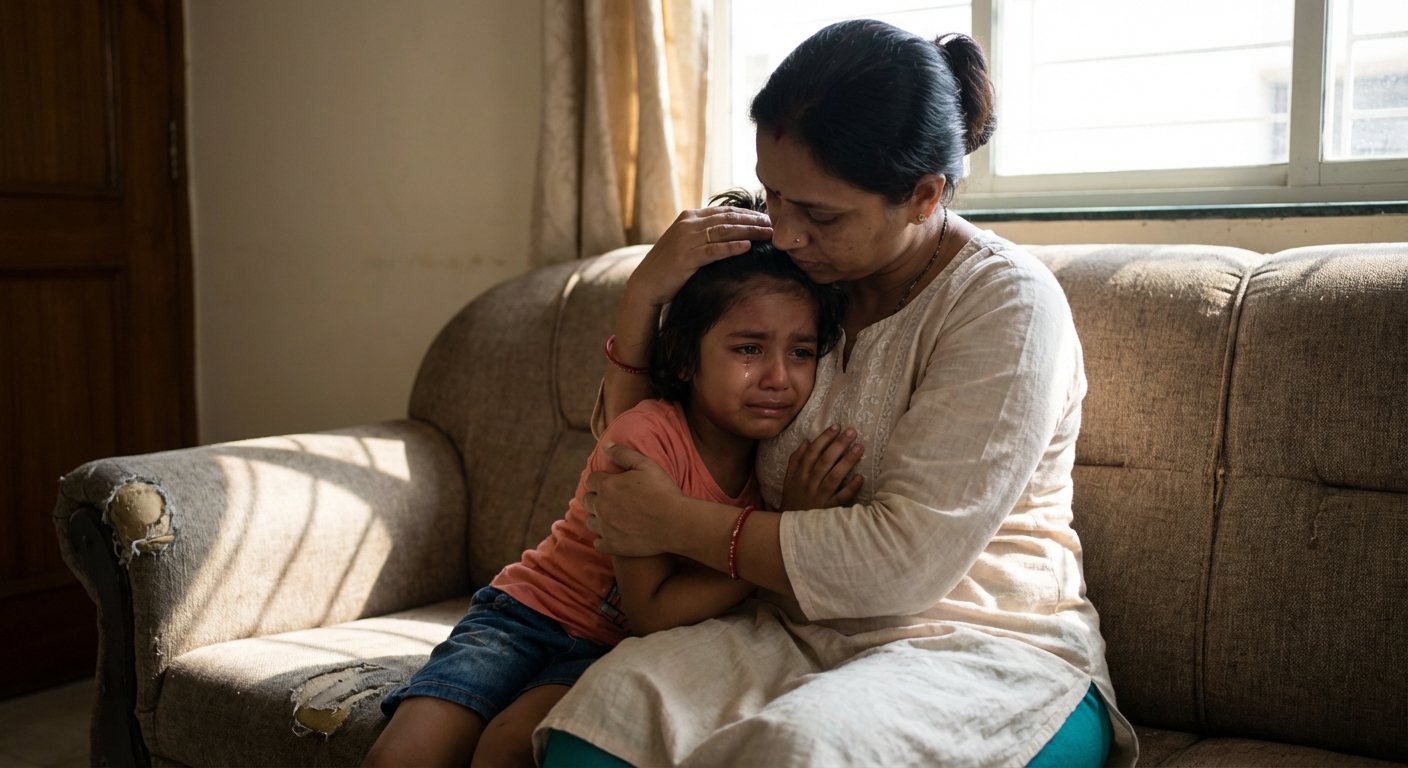
A few months ago, a couple walked into my Hyderabad practice looking utterly exhausted. Priya and Ramesh (names changed) had a seven-year-old son who, in their words, had become "uncontrollable." They had tried everything—scolding, taking away his tablet, even the occasional slap on his back. Nothing seemed to work. Their son was becoming more defiant, and they were becoming more frustrated.
"We don't want to hit him," Priya confessed, tears welling in her eyes. "But what else can we do? This is how we were raised, and we turned out fine."
I hear variations of this story almost every week. Parents who love their children deeply, yet feel trapped in cycles of punishment and conflict that leave everyone feeling disconnected and defeated. If you recognize yourself in this scenario, I want you to know something important: there is another way.
What Is Positive Parenting?
Positive parenting is not about being permissive or letting children do whatever they want. This is perhaps the biggest misconception I encounter. Rather, positive parenting is about guiding children's behavior through connection, clear boundaries, and mutual respect—without relying on punishment, fear, or shame as primary tools.
The research supporting this approach is compelling. Dr. Diana Baumrind's decades of research on parenting styles consistently shows that "authoritative" parenting—characterized by warmth combined with firm boundaries—produces the most well-adjusted children. More recently, studies published in the Journal of Family Psychology have demonstrated that children raised without physical punishment show better cognitive development, stronger emotional regulation, and fewer behavioral problems in the long term.
But here's what resonates with me most after fifteen years of working with families: positive parenting doesn't just produce better outcomes for children—it transforms the entire family dynamic. Parents feel less stressed, more confident, and genuinely closer to their children.
Why Traditional Punishment Falls Short
Let me be clear: I am not here to judge any parent. Many of us were raised with punishment as the primary discipline tool, and we naturally gravitate toward what we know. In our Indian context especially, phrases like "spare the rod, spoil the child" have been passed down through generations.
However, understanding why punishment often backfires can help us make more informed choices.
Punishment focuses on the behavior, not the underlying need. When eight-year-old Arjun (name changed) started throwing tantrums every evening, his parents' first instinct was to send him to his room. What we discovered in our sessions was that Arjun was struggling with anxiety about a new school and desperately needed connection with his parents after long days apart. The tantrums were his way of communicating a need he couldn't articulate.
Punishment damages the parent-child relationship. Research by Dr. Alan Kazdin at Yale University shows that punishment activates the threat response in children's brains, associating parents with fear rather than safety. Over time, this erodes trust and makes children less likely to come to parents with problems.
Punishment teaches what not to do, but not what to do instead. Children need guidance and modeling to develop appropriate behaviors. Simply telling them to stop a behavior without teaching alternatives leaves them without tools for the future.
The Four Pillars of Positive Parenting
Through my practice, I have developed a framework that helps Indian families embrace positive parenting while honoring our cultural values of respect, family cohesion, and strong moral foundations.
1. Connection Before Correction
This is the foundation of everything else. Before addressing any misbehavior, strengthen your connection with your child. A child who feels securely connected to their parents is far more motivated to cooperate.
Practically, this means:
- Spending 15-20 minutes of undivided attention with each child daily (no phones!)
- Making eye contact and getting down to their level during conversations
- Using physical affection generously—hugs, gentle touches on the shoulder
- Showing genuine interest in their world, whether it's their favorite cartoon or their friendship dynamics
2. Clear, Consistent Boundaries
Positive parenting is not permissive parenting. Children actually feel safer and more secure when they understand the boundaries. The difference lies in how we communicate and enforce these boundaries.
Use "I" statements instead of accusations:
- Instead of "You're so irresponsible, you never do your homework!" try "I feel worried when homework isn't completed because I want you to succeed in school."
- Instead of "Don't run in the house!" try "We use walking feet inside."
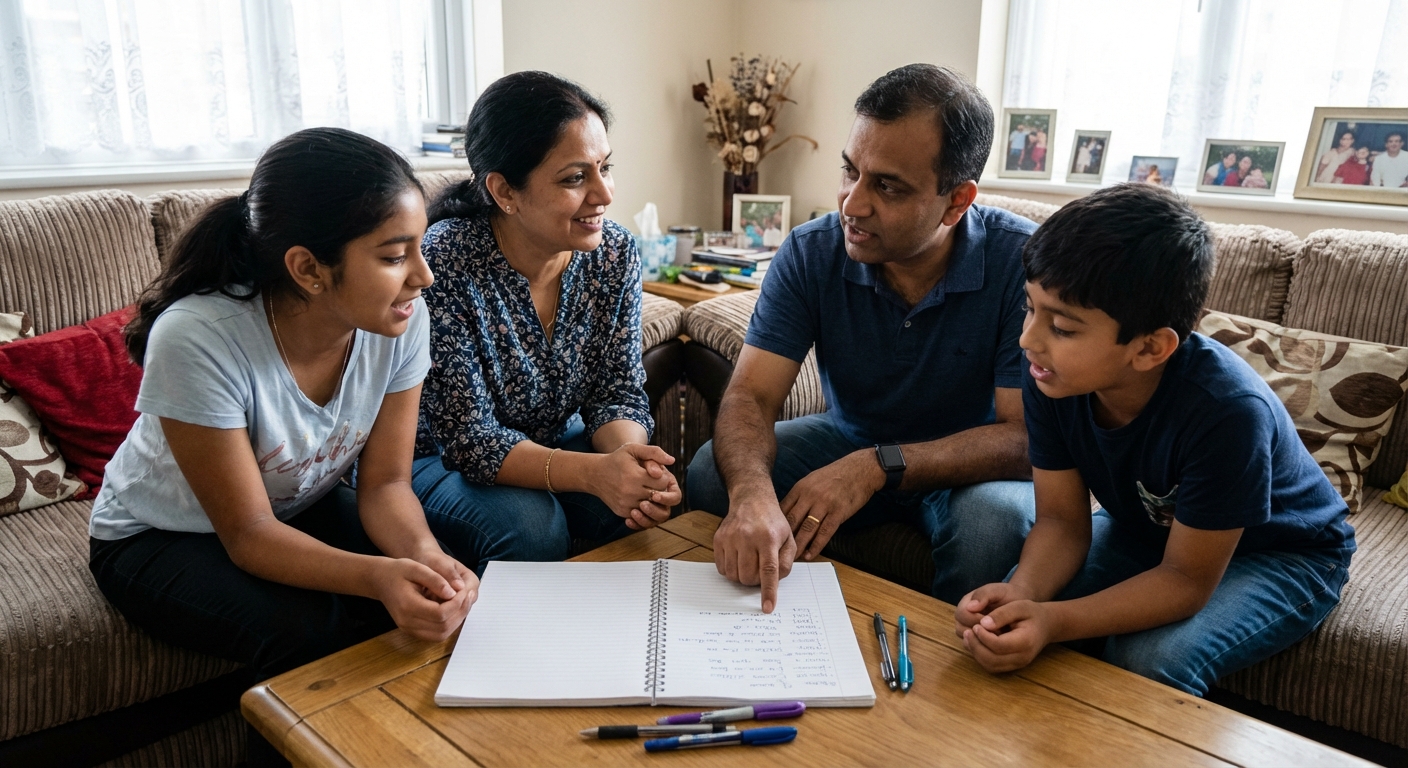
- Family meetings where everyone contributes to household rules create buy-in and teach democratic values
- If the agreed consequence for not finishing homework is no screen time, implement it matter-of-factly, without lectures or emotional escalation
3. Emotional Coaching
One of the most valuable gifts we can give our children is emotional literacy—the ability to recognize, understand, and manage their emotions. Research by Dr. John Gottman shows that children who receive emotional coaching have better academic performance, stronger friendships, and fewer behavioral issues.
In our Indian families, we sometimes inadvertently dismiss emotions. "Don't cry, you're a big boy now." "What's there to be scared of?" "Stop being so sensitive." These well-meaning statements teach children that their emotions are problematic rather than natural.
Instead, try this approach:
Acknowledge the emotion: "I can see you're really angry right now."
Validate the feeling: "It makes sense that you're frustrated. You worked hard on that tower and it fell down."
Help them label it: "That feeling in your chest when you want to scream—that's frustration."
Guide them toward solutions: "What do you think might help you feel better? Would you like to try building it again, or do something else first?"
I worked with a mother whose nine-year-old son was having frequent meltdowns. She started simply narrating his emotions without judgment—"You seem really disappointed that we can't go to the park today." Within a few weeks, her son began using emotional words himself and his outbursts decreased dramatically. He felt understood, and that made all the difference.
4. Natural and Logical Consequences
This is where positive parenting addresses accountability without punishment. The key distinction is that consequences should be related, respectful, and reasonable—not designed to inflict suffering or shame.
Natural consequences occur without parental intervention:
- If a child refuses to wear a sweater, they feel cold
- If they don't eat dinner, they feel hungry later
- If they don't do homework, they face their teacher's response
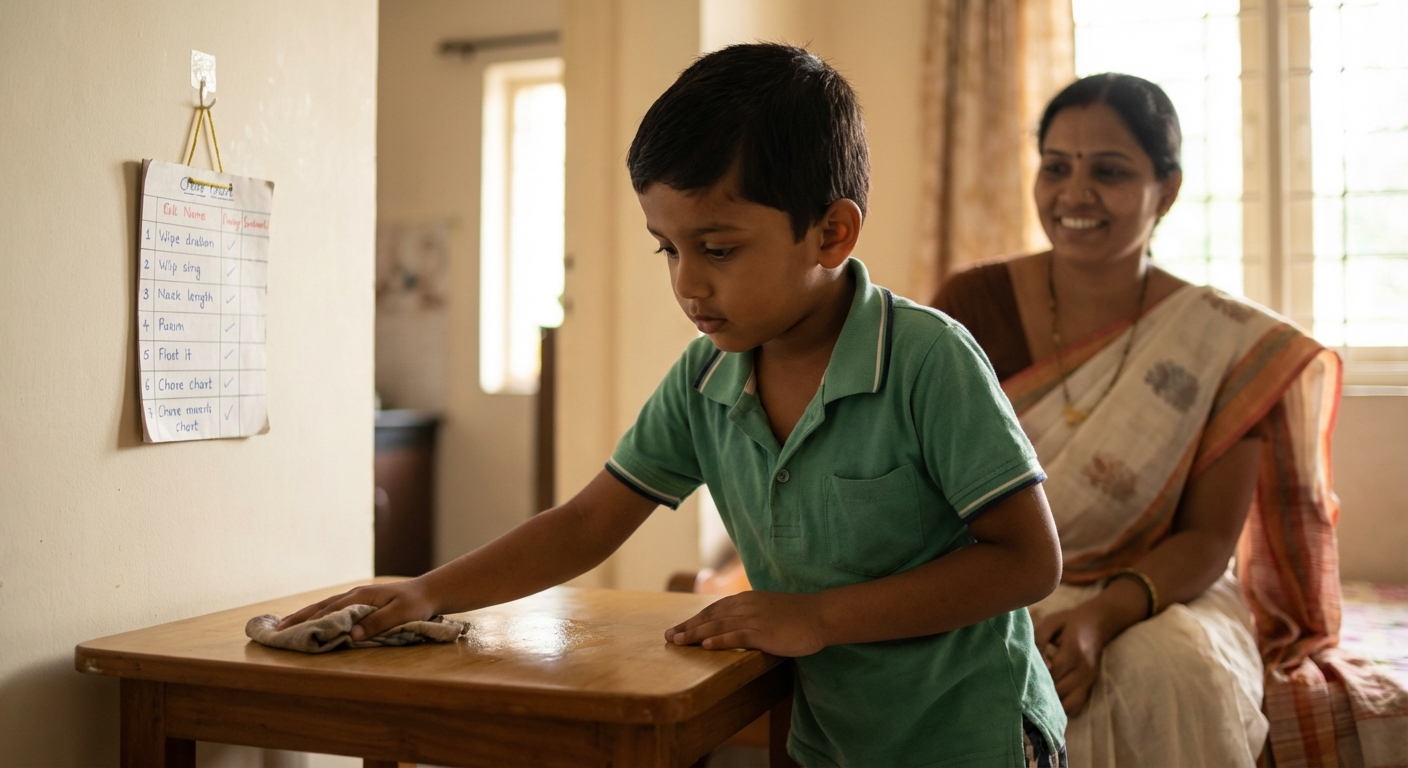
- If toys aren't put away, they become unavailable for a period
- If a child speaks disrespectfully, the conversation pauses until they can communicate calmly
- If screen time limits are exceeded, the next day's screen time is reduced by the same amount
Addressing Common Concerns
"But my parents used punishment and I turned out fine."
I hear this often, and I honor the respect we have for our elders and their parenting efforts. However, "fine" is a low bar. We now have research and tools that can help our children not just survive but truly thrive. Additionally, many adults carry emotional wounds from childhood punishment that affect their relationships and self-worth—wounds they may not even recognize.
"This approach takes too much time. I'm already overwhelmed."
I understand the pressures Indian parents face—demanding careers, joint family dynamics, educational expectations. Here's the truth: positive parenting actually saves time in the long run. Investing in connection and teaching skills now means fewer conflicts, less defiance, and more cooperation later. The families I work with consistently report that after an initial adjustment period, daily life becomes smoother and more peaceful.
"What about serious misbehavior? Some things require strict punishment."
For serious issues, positive parenting doesn't mean no response. It means responding in ways that address the root cause and teach better choices. Serious conversations, loss of privileges, making amends for harm caused—these are all part of positive parenting. What we avoid is physical punishment, humiliation, and responses driven by parental anger rather than the child's learning.
"My in-laws/parents don't agree with this approach."
This is a real challenge in our Indian context where extended family involvement in parenting is common. I recommend having honest conversations about your parenting philosophy, sharing research when appropriate, and focusing on common goals—everyone wants the children to be happy, successful, and well-behaved. Sometimes, demonstrating results is the most convincing approach.

Starting Your Positive Parenting Journey
Change doesn't happen overnight, and perfection isn't the goal. Here's how I suggest families begin:
1. Start with yourself. Notice your triggers and reactions. When do you feel most likely to resort to punishment? What unmet needs of your own might be affecting your responses?
2. Pick one strategy. Don't try to overhaul everything at once. Perhaps start with daily connection time, or practice emotional coaching during one conflict this week.
3. Expect testing. When you change your approach, children often test the new boundaries. This is normal and temporary. Stay consistent.
4. Repair when you slip up. You will lose your temper. You will react in ways you regret. What matters is what happens next. Model accountability by apologizing and reconnecting.
5. Seek support. Parenting is not meant to be done in isolation. Whether through professional guidance, parenting groups, or supportive friends, surround yourself with people who encourage your growth.
A Final Thought
Returning to Priya and Ramesh, whom I mentioned at the start—after three months of working together on positive parenting strategies, their home life transformed. Their son's defiance decreased significantly, but more importantly, they described feeling genuinely close to him for the first time in years. "I actually enjoy being with him now," Ramesh told me, his voice thick with emotion. "I didn't realize how much I was missing."
This is what positive parenting offers: not just better behavior, but deeper relationships. Not just compliant children, but confident, resilient young people who know they are loved unconditionally.
Your children don't need perfect parents. They need parents who are willing to grow alongside them, who can admit mistakes, and who choose connection over control. That parent is already within you.
---If you're struggling with parenting challenges or simply want to strengthen your relationship with your children, I invite you to reach out. At my practice in Hyderabad, I work with families to develop personalized positive parenting strategies that honor your values while building the connected, peaceful home you desire.
---Sudheer Sandra is a licensed psychologist and career counselor based in Hyderabad, India, with over 15 years of experience helping individuals and families navigate life's challenges. His practice specializes in parenting support, adolescent counseling, career guidance, and personal development.