Overcoming Procrastination: The Psychology Behind Delay and How to Break Free

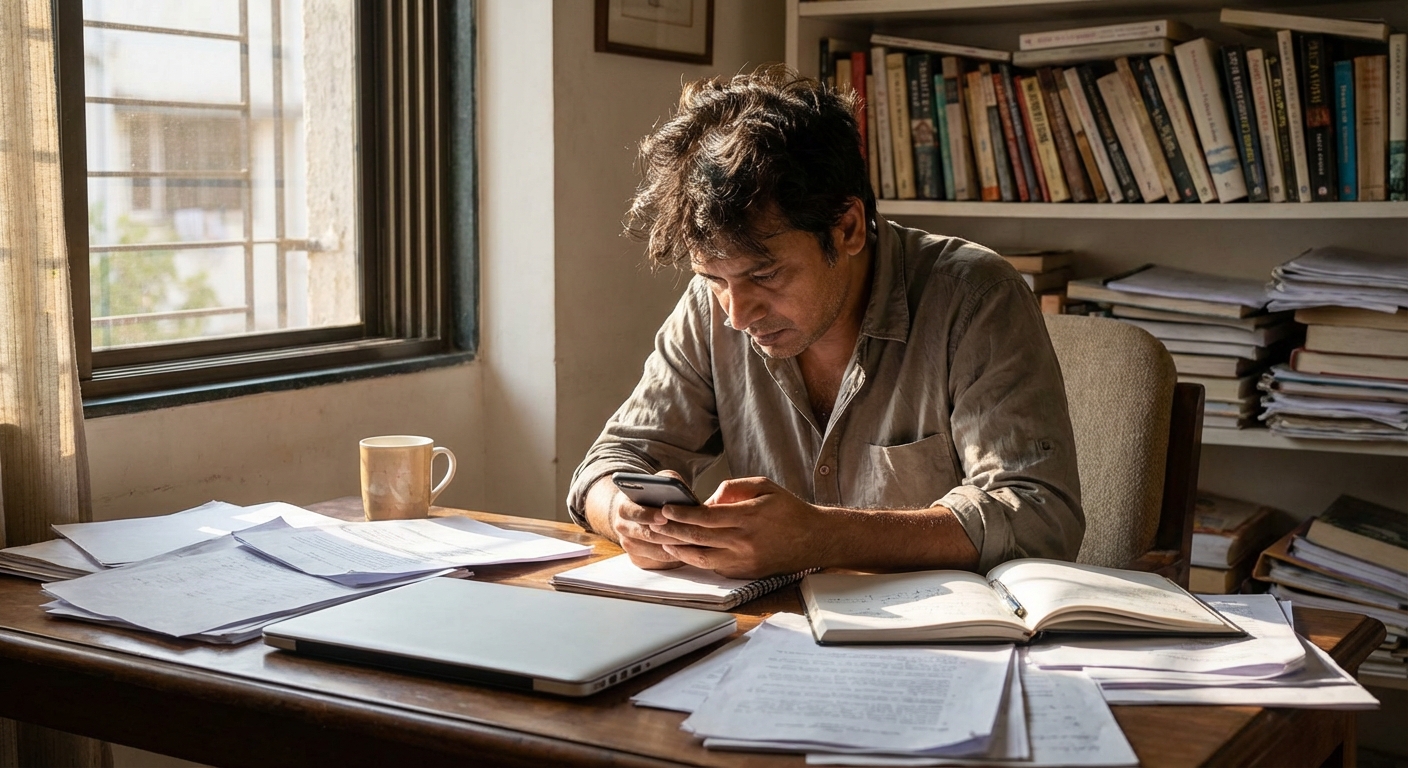
In my fifteen years of practice as a psychologist and career counselor here in Hyderabad, I have heard countless variations of the same confession: "Sir, I know what I need to do. I just cannot get myself to do it."
Whether it is a UPSC aspirant preparing for their third attempt, a software professional at HITEC City putting off an important project, or a college student facing board examinations, the struggle remains remarkably similar. And almost always, it comes wrapped in shame and self-criticism.
Today, I want to share what I have learned about procrastination - not just from textbooks and research papers, but from sitting across from hundreds of individuals who have battled this invisible adversary. More importantly, I want to offer you a path forward.
Understanding the Real Nature of Procrastination
Let me tell you about Arjun (name changed), a bright 24-year-old who came to see me last year. He had cleared JEE Advanced, graduated from a prestigious IIT, and landed a coveted job at a multinational company. Yet, he found himself unable to complete even routine tasks at work. His performance reviews were suffering, and he was convinced something was fundamentally wrong with him.
"I am just lazy," he told me during our first session, unable to meet my eyes.
Here is what I told Arjun, and what I want you to understand: Procrastination is not laziness. It is not a character flaw. It is an emotional regulation problem.
Dr. Timothy Pychyl, one of the world's leading researchers on procrastination at Carleton University, puts it beautifully: "Procrastination is an emotion-focused coping strategy." When we procrastinate, we are not avoiding the task itself - we are avoiding the negative emotions associated with that task. Fear of failure. Anxiety about judgment. Overwhelm at complexity. Resentment at obligation.
This distinction matters tremendously. When we label ourselves as lazy, we attack our character. When we understand procrastination as emotional avoidance, we can address the root cause.
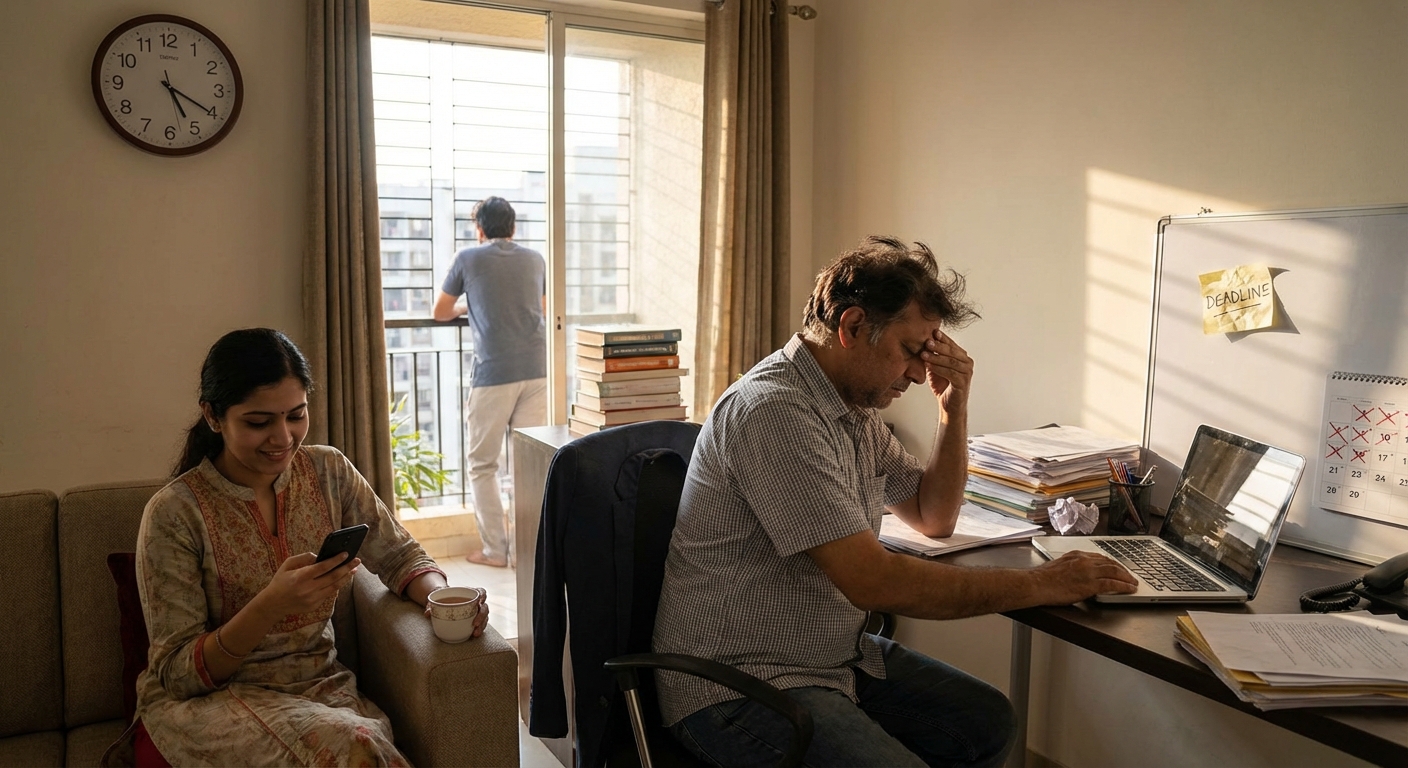
Why Our Brains Betray Us
To understand procrastination, we must understand a fundamental conflict within our own minds.
Our brains have two systems operating simultaneously. The limbic system - our emotional brain - seeks immediate pleasure and avoids immediate pain. It operates on what psychologists call "present bias." The prefrontal cortex - our rational brain - can plan for the future and delay gratification.
When you decide to study for an exam next month, your prefrontal cortex is in charge. It can see the future benefits clearly. But when the time comes to actually open those books, your limbic system takes over. It notices that studying feels uncomfortable right now, while watching one more episode of that web series feels pleasant right now.
This is not weakness. This is neurobiology.
Research by Dr. Fuschia Sirois at the University of Sheffield has shown that procrastinators have difficulty regulating negative moods. When faced with an unpleasant task, they prioritize short-term mood repair over long-term goals. Understanding this helps us move from self-blame to self-compassion - and ultimately, to effective strategies.
The Indian Context: Unique Pressures, Unique Patterns
In my practice, I have noticed certain patterns that seem particularly relevant to our Indian context.
The weight of expectations: Many young Indians carry the hopes of entire families. The pressure to clear competitive examinations, secure government jobs, or maintain family honor can be paralysing. Paradoxically, the higher the stakes, the more likely we are to procrastinate - because the fear of failure becomes unbearable.
The comparison trap: With social media showing us curated highlights of others' achievements, and relatives at family gatherings asking pointed questions about careers and marriages, the sense of falling behind can trigger avoidance behaviors.
The "all or nothing" mindset: I have met countless students who refuse to study unless they can sit for four hours straight. When life inevitably interrupts, they abandon the effort entirely. This perfectionism, often instilled during childhood, becomes a procrastination trigger.
Meera (name changed), a 30-year-old chartered accountant, came to me struggling to complete her CIA certification. Despite being highly accomplished, she would freeze whenever she sat down to study. Through our sessions, we discovered she carried a deep fear of disappointing her late father, who had always called her "the smart one." The stakes felt impossibly high.
Her procrastination was not about the exam. It was about protecting herself from the possibility of shattering that identity.

Breaking Free: Practical Strategies That Work
Now for the part you have been waiting for - what actually helps? Here are strategies I have seen work repeatedly in my practice, supported by psychological research.
1. Practice Self-Compassion, Not Self-Criticism
This might seem counterintuitive. Should we not be hard on ourselves to get things done?
Research by Dr. Sirois and others shows the opposite. Self-criticism increases the negative emotions we are trying to avoid, making procrastination worse. Self-compassion - treating yourself as you would a struggling friend - reduces the emotional charge around tasks and makes action easier.
When you catch yourself procrastinating, try this: Instead of "What is wrong with me?", ask "What am I feeling right now that makes this task difficult?"
2. The Two-Minute Start
Your brain resists beginnings more than continuations. Once you start a task, the "Zeigarnik effect" kicks in - your mind wants to complete what it has begun.
Make a deal with yourself: I will work on this for just two minutes. If I still want to stop after that, I can. More often than not, you will continue. The hardest part is simply starting.
I taught this technique to Arjun, the IIT graduate I mentioned earlier. He started applying it to his work tasks. Within three months, his productivity had transformed. "The task was never as bad as my imagination made it," he told me.
3. Break Tasks Into Laughably Small Steps
Instead of "Study for exam," try "Open the textbook to chapter one." Instead of "Complete project report," try "Write one paragraph of the introduction."
This technique works because it reduces the emotional overwhelm that triggers avoidance. When a task feels small enough, your limbic system does not perceive it as a threat.
4. Design Your Environment for Success
Willpower is limited. Environment is powerful.
Remove friction from desired behaviors: Keep your study materials on your desk, your running shoes by the door. Add friction to undesired behaviors: Log out of social media accounts, keep your phone in another room during work hours.
One of my clients, a young professional struggling with Instagram addiction, started leaving his phone in his car during work hours. His productivity doubled within weeks.

5. Use Implementation Intentions
Research by psychologist Peter Gollwitzer shows that vague intentions ("I will study more") rarely translate into action. Specific plans dramatically increase follow-through.
Use this format: "When [situation], I will [behavior]."
Examples:
- "When I finish dinner, I will study for one hour before watching television."
- "When I feel the urge to check my phone during work, I will take three deep breaths and return to my task."
- "When Monday morning comes, I will complete my most difficult task before checking email."
6. Find Your "Why" - But Make It Personal
Generic motivation rarely sustains effort. You need to connect your task to something that genuinely matters to you - not to your parents, not to society, but to you.
I often ask my clients: "If you could achieve this goal, what would become possible in your life? How would it feel?" The answers that light up their eyes are the ones that can sustain motivation through difficult moments.
7. Build Accountability Structures
We are social creatures. Commitments to others carry more weight than commitments to ourselves.
Find a study partner. Tell a friend about your goals. Hire a coach or counselor. Join a preparation group. The social element adds a layer of motivation that can overcome internal resistance.

The Journey Forward
Let me leave you with this thought: Overcoming procrastination is not about becoming a perfectly productive machine. It is about developing a kinder, more understanding relationship with yourself while building practical skills to move toward what matters to you.
Change does not happen overnight. There will be setbacks. There will be days when you fall back into old patterns. This is not failure - it is part of the process.
What matters is that you keep returning to your intentions, keep practicing self-compassion, and keep taking small steps forward.
In my fifteen years of practice, I have seen people transform their relationship with procrastination. Not by becoming different people, but by understanding themselves better and working with their psychology rather than against it.
Arjun, whom I mentioned at the beginning of this article, recently sent me a message. He has been promoted twice and is now leading a team. "I still procrastinate sometimes," he wrote. "But I understand it now. And I know how to move through it."
That is the goal. Not perfection, but understanding. Not elimination of struggle, but the tools to navigate it.
You are capable of more than you know. Sometimes, you just need someone to help you see it.
---Take the First Step Today
If procrastination has been holding you back from achieving your potential - whether in academics, career, or personal goals - know that you do not have to figure this out alone.
I offer individual counseling sessions at my practice in Hyderabad, where we can work together to understand your unique patterns and develop strategies tailored to your situation. Whether you are a student preparing for competitive examinations, a professional feeling stuck in your career, or anyone struggling to bridge the gap between intention and action, I am here to help.
Book a consultation today. Call my practice or send me a message through the contact form on this website. Let us work together to help you break free from the procrastination cycle and move toward the life you envision.
---About the Author
Sudheer Sandra is a licensed psychologist and career counselor based in Hyderabad, India, with over 15 years of experience helping individuals overcome psychological barriers and achieve their personal and professional goals. He specializes in career counseling, academic performance issues, anxiety, and personal development. Sudheer combines evidence-based psychological approaches with a deep understanding of the Indian cultural context to provide compassionate, effective guidance to his clients. He holds advanced degrees in psychology and has helped hundreds of students, professionals, and families navigate life's challenges. When not in practice, Sudheer enjoys reading, spending time with family, and contributing to mental health awareness initiatives in the community.