Managing Anger Effectively: Understanding and Controlling Your Emotional Responses


Last week, a young software professional walked into my Hyderabad clinic with trembling hands and red-rimmed eyes. "Sir, I shouted at my mother this morning," Vikram (name changed) said, his voice heavy with shame. "I love her more than anyone, but I couldn't control myself. What's wrong with me?"
In my fifteen years of practice as a psychologist and career counselor, I have heard variations of this story countless times. A husband who regrets harsh words spoken to his wife. A manager who lost her temper with a junior colleague. A student who threw his textbooks in frustration before an important exam. The faces change, but the underlying struggle remains the same: anger, that most misunderstood of human emotions, and the guilt that follows its expression.
Today, I want to share with you what I have learned about anger - not as something to be suppressed or feared, but as a powerful signal that, when understood correctly, can lead us toward healing and growth.
Understanding Anger: More Than Just "Losing Your Temper"
The first thing I tell my clients is this: anger is not your enemy. It is a messenger.
In Indian culture, we often grow up hearing phrases like "gussa karna buri baat hai" (getting angry is bad) or "shaant raho" (stay calm). While the intention behind such advice is good, it sometimes creates the impression that anger itself is shameful or wrong. This is a misconception that I have spent years helping people overcome.
From a psychological perspective, anger is one of our most fundamental emotions. Research by Dr. Paul Ekman, the renowned psychologist who studied universal emotions, identified anger as one of six basic emotions shared by all humans across cultures. It served our ancestors well, mobilizing energy to face threats and protect loved ones. The problem is not anger itself - it is what we do with it.
Dr. Raymond Novaco, a pioneer in anger research at the University of California, distinguishes between the experience of anger and the expression of anger. You can feel angry without acting aggressively. You can acknowledge your anger without letting it control your behavior. This distinction has been transformative for many of my clients.
The Anger Iceberg: What Lies Beneath
I often use what I call the "anger iceberg" model with my clients. Imagine an iceberg floating in the ocean. The visible tip - the part above water - represents the anger we show. But beneath the surface lies a much larger mass: hurt, fear, disappointment, exhaustion, feeling disrespected, or unmet needs.
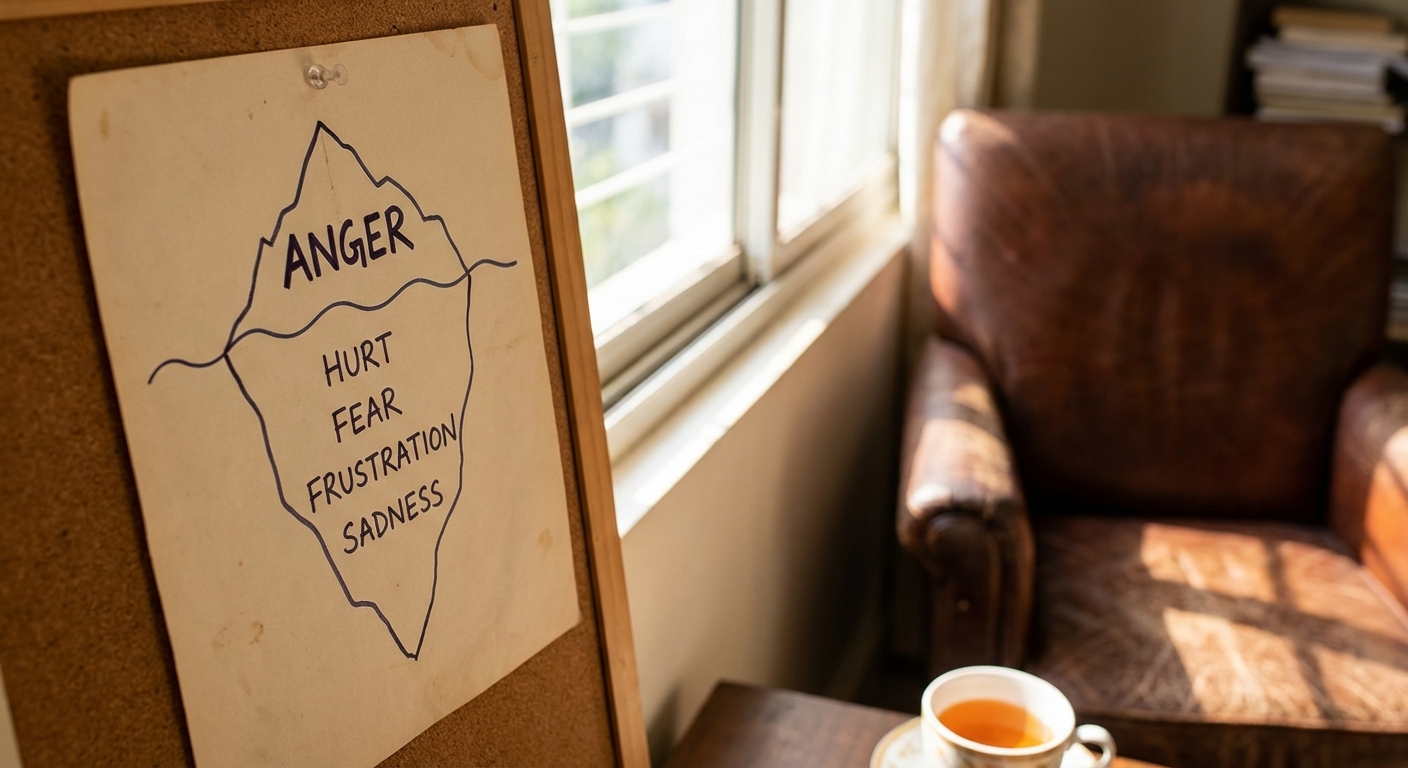
Consider Meera (name changed), a 45-year-old homemaker who came to me complaining about her constant irritation with her teenage daughter. "I snap at her for the smallest things," she admitted. "Leaving a glass on the table, coming home five minutes late. I know I'm being unreasonable, but I can't stop."
Through our sessions, we discovered that Meera's anger wasn't really about glasses or punctuality. Her children were growing up and becoming independent. Her role as a mother was shifting. Beneath her anger lay a profound fear of becoming irrelevant, of losing the close bond she once shared with her daughter. Once Meera understood this, she could address the real issue - and her relationship with her daughter transformed.
Recognizing Your Anger Patterns
Self-awareness is the foundation of anger management. I encourage my clients to become curious observers of their own anger. Consider these questions:
Physical signals: Where do you feel anger in your body? Many people describe tension in the jaw, clenched fists, heat rising to the face, or a tight chest. Vikram, whom I mentioned earlier, noticed his shoulders would rise toward his ears before an outburst.
Triggers: What situations consistently provoke your anger? Is it criticism? Feeling ignored? Traffic jams? Being kept waiting? Understanding your triggers helps you prepare for challenging situations.
Timing patterns: Are you more prone to anger at certain times? Many of my clients notice they are more irritable when hungry, tired, or stressed from work. In our fast-paced Hyderabad tech culture, I see many professionals whose anger issues are directly linked to sleep deprivation and overwork.
Family patterns: How was anger expressed in your childhood home? We often unconsciously replicate or react against patterns we witnessed growing up. Understanding this can be illuminating.

Practical Techniques for Managing Anger
Over fifteen years, I have refined a set of techniques that work consistently across different personalities and situations. Here are my most effective recommendations:
1. The STOP Technique
When you feel anger rising, remember STOP:
- S - Stop what you are doing
- T - Take three deep breaths
- O - Observe what you are feeling without judgment
- P - Proceed mindfully
2. The 6-Second Rule
Neurological research shows that the chemical surge of anger lasts approximately six seconds. When you feel intense anger, commit to waiting six seconds before speaking or acting. Count slowly, breathe deeply, and let the initial wave pass. You will be amazed at how different your response can be after this brief pause.
3. Physical Release
Anger is energy, and sometimes it needs a physical outlet. I recommend:
- A brisk walk (even around your office building)
- Squeezing a stress ball
- Progressive muscle relaxation
- Vigorous exercise when possible
4. The Reframe Practice
Much of our anger stems from how we interpret situations. Cognitive reframing involves consciously challenging our initial interpretations.
For example: Your colleague doesn't respond to your email for two days. Initial thought: "He's ignoring me. He doesn't respect my work." Reframe: "He might be overwhelmed with his own deadlines. His silence is about his situation, not my worth."
This doesn't mean making excuses for genuinely disrespectful behavior. It means giving ourselves more options before we react.
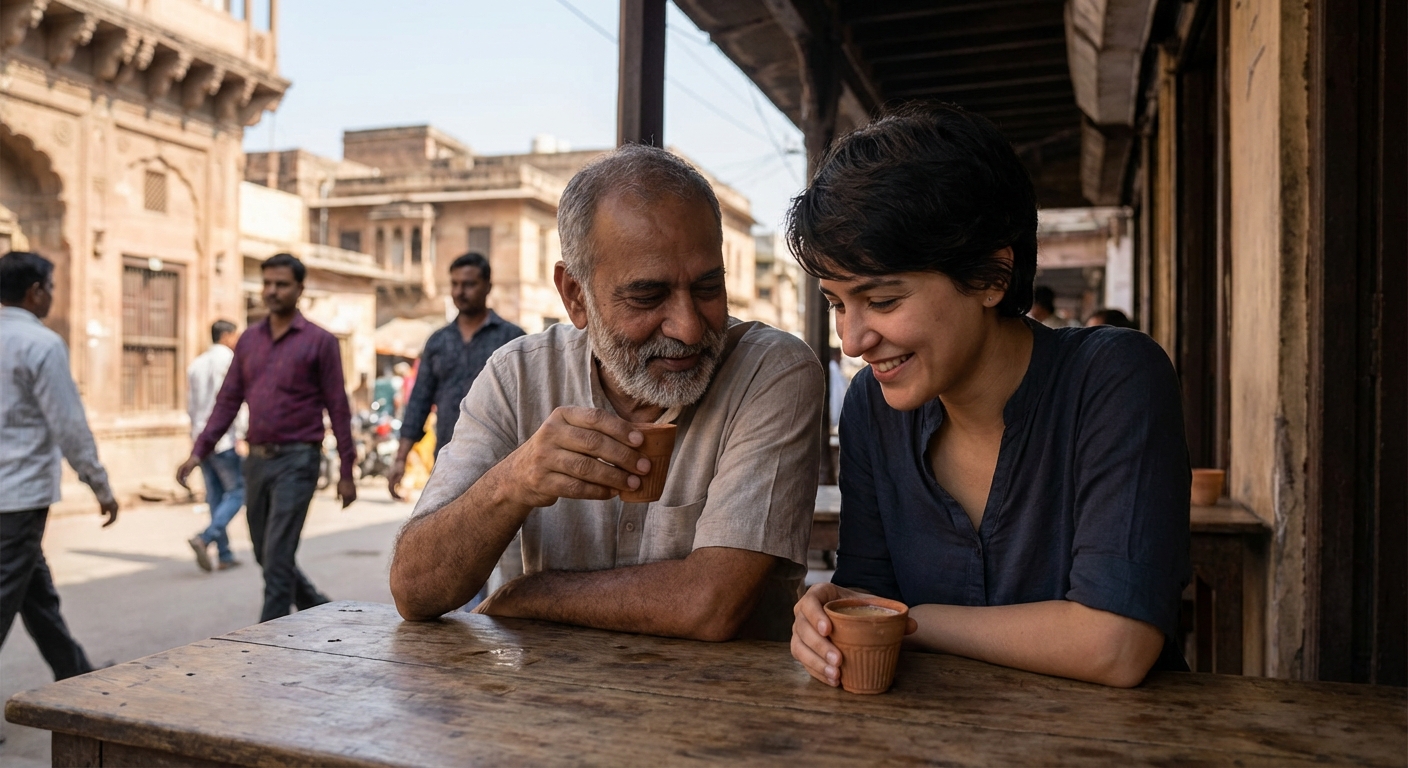
5. The "Chai Break" Conversation
This is a technique I developed specifically for the Indian context. When you need to have a difficult conversation, suggest having it over chai. There is something about the ritual of sharing tea - the warmth of the cup in your hands, the familiar comfort of the beverage - that naturally softens interactions.
"Let's discuss this over chai" has become a code phrase in many families I work with. It signals: "I want to talk about something important, but I want us both to be calm."
The Role of Communication
Much anger arises from unexpressed needs and poor communication. I teach my clients the art of assertive communication - expressing your feelings and needs clearly without aggression.
The formula I recommend: "When [specific behavior], I feel [emotion], because [reason]. I need [specific request]."
For example: "When meetings run past their scheduled time, I feel frustrated, because I have other commitments. I need us to respect the end time or reschedule properly."
This approach, grounded in Marshall Rosenberg's Nonviolent Communication framework, has transformed relationships for many of my clients.
Cultural Considerations: Anger in the Indian Context
In India, we navigate complex family dynamics, hierarchical workplaces, and social expectations that can make anger management particularly challenging. The joint family system, while supportive, can also create friction. The pressure to respect elders can lead to suppressed anger that explodes inappropriately.
I always remind my clients: respecting elders does not mean silencing your own needs. It is possible to disagree respectfully, to set boundaries lovingly, to express hurt without disrespect. Finding this balance is an art, and it often requires practice and patience.
Similarly, in our workplaces, the culture of long hours and constant availability can create chronic stress that manifests as irritability. If you find yourself frequently angry at work, it may be worth examining whether the environment itself is sustainable for your wellbeing.
When to Seek Professional Help
While these techniques help many people, some situations require professional support. Please consider reaching out to a mental health professional if:
- Your anger leads to physical aggression
- You experience anger most of the time
- Your relationships are consistently damaged by your anger
- You feel unable to control your responses despite trying
- Your anger is accompanied by other symptoms like depression or anxiety
A Final Thought
Returning to Vikram, the young man I mentioned at the beginning - after several months of work together, he shared something that moved me deeply. "Sir, I still feel angry sometimes," he said. "But now I understand my anger. I can feel it coming, and I can choose what to do with it. I don't feel controlled by it anymore."
This is my hope for everyone reading this article. Not that you will never feel angry - that would be neither realistic nor healthy. But that you will develop a new relationship with this powerful emotion. That you will see it as information rather than a verdict. That you will learn to pause, breathe, and choose your response.
Anger, when understood and channeled well, can be a force for positive change. It can motivate us to address injustice, to set necessary boundaries, to protect what matters. The goal is not to eliminate anger but to master it - to make it work for you rather than against you.
If you are struggling with anger and would like support, I invite you to reach out. Whether you are in Hyderabad or connecting virtually from elsewhere, my practice offers a safe, non-judgmental space to explore these challenges and develop personalized strategies for emotional regulation.
Remember: seeking help is not a sign of weakness. It is an act of wisdom and self-compassion.
---Ready to take the next step? If you would like to discuss anger management or any other mental health concerns, I welcome you to schedule a consultation at my Hyderabad practice. You can reach me through the contact form on this website, call my clinic directly, or book an appointment online. I offer both in-person sessions in Hyderabad and virtual consultations for those who prefer the convenience of online therapy.
Your wellbeing matters. Let us work together toward a calmer, more fulfilling life.
---About the Author
Sudheer Sandra is a licensed psychologist and career counselor based in Hyderabad, India, with over 15 years of experience helping individuals navigate life's challenges. He specializes in emotional regulation, stress management, career guidance, and personal development. Sudheer's warm, practical approach combines evidence-based psychological techniques with cultural sensitivity, making therapy accessible and effective for his diverse clientele. He is passionate about reducing the stigma around mental health in India and empowering people to live more balanced, fulfilling lives. When not in his practice, Sudheer conducts workshops for corporate clients and educational institutions across Telangana and Andhra Pradesh.
Connect with Sudheer Sandra for consultations, workshops, or speaking engagements.