Helping Your Teenager Navigate Academic Pressure: A Parent's Guide


Last month, a mother sat across from me in my Hyderabad clinic, her eyes filled with worry. "Sudheer sir," she said, "my daughter used to love learning. She would read books for hours, ask endless questions about the world. Now she is in Class 11, and all I see is a tired, anxious child who cries before every test. Where did we go wrong?"
This question haunts many parents who come to me for counseling. After fifteen years of working with families across Hyderabad, I can tell you with certainty: you have not gone wrong. What you are witnessing is the collision between a curious young mind and an education system that often prioritizes marks over meaning.
In this guide, I want to share what I have learned from thousands of conversations with teenagers and their parents. My goal is not to give you a magic formula—there is none—but to offer you practical, psychologically-grounded strategies that can transform your home from a pressure cooker into a sanctuary of support.
Understanding the Pressure Landscape
Before we discuss solutions, we must understand what our children are facing. The academic pressure on Indian teenagers today is unprecedented. Consider this: a Class 10 student preparing for board exams is simultaneously expected to excel in school tests, attend coaching classes, complete homework from multiple sources, and often begin preparation for competitive entrance exams—all while navigating the emotional turbulence of adolescence.
I remember counseling a bright young man named Arjun (name changed) who was preparing for JEE. When I asked him to describe his daily schedule, he told me he woke at 5 AM, attended school until 3 PM, went to coaching until 8 PM, and then studied until midnight. He had been following this routine for two years. "Sir, I don't remember the last time I laughed with my friends," he told me quietly.
This is not education. This is endurance training, and our children's minds and bodies are paying the price.
The Three Sources of Academic Pressure
In my practice, I have identified three primary sources of pressure that affect our teenagers:
Systemic Pressure: Our education system's emphasis on high-stakes examinations creates an environment where a single test can determine years of future opportunities. Board exam percentages, JEE ranks, NEET scores—these numbers carry enormous weight.
Social Pressure: Relatives asking about marks at family gatherings, comparisons with the neighbor's child who got into IIT, WhatsApp groups where parents share their children's achievements—the social ecosystem constantly reinforces the message that academic performance equals worth.
Internalized Pressure: Perhaps most concerning is when children absorb these external pressures and make them their own. They begin to believe that their value as human beings depends on their academic performance.
Recognizing the Warning Signs
As parents, you are the first line of defense in protecting your child's mental health. Learning to recognize early warning signs can help you intervene before problems escalate.
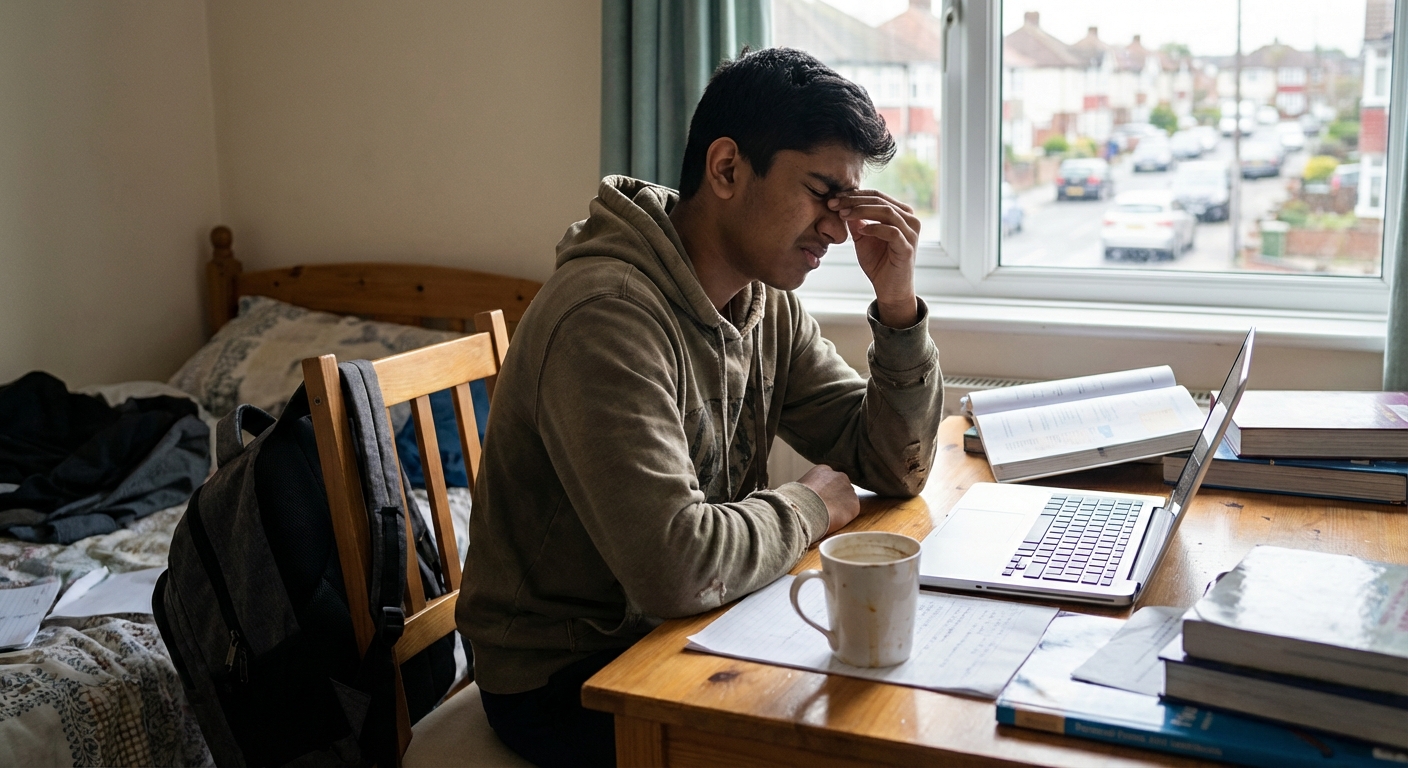
Physical Signs
- Changes in sleep patterns (sleeping too much or too little)
- Frequent headaches, stomach aches, or other unexplained physical complaints
- Changes in appetite or weight
- Fatigue that does not improve with rest
Emotional and Behavioral Signs
- Increased irritability or angry outbursts
- Withdrawal from family and friends
- Loss of interest in activities they once enjoyed
- Excessive worry about academic performance
- Perfectionism that leads to procrastination
- Statements suggesting hopelessness or worthlessness
Practical Strategies for Parents
Now, let me share the strategies that I have seen work repeatedly in my practice. These are not theoretical concepts but practical approaches that families have implemented successfully.
1. Reframe Your Definition of Success
This is the foundation upon which everything else rests. As long as we define success narrowly—as marks, ranks, and admissions to prestigious institutions—we will continue to sacrifice our children's wellbeing on the altar of achievement.
I am not suggesting that academic performance does not matter. It does. But it is one dimension of a multidimensional life. In my counseling sessions, I often ask parents: "Twenty years from now, what do you want your child to remember about their school years? Their percentage in Class 12, or that they had a home where they felt loved and supported?"
Start conversations with your teenager about their interests, dreams, and values—conversations that have nothing to do with studies. Show them through your words and actions that your love is unconditional, not contingent on their report card.
2. Create a Sustainable Study Environment
Many well-meaning parents inadvertently create environments that increase rather than decrease stress. Here are some evidence-based adjustments:
Respect biological rhythms: Adolescent brains are wired differently. Teenagers naturally feel alert later in the evening and need more sleep than adults. Forcing your child to wake at 4 AM to study when their brain is not ready to function is counterproductive. Work with their natural rhythms, not against them.
Build in breaks: The brain cannot focus effectively for hours on end. Encourage the Pomodoro technique—25-30 minutes of focused study followed by a 5-minute break, with a longer break every two hours.
Protect sleep: I cannot emphasize this enough. Sleep is when the brain consolidates learning. A well-rested student who studied for six hours will outperform an exhausted student who studied for ten hours. Aim for 8-9 hours of sleep for teenagers.

3. Be a Emotional Container, Not a Pressure Multiplier
In psychology, we use the concept of "containment"—the ability of a caregiver to receive a child's difficult emotions, process them, and return them in a more manageable form. Your teenager needs you to be this container.
When your child comes home stressed about an upcoming exam, resist the urge to immediately problem-solve or, worse, add to their anxiety by reminding them of the stakes. Instead:
- Listen without interrupting
- Validate their feelings ("This sounds really overwhelming")
- Ask what kind of support they need
- Offer reassurance about your unconditional love
4. Model Healthy Coping
Children learn more from what we do than what we say. How do you handle stress in your own life? Do you take breaks? Do you have hobbies? Do you talk about your struggles openly?
If your response to work pressure is to work longer hours, skip meals, and sacrifice sleep, your child is watching and learning. Show them that taking care of oneself is not weakness—it is wisdom.
5. Maintain Family Rituals and Joy
Academic pressure has a way of consuming everything in its path. Families tell me they have stopped going on outings, stopped celebrating small occasions, stopped having dinner together—all in service of "focus on studies."
This is a mistake. Family rituals and moments of joy are not distractions from success; they are the foundation of resilience. A child who has happy memories and strong family bonds has something to fall back on when times get hard.
Protect at least one weekly family ritual—whether it is Sunday lunch together, an evening walk, or watching a favorite show. These moments tell your child: "You matter to us beyond your academic performance."

6. Know When to Seek Professional Help
There is immense strength in recognizing when a situation requires professional support. Please consider reaching out to a mental health professional if:
- Your child expresses thoughts of self-harm or suicide
- Anxiety or depression is interfering with daily functioning
- Your child has become completely withdrawn
- There is a sudden, significant change in behavior
- Family conflicts have become frequent and intense
- You feel overwhelmed and unsure how to help
A Message of Hope
I want to end with something I tell every parent who walks into my clinic: Your child is not a machine built to produce marks. They are a human being—complex, evolving, and infinitely valuable regardless of any number on any scorecard.
The teenage years are hard, and the Indian academic environment makes them harder. But I have seen hundreds of families navigate this journey successfully. The children who thrive are not always the ones with the highest IQs or the most coaching classes. They are the ones who have parents who showed up for them—not as taskmasters, but as safe harbors.

Your presence, your patience, and your unconditional love are the greatest gifts you can give your child during these years. Marks can be improved, exams can be retaken, but the foundation of trust and support you build now will last a lifetime.
Taking the Next Step
If you are struggling to support your teenager through academic pressure, or if you are noticing warning signs that concern you, I invite you to reach out. At my practice in Hyderabad, I offer individual counseling for teenagers, parent guidance sessions, and family therapy—all designed to help families navigate these challenges together.
Remember, seeking help is not a sign of failure. It is a sign that you love your child enough to give them every possible resource to succeed—not just academically, but in life.
---Sudheer Sandra is a licensed psychologist and career counselor based in Hyderabad, India, with over 15 years of experience helping teenagers and families navigate academic pressure, career decisions, and mental health challenges. He holds advanced certifications in adolescent psychology and cognitive behavioral therapy.