Coping with Grief and Loss: A Compassionate Guide to Healing

In my fifteen years as a psychologist and counselor in Hyderabad, I have sat across from hundreds of individuals whose worlds had been turned upside down by loss. A mother who lost her son in an accident. A young professional whose marriage fell apart. A middle-aged man who lost his job of twenty years. Each story is unique, yet they all share a common thread: the profound, sometimes overwhelming experience of grief.
If you are reading this, perhaps you too are navigating the difficult terrain of loss. I want you to know, first and foremost, that you are not alone. Grief is not a sign of weakness—it is a testament to your capacity for love, connection, and meaning. In this article, I will share what I have learned from both psychological research and the sacred space of my counseling room about how we can move through grief with compassion for ourselves and eventually find our way back to wholeness.
Understanding Grief: More Than Just Sadness
One of the first things I explain to my clients is that grief is far more complex than simple sadness. It encompasses a whole constellation of emotions—anger, guilt, confusion, numbness, even moments of unexpected relief or peace. All of these are normal.
I remember working with Lakshmi (name changed), a 45-year-old teacher who came to me three months after losing her mother. "I feel so angry all the time," she confessed, tears streaming down her face. "What kind of daughter feels angry at her dead mother?" I assured her that anger is one of the most common—and most misunderstood—aspects of grief. She was not angry at her mother; she was angry at the circumstances, at the unfairness, at the void left behind.
The Many Faces of Loss
When we think of grief, we often think only of death. But loss takes many forms:
- Loss of a loved one through death, separation, or estrangement
- Loss of a relationship through divorce, breakup, or friendship ending
- Loss of identity through job loss, retirement, or major life transitions
- Loss of health through illness or disability
- Loss of dreams when plans and aspirations do not materialize
- Loss of security through financial difficulties or displacement
The Journey Through Grief: Not Stages, But Waves
You may have heard of the "five stages of grief"—denial, anger, bargaining, depression, and acceptance. While this model, developed by Elisabeth Kubler-Ross, has been helpful for many, I want to offer a more nuanced perspective that I find resonates better with my clients' experiences.
Grief is not a linear progression through neat stages. It is more like waves in the ocean. Some days, the waves are gentle, and you can wade through them. Other days, a massive wave crashes over you without warning, leaving you gasping for breath. And this is perfectly normal.

What Research Tells Us
Modern psychological research, particularly the Dual Process Model developed by Stroebe and Schut, suggests that healthy grieving involves oscillating between two orientations:
1. Loss-oriented coping: Focusing on the loss itself, processing painful emotions, and working through grief 2. Restoration-oriented coping: Attending to life changes, developing new roles and identities, and taking breaks from grief
This means that if you find yourself laughing at a friend's joke just days after a loss, you are not betraying your grief. Your mind is naturally seeking balance. Similarly, if you break down months later when you thought you were "over it," you are simply experiencing a natural return to processing your loss.
Practical Strategies for Navigating Grief
Over the years, I have developed and refined several approaches that have helped my clients navigate their grief. Here are the strategies I most frequently recommend:
1. Allow Yourself to Feel
In our culture, we often receive messages—sometimes subtle, sometimes explicit—that we should "be strong" or "move on" quickly. I have had clients tell me their relatives advised them to "stop crying" within days of losing a spouse.
I encourage you to resist this pressure. Grief that is suppressed does not disappear; it goes underground, often emerging later as anxiety, depression, or physical illness. Give yourself permission to feel whatever arises, without judgment.
Practical tip: Set aside a specific time each day—even just 15 minutes—as your "grief time." During this period, allow yourself to fully feel your emotions. Write in a journal, look at photographs, or simply sit with your feelings. This contained approach can help you process grief without it overwhelming your entire day.
2. Maintain Connection
Isolation is one of the greatest risks during grief. Yet many of us withdraw, either because we do not want to burden others or because we lack the energy for social interaction.
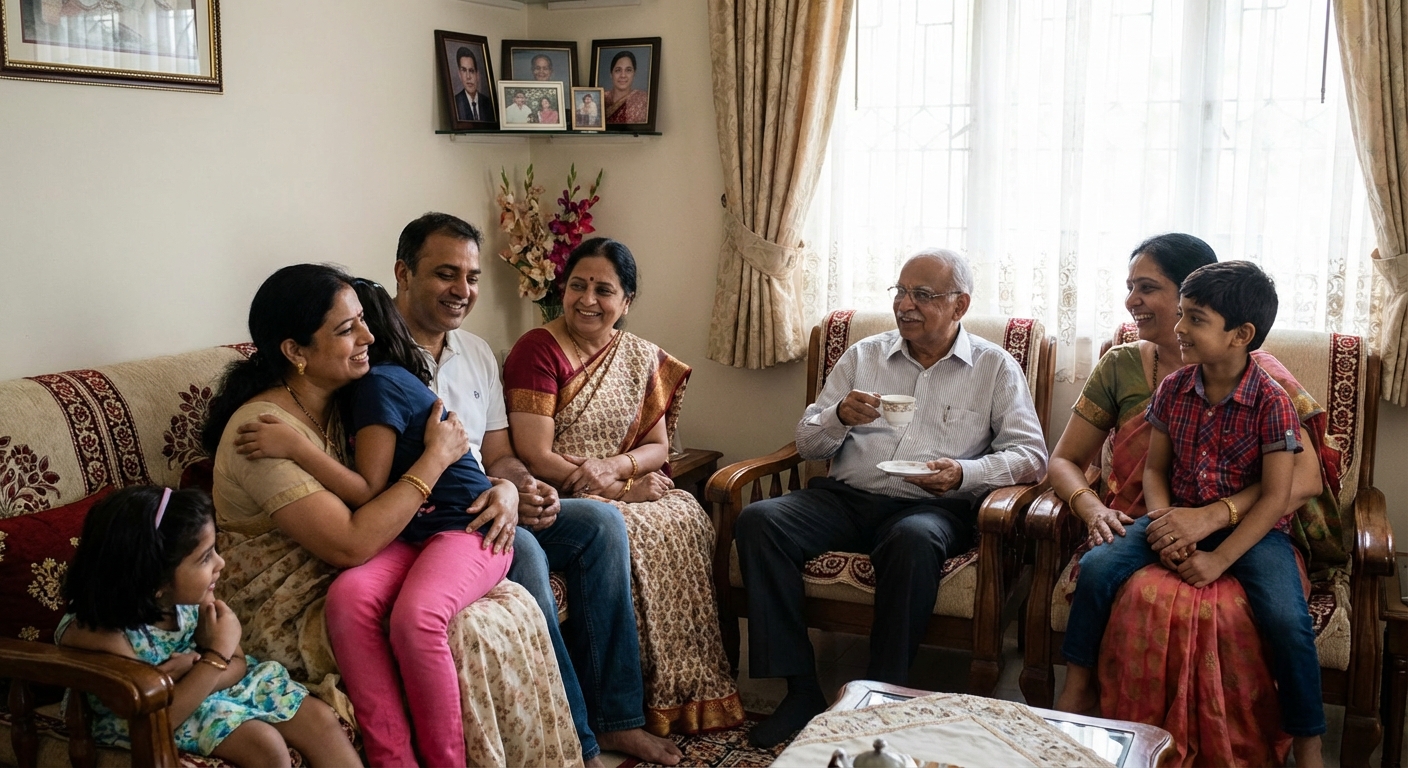
I recall working with Rajesh, a 52-year-old businessman who lost his wife to cancer. For months, he refused to see friends or attend family gatherings. "What would I even talk about?" he asked me. Slowly, we worked on rebuilding his social connections—starting with just one trusted friend for brief visits. The healing that came from these connections was profound.
Practical tip: Identify two or three people you trust and let them know specifically how they can help. "I need someone to sit with me" or "I would appreciate help with grocery shopping" is more actionable than a general "I am struggling."
3. Take Care of Your Physical Self
Grief is not just an emotional experience—it lives in our bodies. Research has shown that grief can affect our immune system, sleep patterns, appetite, and even cardiovascular health.
During acute grief, basic self-care becomes essential but often feels impossible. I encourage my clients to focus on the fundamentals:
- Sleep: Maintain a regular sleep schedule, even if sleep is difficult
- Nutrition: Eat regular meals, even small ones
- Movement: Gentle exercise, even a short walk, can help regulate emotions
- Breath: Practice deep breathing when overwhelmed
4. Create Meaningful Rituals
Our Indian culture is rich with rituals around death and mourning—shraddha ceremonies, prayer meetings, and annual remembrances. These rituals serve an important psychological function: they give structure to our grief and connect us to something larger than ourselves.
But rituals need not be only religious or traditional. I encourage clients to create personal rituals that feel meaningful to them:
- Lighting a diya each evening in memory of a loved one
- Writing letters to the person you have lost
- Creating a memory box or photo album
- Planting a tree or garden in their honor
- Donating to a cause they cared about on significant dates
5. Seek Professional Support When Needed
There is immense strength in recognizing when you need help. Professional support—whether from a psychologist, counselor, or psychiatrist—can provide tools and perspectives that friends and family cannot.

I particularly recommend seeking professional help if:
- Your grief is significantly interfering with work, relationships, or daily functioning after several months
- You are experiencing thoughts of self-harm or suicide
- You are using alcohol or substances to cope
- You feel "stuck" in your grief with no sense of movement
- You have experienced multiple losses or complicated circumstances around the loss
Special Considerations: Grief in the Indian Context
Our cultural context shapes how we experience and express grief. In my practice, I have observed several patterns worth addressing:
Gender and Grief
Men in our society are often expected to be "strong" and manage practical matters during times of loss, leaving little room for their own grief. Women may be given more permission to grieve openly but can face pressure to "move on" for the sake of the family.
I encourage all my clients, regardless of gender, to find safe spaces to process their grief authentically.
Disenfranchised Grief
Some losses are not fully acknowledged by society—the end of a live-in relationship, the loss of a pet, grief after abortion or miscarriage, or mourning someone from whom you were estranged. This "disenfranchised grief" can be particularly painful because it lacks social support and validation.
If your grief falls into this category, please know that your loss is real and your pain is valid, regardless of whether others recognize it.
Collective and Intergenerational Grief
Sometimes we carry grief that extends beyond our individual experience—grief for what our families or communities have endured, grief passed down through generations. This collective grief is particularly relevant in contexts of displacement, partition, or community trauma.
The Gift Within Grief
I want to close with something that may seem paradoxical: grief, as painful as it is, can also be a teacher.
Many of my clients, as they move through their grief, discover unexpected gifts—deeper appreciation for life, strengthened relationships, clearer priorities, and greater compassion for others who suffer. This does not mean grief is "good" or that loss is necessary for growth. It simply means that even in our darkest moments, transformation is possible.

A client once told me, months after the death of her father, "I think I understand now why he lived the way he did. And I am trying to live that way too—with more presence, more gratitude." Her father's death had not been negated or made worthwhile by this insight. But alongside her grief, something meaningful had grown.
Moving Forward: Not Moving On
I prefer the phrase "moving forward" to "moving on." Moving on implies leaving something behind. But we do not leave our loved ones behind, nor do we leave behind the parts of ourselves that were shaped by what we have lost. We integrate these experiences into who we are becoming.
Healing from grief does not mean forgetting. It does not mean the pain disappears entirely. It means learning to carry your loss in a way that allows you to also carry love, joy, and purpose.
If you are in the midst of grief right now, be patient with yourself. Healing is not a destination but a journey—one that unfolds in its own time, in its own way. Trust that you have within you the capacity to survive this, even when it does not feel that way.
And if you need support along the way, please reach out. Whether to trusted loved ones, support groups, or professional counselors, you do not have to walk this path alone.
---If you are struggling with grief or loss and would like professional support, I invite you to reach out to my practice in Hyderabad. Together, we can create a safe space for you to process your grief and find your path toward healing.
---Sudheer Sandra is a licensed psychologist and career counselor based in Hyderabad, India, with over 15 years of experience helping individuals navigate life's challenges. His practice focuses on mental health, grief counseling, career transitions, and personal development. He believes in a compassionate, culturally sensitive approach that honors each person's unique journey toward wellbeing.