Conquering Exam Stress: Psychological Strategies for Students

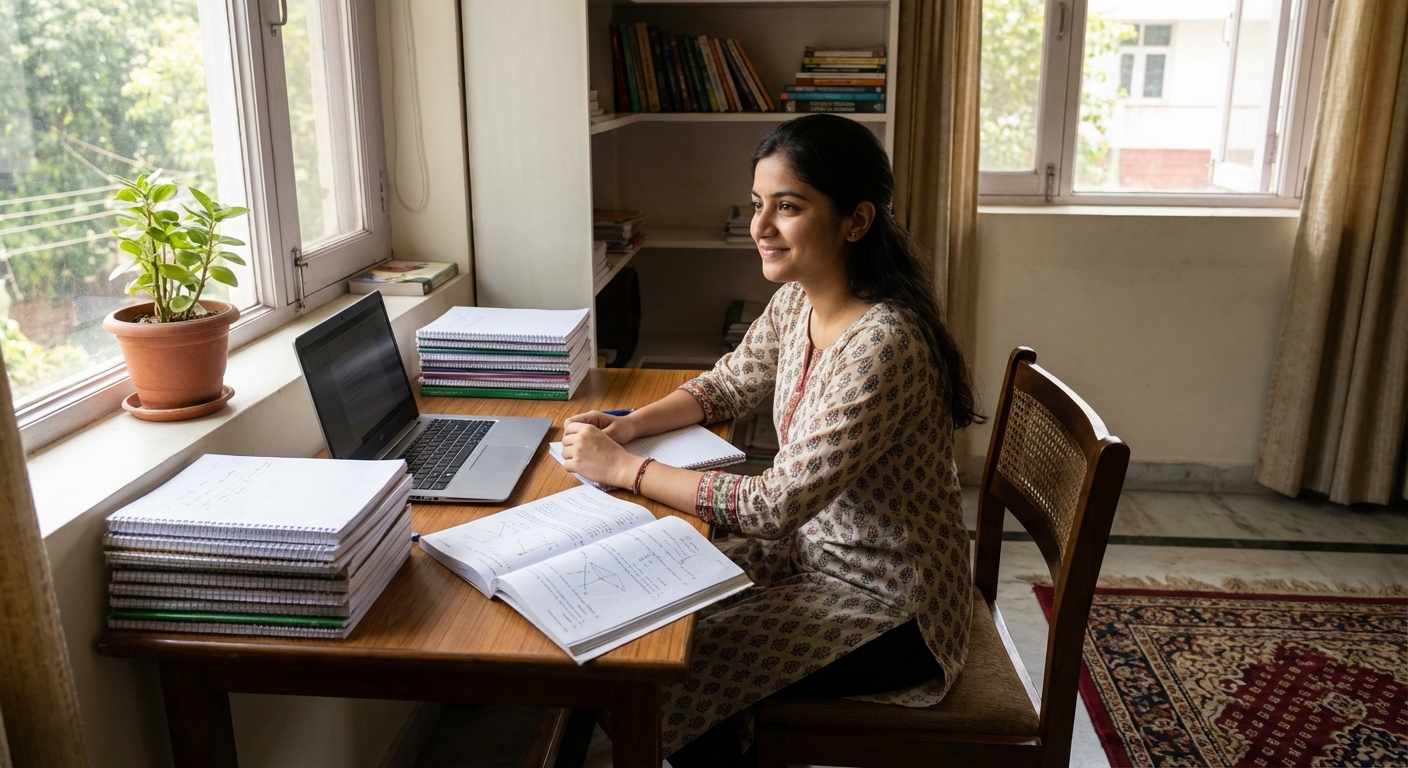
Last month, a young woman named Priya (name changed) walked into my Hyderabad office looking utterly exhausted. She was preparing for NEET, sleeping barely four hours a night, and had convinced herself that anything less than a top rank would make her a failure in her parents' eyes. "Sir, I cannot even remember what I studied yesterday," she told me, her voice trembling. "My mind goes blank the moment I sit down with my books."
Priya's story is not unique. In my fifteen years as a psychologist and career counselor, I have worked with hundreds of students who find themselves caught in this same painful cycle of pressure, anxiety, and diminishing returns. Whether it is Class 10 boards, Class 12 examinations, JEE, NEET, or competitive entrance tests, the experience of exam stress has become almost universal among Indian students.
But here is what I want you to understand from the very beginning: exam stress is not a character flaw. It is not a sign of weakness. It is a natural psychological response that, when properly understood and managed, can actually be channeled into better performance. Today, I want to share with you the strategies that have helped my students not just survive their exams, but genuinely thrive.
Understanding What Happens in Your Brain Under Stress
Before we discuss solutions, let us understand what is actually happening when you feel overwhelmed. When your brain perceives a threat, whether it is a tiger or a looming board exam, it activates what scientists call the hypothalamic-pituitary-adrenal (HPA) axis. This triggers the release of cortisol and adrenaline, hormones designed to help you fight or flee from danger.
In small doses, this stress response actually enhances your focus and memory. Research published in the journal Neurobiology of Learning and Memory shows that moderate stress can improve cognitive performance. This is why some students report studying best under a bit of pressure.
The problem arises when stress becomes chronic. When cortisol levels remain elevated for extended periods, it actually impairs the hippocampus, the brain region crucial for forming new memories. This is exactly what Priya was experiencing. Her constant anxiety was literally making it harder for her brain to retain information.
Understanding this biology is empowering because it tells us something important: managing stress is not about eliminating it entirely. It is about keeping it in that optimal zone where it helps rather than hinders.
The Myth of "Just Study Harder"
One of the most damaging pieces of advice I hear parents give their children is simply to "study more." I understand where this comes from. Our culture deeply values hard work and sacrifice. But here is what the research tells us: beyond a certain point, more hours of studying actually decrease performance.
A landmark study by the American Psychological Association found that students who took regular breaks and maintained healthy sleep schedules significantly outperformed those who engaged in marathon study sessions. Your brain needs time to consolidate memories, and this happens primarily during sleep and rest.
I remember working with a boy named Arjun (name changed) who was preparing for JEE Advanced. His parents had hired tutors for every subject, scheduled his day from 5 AM to 11 PM, and eliminated all "distractions" including time with friends and any form of recreation. When he came to me, his practice test scores had actually been declining for three months despite the increased effort.
We worked together to restructure his schedule, incorporating deliberate rest periods, physical activity, and even time for his hobby of playing guitar. His parents were initially resistant. "How can he waste time on guitar when the exam is so close?" his father asked me. But within six weeks, Arjun's scores began improving, and more importantly, he reported actually understanding concepts rather than just memorizing them.

Practical Strategies That Work
Let me share the specific techniques I teach my students. These are not abstract theories but practical tools you can start using today.
1. The 50-10 Study Rhythm
Structure your study sessions in 50-minute focused blocks followed by 10-minute breaks. During your 50 minutes, eliminate all distractions. Put your phone in another room. During your 10 minutes, step away from your desk entirely. Stretch, walk around, drink water. This rhythm works with your brain's natural attention cycles rather than against them.
2. Strategic Deep Breathing
When you feel anxiety rising, try the 4-7-8 breathing technique developed by Dr. Andrew Weil. Inhale quietly through your nose for 4 seconds. Hold your breath for 7 seconds. Exhale completely through your mouth for 8 seconds. This activates your parasympathetic nervous system, directly counteracting the stress response.
I teach this to every student I work with, and I have seen it make a remarkable difference. One student told me she used it right before opening her CBSE physics paper and felt her racing heart slow down within a minute.
3. Cognitive Reframing
Much of exam stress comes not from the exams themselves but from the stories we tell ourselves about them. "If I do not get into IIT, my life is over." "My parents will be ashamed of me." "Everyone will think I am stupid."
These thoughts feel absolutely true in the moment, but they are cognitive distortions. In therapy, we work on identifying these thoughts and examining them critically. Is it really true that your life will be over? Has anyone's life actually been over because of exam results? When you look at this thought rationally, what evidence supports or contradicts it?
Learning to catch these thoughts and reframe them more realistically can dramatically reduce anxiety.
4. Physical Movement
Exercise is one of the most powerful anti-anxiety interventions we have. It does not need to be intense. Even a 20-minute walk triggers the release of endorphins and helps clear cortisol from your system. I strongly encourage my students to maintain some form of physical activity even during peak exam preparation.
5. Sleep Protection
This is non-negotiable. Your brain consolidates memories during sleep, particularly during the deeper stages of the sleep cycle. Cutting sleep to study more is like trying to fill a bucket with a hole in it. Aim for 7-8 hours of sleep, and protect this time fiercely. The studying you do while well-rested will be far more effective than extra hours spent in an exhausted fog.
A Word to Parents
I want to address parents directly because you play such a crucial role in your child's psychological wellbeing during exam season.
I know you want the best for your children. I know that in the competitive Indian environment, you worry about their futures. These feelings come from love. But please understand that excessive pressure often backfires. When children feel that parental love is conditional on their performance, their anxiety increases, and paradoxically, their performance often suffers.
The most helpful thing you can do is to communicate unconditional support. Let your child know that while you want them to do their best, your love and pride in them does not depend on a score or a rank. Create a home environment that supports rest and balance, not just endless studying. And please, if you notice signs of severe stress, anxiety, or depression, do not hesitate to seek professional help.

When to Seek Professional Help
Some level of exam stress is normal. But certain signs indicate that professional support may be needed:
- Persistent sleep disturbances lasting more than two weeks
- Loss of appetite or significant changes in eating patterns
- Feelings of hopelessness or worthlessness
- Panic attacks or severe anxiety episodes
- Thoughts of self-harm
- Complete inability to concentrate despite adequate rest
- Physical symptoms like persistent headaches or stomach problems with no medical cause
The Bigger Picture
As I conclude, I want to leave you with a perspective that I share with every student who walks into my office.
Examinations are important. I will not minimize that. In our current system, they open doors to opportunities. But they are not the entirety of your worth as a human being. They are not the sole determinant of your future success or happiness. I have counseled students who topped their exams and struggled in their careers, and others who had modest academic records but went on to build remarkable lives.
Your mental health, your relationships, your character, your ability to adapt and learn throughout life, these matter far more in the long run than any single examination score.
So yes, prepare well. Use the strategies I have shared. Work hard and work smart. But also be kind to yourself. Take care of your mind and body. Remember that you are a complete human being, not just an exam-taking machine.

Take the First Step
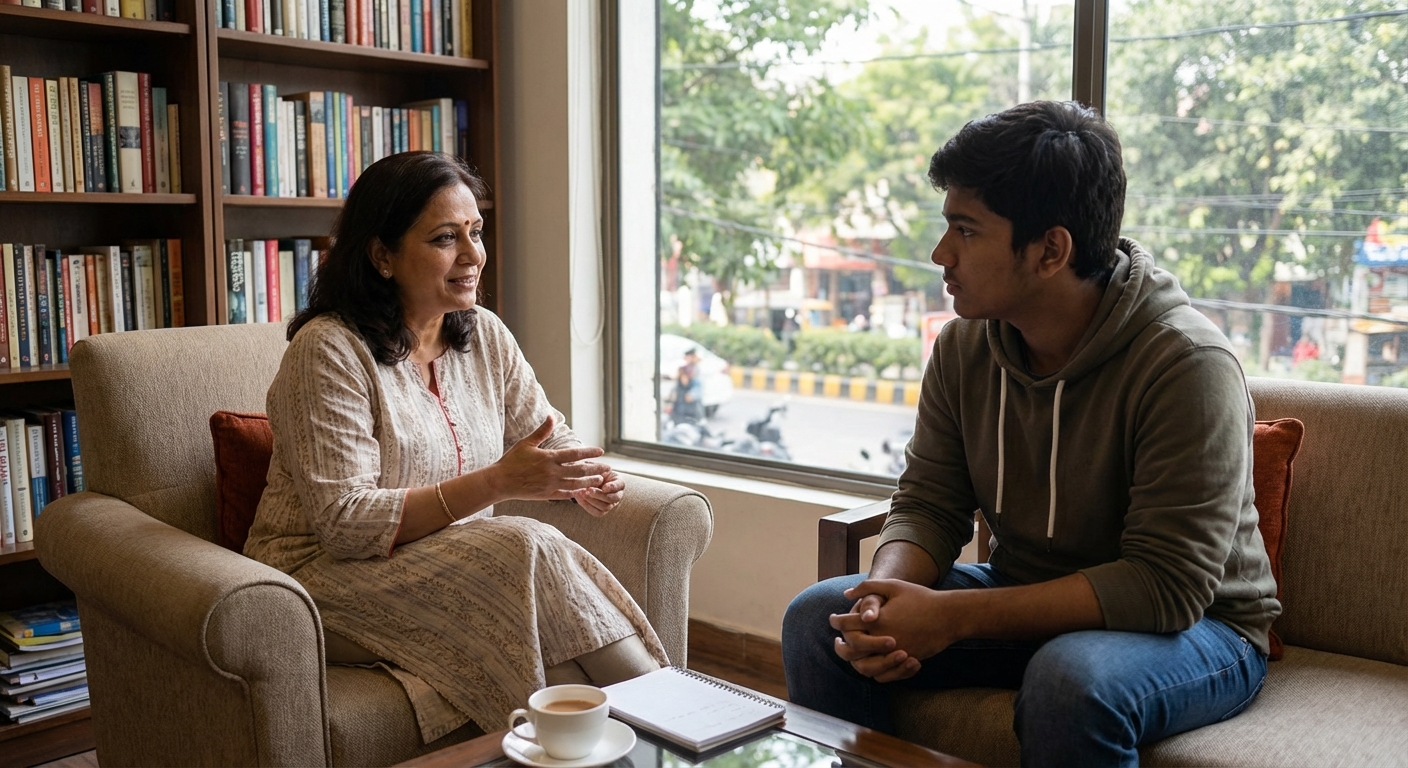
If you are a student struggling with exam stress, or a parent watching your child suffer, I want you to know that support is available. In my fifteen years of practice in Hyderabad, I have helped hundreds of students develop healthier relationships with academic pressure and discover strategies that work for their unique situations.
Every student is different, and what works for one may not work for another. That is why personalized counseling can be so valuable. We can work together to understand your specific stress patterns, identify the thoughts and behaviors that may be holding you back, and develop a customized plan to help you perform at your best while maintaining your wellbeing.
I invite you to reach out for a consultation. Whether you need a single session to learn some coping strategies or ongoing support through your exam preparation journey, I am here to help. You do not have to face this alone.
---Sudheer Sandra is a licensed psychologist and career counselor based in Hyderabad, India, with over 15 years of experience helping students, professionals, and families navigate life's challenges. He specializes in academic stress, career guidance, anxiety management, and adolescent counseling. He is passionate about making mental health support accessible and removing the stigma around seeking help.