The College Transition: A Psychological Guide for Students and Parents


Every August and September, I witness a familiar scene at my Hyderabad practice: parents sitting across from me, their eyes reflecting a mixture of pride and anxiety, speaking about their child who has just left for college. Sometimes, it is the students themselves, calling from their hostel rooms in distant cities, struggling to articulate a homesickness they did not anticipate. After fifteen years of working with families navigating this transition, I have come to understand that leaving home for college is one of the most significant psychological milestones in a young person's life—and one of the most challenging periods for their parents.
Understanding the Psychological Significance of Leaving Home
The transition to college represents far more than a change of address. Psychologically, it marks the beginning of what developmental theorists call "individuation"—the process of becoming a separate, autonomous adult. For eighteen years, your identity has been shaped within the context of your family. Suddenly, you are tasked with answering the question: "Who am I, apart from my parents?"
I recall working with Priya, a bright student from Secunderabad who secured admission to a prestigious engineering college in Chennai. She had always been confident and academically accomplished. Yet, within weeks of arriving at college, she found herself paralyzed by anxiety. "I do not know who I am here," she told me during one of our video sessions. "At home, I was Priya—the topper, the responsible daughter, the one everyone depended on. Here, I am just one of hundreds of bright students."
Priya's experience illustrates a fundamental truth: the college transition challenges our very sense of self. This is not a sign of weakness; it is a normal and necessary part of psychological development.
Common Challenges for First-Year Students
Homesickness: More Than Missing Home
Homesickness is perhaps the most universal experience among first-year students, yet it remains poorly understood. It is not simply about missing your mother's cooking or your childhood bedroom. Homesickness is grief—grief for the familiar rhythms of life, the effortless belonging of home, and the secure identity you had built over eighteen years.
Research suggests that approximately 70% of first-year students experience significant homesickness during their first semester. In my practice, I have observed that students who acknowledge and process this grief tend to adjust better than those who suppress it or feel ashamed of it.
Academic Pressure: The Weight of Expectations
In the Indian context, academic pressure takes on particular intensity. The journey to IITs, NITs, AIIMS, and other prestigious institutions often involves years of coaching, lakhs of rupees in investment, and the hopes of entire extended families. When students arrive at these institutions, they carry not just their own ambitions but the weight of collective expectation.
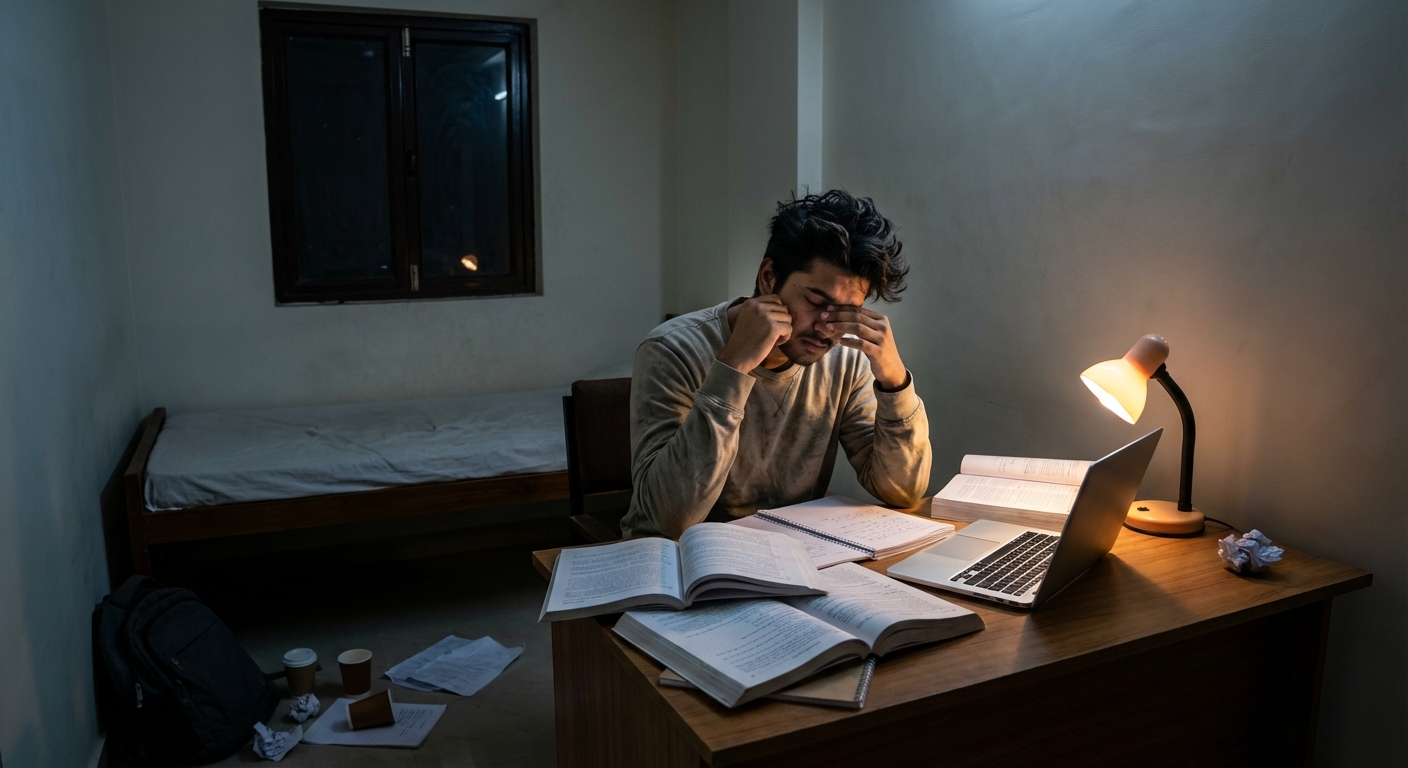
Arjun came to see me after his first semester at IIT Bombay. He had been among the top rankers in his JEE batch, accustomed to being the best. At IIT, he found himself struggling to keep up, his first semester grades placing him in the middle of his class. "I have never been average at anything," he said, his voice breaking. "My parents sacrificed everything for my coaching. How can I tell them I am just ordinary here?"
What Arjun needed to understand—and what many students need to hear—is that being surrounded by equally talented peers is not a failure; it is an opportunity for growth that was not possible in environments where you were always at the top.
Social Adjustment: Building a New World
Humans are fundamentally social creatures, and our wellbeing depends significantly on our sense of belonging. When students leave home, they leave behind established social networks built over years. Building new friendships in an unfamiliar environment, while also managing academic demands, can feel overwhelming.
This challenge is particularly acute for students who were introverted or had small, close-knit friend groups at home. The hostel environment, with its constant social interaction, can feel exhausting rather than energizing for such students.
Practical Strategies for Students
Embrace the Discomfort of Growth
The anxiety and uncertainty you feel are not signs that something is wrong. They are signs that you are growing. Allow yourself to feel uncomfortable without immediately trying to escape those feelings. Psychologists call this "distress tolerance"—the ability to sit with difficult emotions without being overwhelmed by them.
Build Connection Gradually
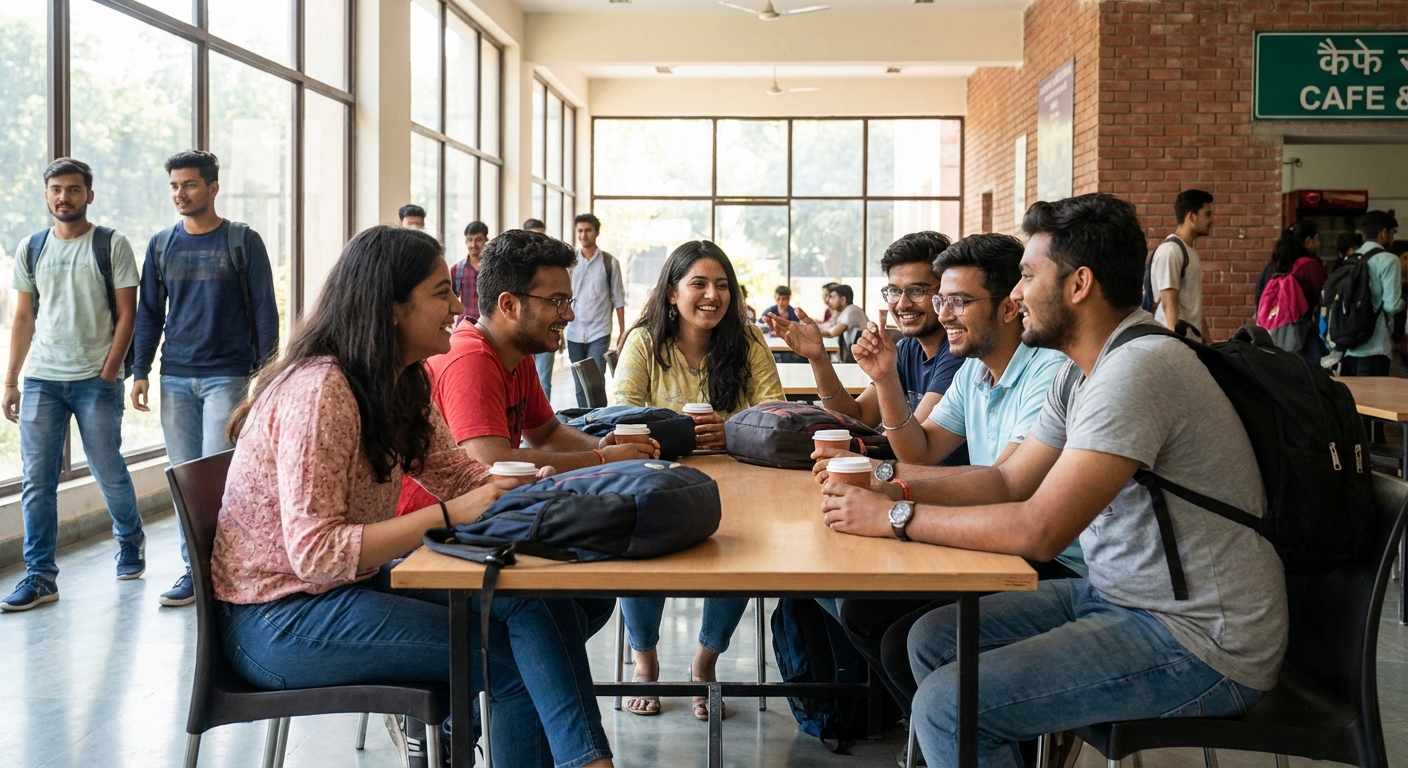
You do not need to become best friends with everyone in your hostel by the end of the first week. Meaningful friendships develop over time. Focus on one or two genuine connections rather than trying to maintain a large social circle. Join clubs or activities aligned with your interests—shared activities provide natural opportunities for connection.
Establish Routines
In the absence of the external structure provided by family and school, creating your own routines becomes essential. Regular sleep schedules, meal times, and study hours provide psychological anchoring in an otherwise uncertain environment.
Maintain Connections with Home—But Not Too Much
Stay in touch with family and old friends, but resist the temptation to call home multiple times a day or spend all your free time on video calls with school friends. Excessive contact with home can prevent you from fully engaging with your new environment. I typically recommend one substantial call home per day during the first few weeks, gradually reducing to a few times per week.
Seek Help Early
If you find yourself struggling with persistent sadness, anxiety, or difficulty functioning, do not wait until you are in crisis to seek help. Most colleges have counseling centers, and there is no shame in using them. In fact, seeking help early is a sign of self-awareness and maturity.
A Guide for Parents: Managing Your Own Transition
While much attention is given to students' adjustment, parents often struggle silently with their own psychological challenges during this period.
Acknowledge Your Grief
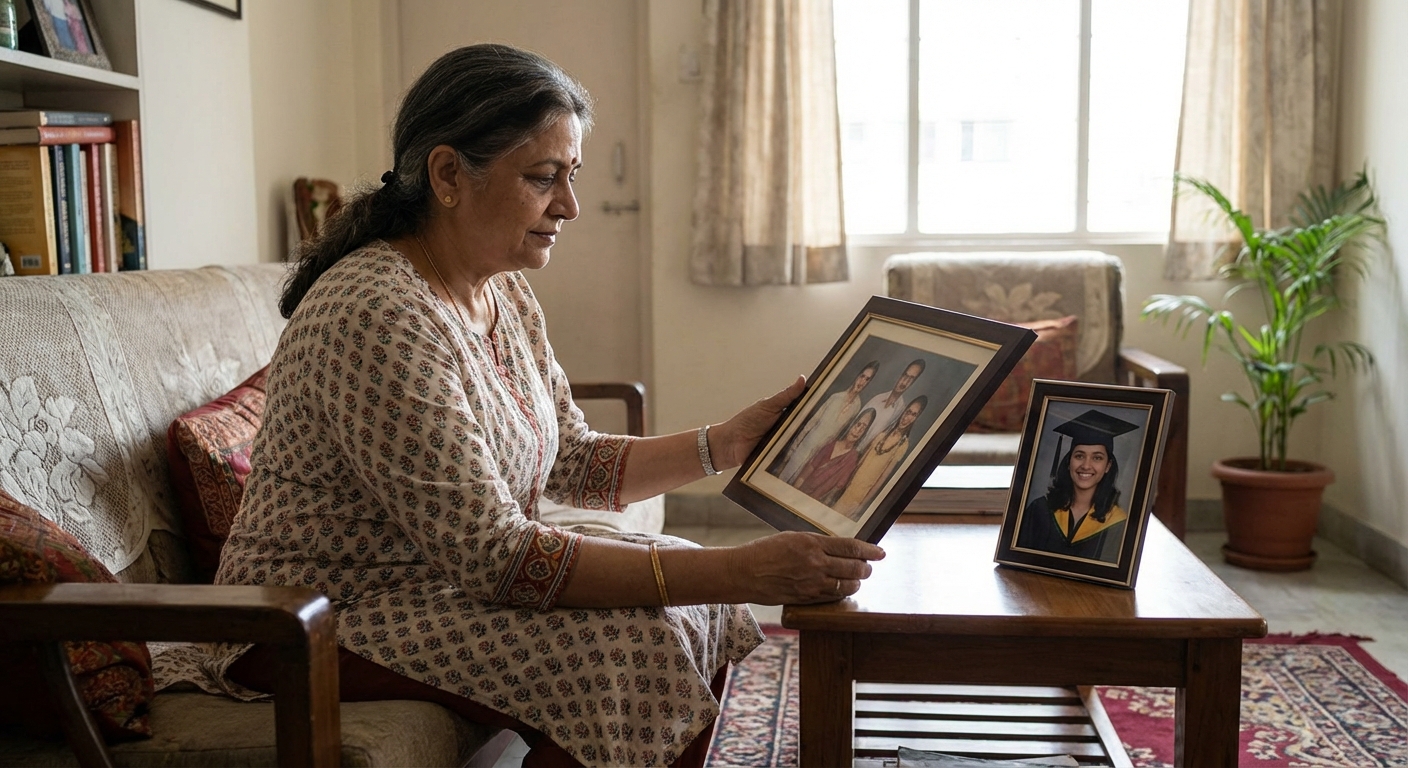
When your child leaves for college, you lose something precious: the daily presence of someone you have loved and cared for since their first breath. The empty room, the quiet dinner table, the absence of their voice in the house—these are genuine losses that deserve acknowledgment.
Meera, a mother I worked with, described it beautifully: "Everyone keeps telling me how proud I should be. And I am proud. But I am also sad, and no one seems to understand that both can be true at the same time."
Resist the Urge to Over-Manage
One of the most common mistakes I see parents make is attempting to continue managing their child's life from a distance. Constant calls asking about meals, sleep, and studies; unsolicited advice about friendships and time management; monitoring their location through phone apps—these behaviors, though motivated by love, can undermine your child's development of autonomy.
Rediscover Yourself
For many parents, particularly mothers in Indian families, identity has been largely defined by the parenting role for nearly two decades. Your child's departure is an opportunity—perhaps an unwelcome one initially—to rediscover aspects of yourself that may have been dormant. What interests did you set aside? What relationships did you neglect? What dreams did you defer?
Stay Connected, But Differently
Your relationship with your child is not ending; it is transforming. The goal is to shift from a parent-child dynamic to something closer to an adult-adult relationship, while still maintaining appropriate parental support. Ask questions that show genuine interest rather than surveillance. Share your own life with them. Trust them to make decisions—and to learn from their mistakes.
Maintaining Healthy Communication
The quality of parent-child communication during this period significantly impacts both parties' adjustment. Here are some guidelines I share with families:
For Students:
- Be honest about your struggles, but also share your joys and discoveries
- Remember that your parents are adjusting too; their concern comes from love
- Set boundaries kindly but clearly if you need more space
- Listen more than you advise
- Ask open-ended questions: "What has been interesting this week?" rather than "Did you eat properly?"
- Respect their growing need for privacy and autonomy
- Express confidence in their ability to handle challenges
Warning Signs That Require Professional Attention
While some struggle is normal, certain signs indicate that a student may need professional support:
- Persistent sadness or hopelessness lasting more than two weeks
- Significant changes in sleep or appetite
- Social withdrawal or isolation
- Declining academic performance despite effort
- Expressions of worthlessness or thoughts of self-harm
- Increased use of alcohol or substances
- Panic attacks or severe anxiety

The Indian Context: Unique Challenges and Strengths
The college transition in India carries particular cultural dimensions that deserve acknowledgment. The emphasis on academic achievement, the financial sacrifices families make for education, the pressure to secure placements and justify the investment—these create a unique psychological landscape.
However, Indian culture also offers strengths: the deep family bonds that provide ongoing support, the cultural value of resilience and perseverance, and the community networks that often extend to college campuses through alumni connections and family friends.
I encourage students to draw on these cultural strengths while also giving themselves permission to struggle and seek help when needed. There is no contradiction between being a strong, capable person and needing support during difficult transitions.
A Final Word
The college transition is challenging precisely because it matters. It is a threshold between childhood and adulthood, between dependence and autonomy, between who you have been and who you are becoming. Both students and parents deserve compassion and support during this time.
In my fifteen years of practice in Hyderabad, I have witnessed hundreds of families navigate this transition. The families who fare best are those who approach it with openness, patience, and willingness to seek help when needed. The struggle is not a sign of failure—it is a sign of growth.
If you or your child is struggling with the college transition, I invite you to reach out for a consultation at my Hyderabad practice. Sometimes, having a supportive professional guide you through this period can make all the difference. You do not have to navigate this journey alone.
---Sudheer Sandra is a licensed psychologist based in Hyderabad with over 15 years of experience working with students, families, and individuals navigating life transitions. He specializes in adolescent and young adult mental health, academic stress, and family dynamics. His practice integrates evidence-based therapeutic approaches with cultural sensitivity to the unique challenges faced by Indian families. To schedule a consultation, please visit the contact page or call the clinic directly.