Choosing the Right Career Path: A Psychologist's Guide to Finding Your Calling

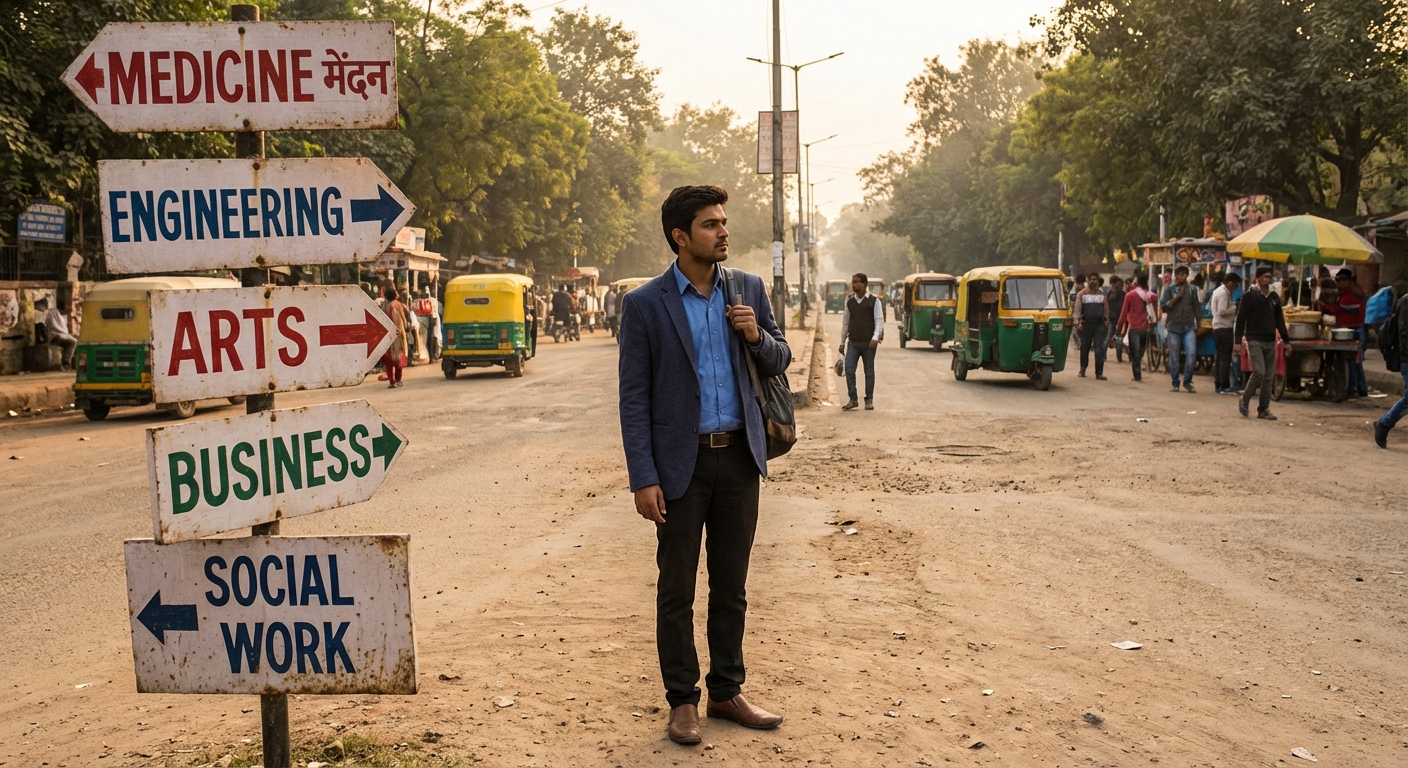
In my fifteen years of practice as a psychologist and career counselor here in Hyderabad, I have had the privilege of sitting across from thousands of young people grappling with one of life's most significant decisions: "What should I do with my life?"
I remember a young woman named Priya (name changed) who walked into my office three years ago. She was 22, had just completed her engineering degree from a reputed college, and had a job offer from a leading IT company. On paper, everything looked perfect. Yet she sat in my chair with tears streaming down her face, saying, "Sir, I feel like I'm about to make the biggest mistake of my life."
Priya's story is not unique. Every week, I meet students and young professionals who feel trapped between what they are expected to do and what their hearts truly desire. Today, I want to share some insights from my practice and from psychological research that might help you navigate this crucial crossroads in your own life.
The Weight of Expectations: Understanding the Indian Context
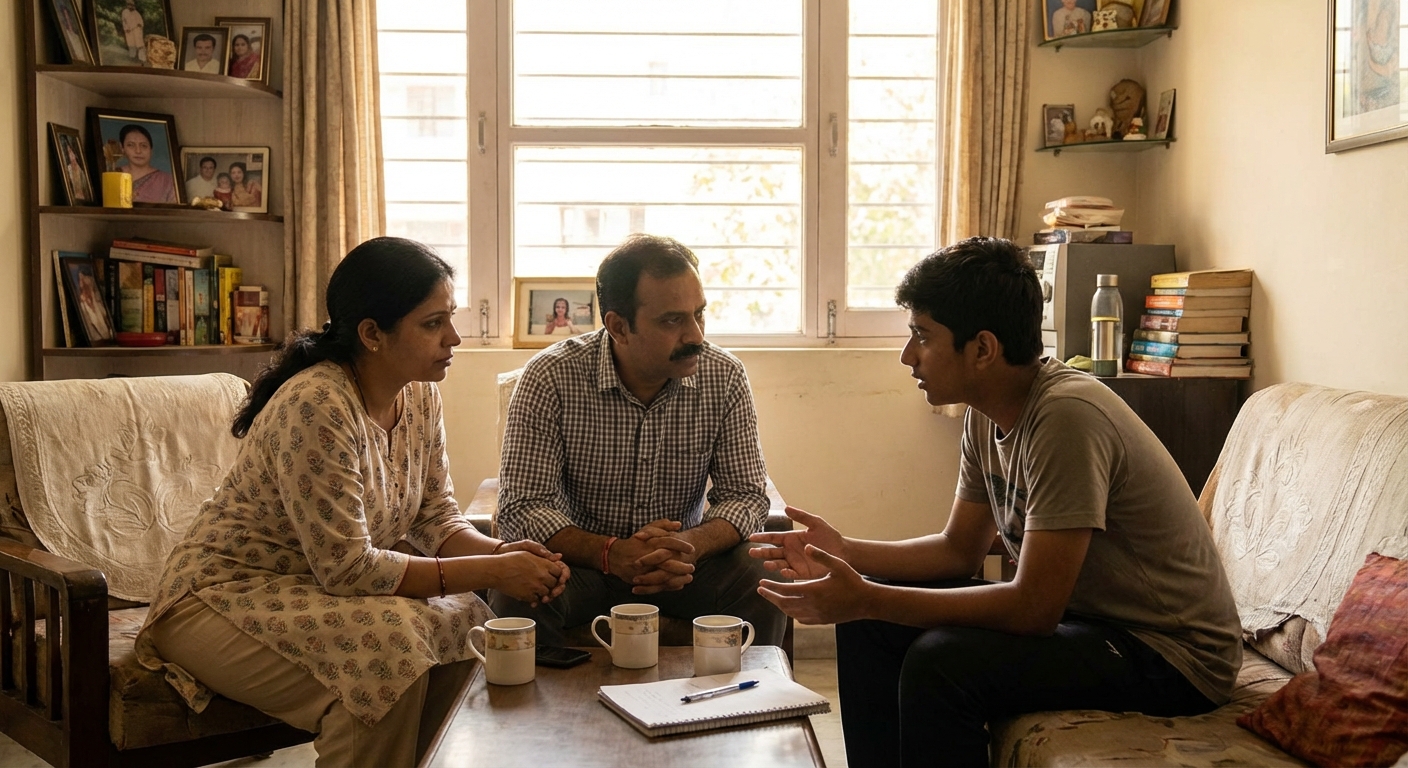
Let us acknowledge something important: choosing a career in India is rarely an individual decision. It is a family affair, often involving parents, grandparents, uncles, aunties, and sometimes even well-meaning neighbours who have an opinion about what you should become.
I grew up in a middle-class family myself, and I understand the pressure that comes with being told that "only doctor, engineer, or IAS officer" are respectable careers. These expectations come from a place of love and concern for our financial security. Our parents have often sacrificed tremendously to give us opportunities they never had, and they naturally want to see those sacrifices bear fruit in the form of stable, prestigious careers.
However, what I have observed in my practice is that when individuals pursue careers solely based on external expectations, without any alignment with their inner selves, they often experience what psychologists call "career incongruence." This mismatch between who we are and what we do can lead to chronic dissatisfaction, burnout, and in severe cases, depression and anxiety.
The Science of Career Fit: Holland's Theory and Beyond
One of the most robust frameworks in career psychology is John Holland's Theory of Vocational Personalities. Through decades of research, Holland identified six personality types that correspond to different work environments:
Realistic (R): People who prefer working with things, tools, machines, and physical activities. They often excel in engineering, agriculture, or skilled trades.
Investigative (I): Individuals drawn to analysis, research, and solving complex problems. Scientists, researchers, and medical professionals often fall here.
Artistic (A): Creative souls who value self-expression, originality, and independence. Writers, designers, musicians, and artists typically score high in this dimension.
Social (S): Those who find fulfillment in helping, teaching, and healing others. Teachers, counselors, nurses, and social workers embody this type.
Enterprising (E): Natural leaders who enjoy persuading, managing, and taking risks. Entrepreneurs, managers, and sales professionals often have this orientation.
Conventional (C): Individuals who appreciate order, structure, and clear procedures. Accountants, administrators, and data analysts often thrive in these roles.
What Holland discovered was that people are happiest and most successful when their personality type matches their work environment. But here is the crucial insight: most of us are not purely one type. We are combinations, with primary, secondary, and sometimes tertiary preferences.
In my practice, I use standardized assessments based on Holland's model, combined with in-depth conversations, to help individuals understand their unique vocational personality. This scientific approach removes much of the guesswork from career planning.
Listening to Your Inner Voice: A Practical Exercise
Before I share more insights, I want you to try something. Take out a piece of paper and answer these questions honestly, without thinking about what anyone else would want you to write:
1. When you were a child, what activities made you lose track of time? 2. What topics can you talk about for hours without getting bored? 3. If money were not a concern, how would you spend your working hours? 4. What problems in the world do you feel most drawn to solving? 5. When have you felt most proud of yourself professionally or academically?

These questions tap into what psychologist Mihaly Csikszentmihalyi called "flow" - that state of complete absorption in an activity where we feel both challenged and capable. Careers that allow us to experience flow regularly tend to be the ones where we thrive.
The Story of Ravi: From IT Engineer to Wildlife Photographer
Let me tell you about Ravi (name changed), a young man who came to me five years ago. He was working as a software developer at a multinational company, earning well, and his parents were proud. But Ravi was miserable. He would spend his weekends trekking and photographing birds, then drag himself to work on Monday mornings feeling like something vital had been drained from his soul.
Through our sessions, we explored his values, interests, and strengths. We discussed the financial realities - he had responsibilities, including supporting his parents. We also examined his fears and the beliefs holding him back.
After six months of careful planning, Ravi did not quit his job dramatically. Instead, he began building a parallel path. He started a wildlife photography blog, took weekend assignments, built his portfolio, and connected with nature magazines. Two years later, when his photography income matched seventy percent of his IT salary, he made the transition. Today, Ravi runs a successful wildlife photography business and leads photo tours across India.
What made Ravi's transition successful was that it was strategic, not impulsive. He honored both his passion and his responsibilities. This balanced approach is something I strongly advocate for.
Navigating Family Conversations: A Delicate Art
One of the most common questions I receive is: "How do I tell my parents I don't want to pursue the career they have planned for me?"
This conversation requires sensitivity, preparation, and genuine respect for your parents' perspective. Here is a framework I often share:
1. Choose the Right Time and Setting: Have this conversation when everyone is relaxed, not during a festival preparation or a stressful period.
2. Acknowledge Their Sacrifices: Begin by expressing genuine gratitude for everything they have done for you. This is not manipulation - it is recognition of truth.
3. Share Your Journey: Explain how you have arrived at your career interests. Share specific experiences that have shaped your thinking.
4. Present Your Research: Show them you have done your homework. What are the career prospects? What is the earning potential? What is your plan?
5. Address Their Concerns: Listen to their worries without becoming defensive. Often, their concerns about financial stability or social perception are valid and deserve thoughtful responses.
6. Propose a Trial Period: Sometimes, asking for a chance to prove yourself over six months or a year can be more acceptable than demanding an immediate, permanent change.

The Role of Aptitude vs. Interest: Both Matter
In my experience, sustainable career success requires the intersection of three elements: what you are good at (aptitude), what you love doing (interest), and what the world needs (opportunity).
I have seen brilliant artists who have no interest in pursuing art professionally. I have met passionate writers who struggle with the basic mechanics of writing. Passion alone is not enough, and neither is talent alone.
This is why I recommend a comprehensive approach to career assessment. Through a combination of aptitude tests, interest inventories, personality assessments, and counseling conversations, we can identify careers that sit at the intersection of your abilities and passions while also being viable in the current job market.
Practical Steps Forward
If you are currently struggling with career decisions, here are some actionable steps I recommend:
1. Invest in Professional Assessment: Take standardized career assessments administered by a qualified counselor. These provide objective data about your interests and aptitudes.
2. Seek Exposure: Before committing to any career, try to gain real-world exposure. Shadow professionals, take internships, or volunteer in related fields.
3. Talk to People in the Field: Nothing beats a conversation with someone already doing what you think you want to do. Ask about their daily realities, not just the glamorous aspects.
4. Build Transferable Skills: While you are exploring, focus on developing skills that are valuable across careers: communication, critical thinking, digital literacy, and emotional intelligence.
5. Give Yourself Permission to Evolve: The average person changes careers five to seven times in their lifetime. Choosing a career at 18 or 22 is not a life sentence.
6. Consider Hybrid Paths: In today's world, careers do not have to be either/or. Many successful professionals combine multiple interests. I know doctors who are published authors, engineers who are part-time musicians, and lawyers who are certified yoga instructors.

A Final Thought: Your Career is a Journey, Not a Destination
If there is one insight I want to leave you with after fifteen years of helping people find their professional paths, it is this: your career is not a single decision made at one moment in time. It is a journey of continuous discovery, growth, and sometimes, course correction.
The young woman I mentioned at the beginning, Priya, did take that IT job initially. But she used the financial stability it provided to pursue her true passion on the side - psychological research. Today, three years later, she is completing her Master's degree in Psychology and plans to become a researcher studying workplace well-being. Her engineering background now gives her a unique analytical edge in her research.
Your path may not be linear. It may involve unexpected turns, temporary compromises, and gradual transitions. And that is perfectly okay. What matters is that you remain connected to your authentic self and keep moving toward work that gives your life meaning.
---If you are at a crossroads in your career journey and would like guidance rooted in psychological science and compassionate understanding, I invite you to reach out. At my practice in Hyderabad, I offer comprehensive career assessments, individual counseling, and family sessions to help navigate these important decisions together.
Whether you are a student unsure about which stream to choose, a college graduate weighing your options, or a professional considering a mid-career transition, I am here to help you find clarity and confidence in your path forward.
---Sudheer Sandra is a licensed psychologist and career counselor based in Hyderabad, India, with over 15 years of experience helping individuals navigate life's psychological and professional challenges. He specializes in career assessment and counseling, academic guidance, workplace well-being, and personal development. Sudheer has helped thousands of clients across all age groups find clarity in their career paths.