Helping Children with Learning Disabilities: A Parent's Guide

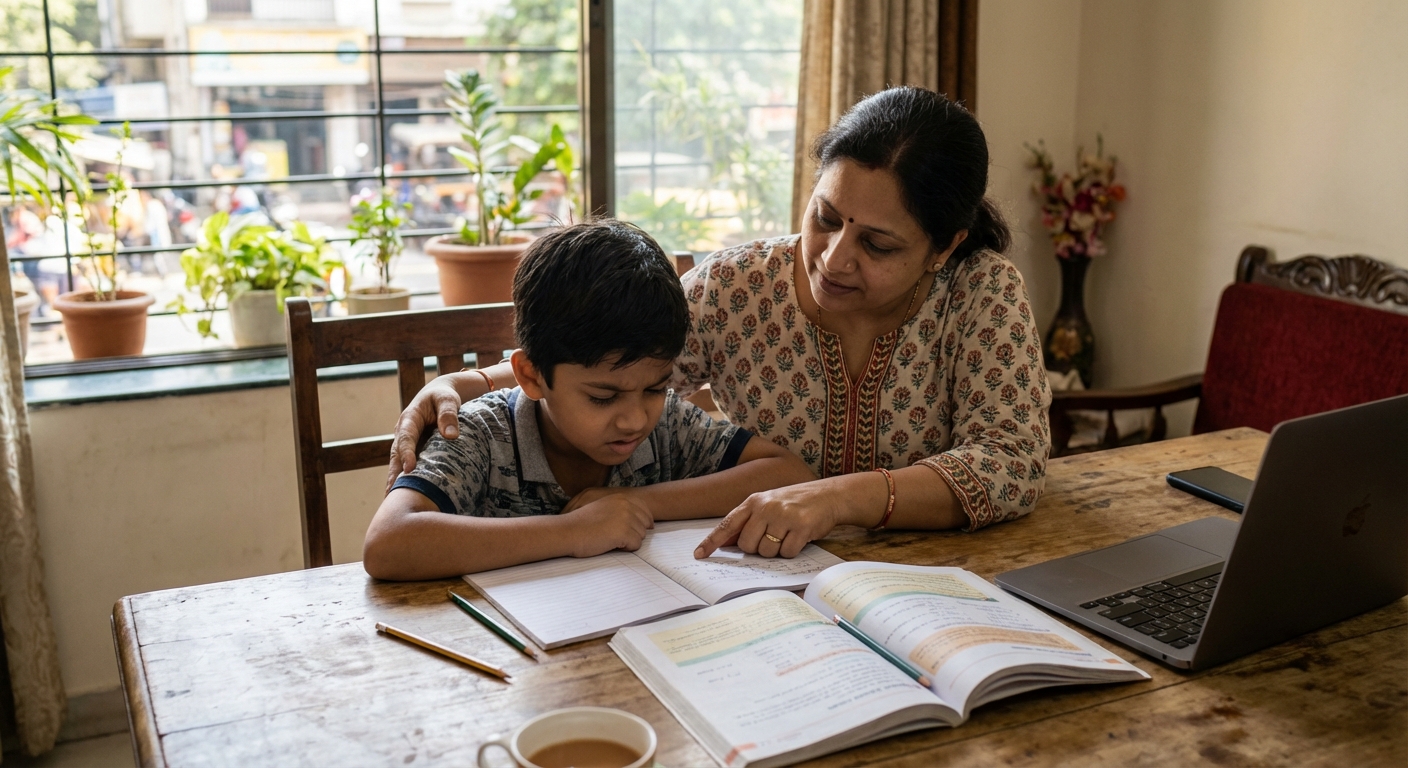
As a psychologist working with families in Hyderabad for over fifteen years, I have witnessed countless parents struggle with a painful question: "Why is my bright, intelligent child falling behind in school?" The answer often lies not in a lack of effort or intelligence, but in learning disabilities that, once understood and addressed, can be effectively managed.
Learning disabilities affect approximately 10-15% of children in India, yet awareness remains limited. Many families spend years blaming the child, changing schools, or hiring multiple tutors before understanding the root cause. This guide aims to help you recognize the signs early, understand different types of learning disabilities, and implement effective support strategies that can transform your child's educational journey.
Understanding Learning Disabilities: What Every Parent Should Know
A learning disability is a neurological condition that affects how the brain processes information. It is not related to intelligence—in fact, many children with learning disabilities have average or above-average IQ. The challenge lies in specific areas of learning, such as reading, writing, or mathematics.
I remember working with the Sharma family from Secunderabad. Their son Arjun, now in Class 7, had been labeled "lazy" and "careless" by teachers for years. His mother, Priya, would spend hours making him rewrite his homework, believing practice would solve the problem. When they finally came to me, Arjun's self-esteem was severely damaged. After proper assessment, we discovered he had dysgraphia—a writing-related learning disability. With appropriate interventions, Arjun is now pursuing his passion for coding, where his brilliant logical mind shines without the barrier of handwriting.
The Three Major Types of Learning Disabilities
Dyslexia: When Reading Becomes a Struggle
Dyslexia is the most common learning disability, affecting the ability to read, spell, and decode words. Children with dyslexia often see letters as jumbled or reversed, making reading a frustrating and exhausting experience.
Signs to watch for:
- Difficulty learning nursery rhymes or recognizing rhyming words
- Trouble remembering the sequence of letters in words
- Reading slowly with many mistakes
- Avoiding reading aloud
- Difficulty distinguishing between similar-looking letters (b/d, p/q)
- Strong verbal skills but poor written expression

Kavitha, a Class 4 student from Kukatpally, would come home crying every day because her classmates laughed at her reading. Her father, Ramesh, initially thought she was not trying hard enough. "She can tell me the entire story of a movie she watched once, but cannot read a paragraph from her textbook," he told me. This disconnect between verbal ability and reading performance is a classic sign of dyslexia. Today, with the right support—including audiobooks, text-to-speech software, and a trained special educator—Kavitha reads at grade level and has rediscovered her love for stories.
Dyscalculia: The Mathematics Challenge
Dyscalculia affects a child's ability to understand numbers and mathematical concepts. These children often struggle with basic arithmetic, telling time, counting money, and understanding mathematical symbols.
Signs to watch for:
- Difficulty counting and recognizing numbers
- Trouble understanding concepts like "more than" or "less than"
- Inability to estimate quantities or distances
- Problems with mental math and memorizing multiplication tables
- Difficulty telling time on analog clocks
- Trouble managing money or understanding prices
Dysgraphia: When Writing Becomes the Obstacle
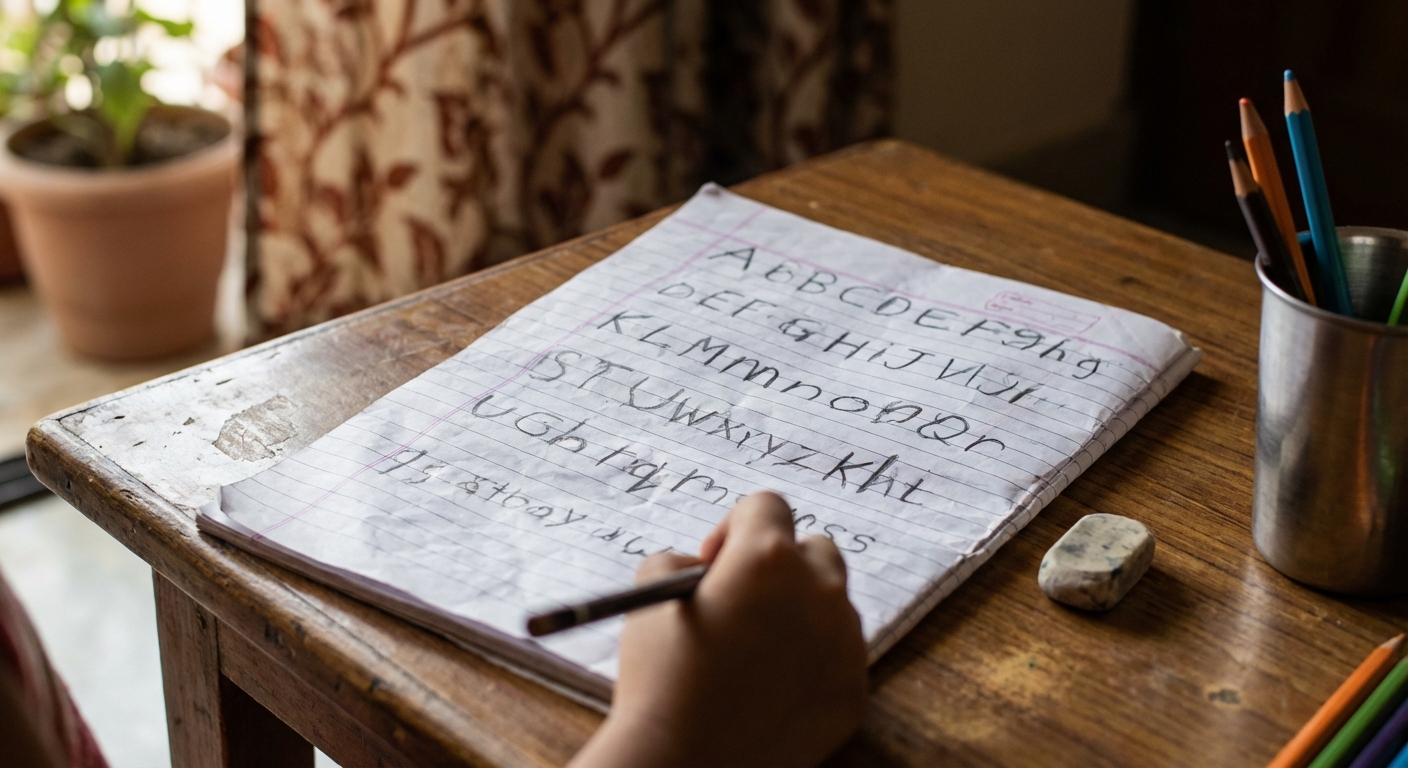
Dysgraphia affects the physical act of writing and the ability to express thoughts in written form. Children with dysgraphia may have illegible handwriting, inconsistent spacing, and difficulty organizing their thoughts on paper.
Signs to watch for:
- Extremely messy or illegible handwriting
- Inconsistent spacing between letters and words
- Awkward pencil grip and body posture while writing
- Fatigue and frustration during writing tasks
- Avoidance of writing activities
- Difficulty copying from the board
- Thoughts that seem "lost" between brain and paper
Early Identification: Why Timing Matters
The brain is most adaptable during the early years. Research consistently shows that children who receive intervention before age 8 have significantly better outcomes than those identified later. However, it is never too late to help.
As parents, you are in the best position to notice early warning signs. Trust your instincts. If something feels different about your child's learning pattern, seek professional evaluation. A comprehensive assessment by a qualified psychologist can identify specific learning disabilities and guide appropriate interventions.
When to seek help:
- Persistent difficulty in one academic area despite effort
- Significant gap between spoken and written abilities
- Behavioral changes related to school (anxiety, avoidance, aggression)
- Teacher feedback suggesting learning concerns
- Family history of learning disabilities
Practical Support Strategies for Parents
Creating a Supportive Home Environment
Your home should be a safe haven where your child feels accepted regardless of academic performance. Here are strategies that work:
For Dyslexia:
- Read aloud to your child daily, even as they grow older
- Use audiobooks alongside printed books
- Allow extra time for reading assignments
- Use colored overlays or adjust screen colors for digital reading
- Practice phonics through games and songs
- Celebrate progress, no matter how small
- Use real-world objects for counting (coins, fruits, toys)
- Play board games involving numbers and money
- Use visual aids like number lines and charts
- Break math problems into smaller steps
- Allow calculator use for complex calculations
- Connect math to daily life (cooking, shopping, time management)
- Reduce the emphasis on handwriting perfection
- Allow typing for longer assignments
- Use wide-ruled paper and pencil grips
- Teach keyboarding skills early
- Allow oral responses when possible
- Focus on content over presentation

Working with Schools and Teachers
In my practice, I often mediate between parents and schools. Here are key steps:
1. Request a formal meeting with teachers and the school counselor 2. Share assessment reports and recommendations from professionals 3. Ask about accommodations such as extra time, separate testing rooms, or oral examinations 4. Request modified homework that focuses on learning rather than volume 5. Establish regular communication with teachers about progress 6. Know your rights—the Rights of Persons with Disabilities Act, 2016 mandates reasonable accommodations in educational institutions
Building Emotional Resilience
Children with learning disabilities often struggle with self-esteem. The Mehta family learned this when their daughter Ananya, diagnosed with dyslexia in Class 3, began saying she was "stupid." No amount of reassurance seemed to help until we began focusing on her strengths—her remarkable artistic ability and emotional intelligence.
Strategies to build emotional strength:
- Identify and nurture your child's strengths and interests
- Share stories of successful people with learning disabilities (like Albert Einstein, who likely had dyslexia)
- Teach self-advocacy skills
- Consider counseling if anxiety or depression develops
- Connect with other families facing similar challenges
- Remind your child regularly that their worth is not defined by grades
The Role of Technology
Modern technology offers tremendous support for children with learning disabilities. Consider these tools:
- Text-to-speech software for reading difficulties
- Speech-to-text programs for writing challenges
- Calculator apps with step-by-step problem solving
- Mind-mapping software for organizing thoughts
- Educational apps designed for different learning styles
- E-readers with adjustable fonts and backgrounds
Looking Ahead: Your Child's Future

I want to leave you with hope. In my fifteen years of practice, I have seen children who were once labeled "failures" go on to become engineers, artists, entrepreneurs, and professionals. Learning disabilities do not determine destiny—how we respond to them does.
Your child needs you to be their advocate, their safe space, and their biggest believer. With early identification, appropriate intervention, and unwavering support, children with learning disabilities can not only succeed but excel in their own unique ways.
When to Seek Professional Help
If you recognize any of the signs mentioned in this article, I encourage you to seek a comprehensive psychological evaluation. Early intervention can prevent years of struggle and protect your child's self-esteem.
At my practice in Hyderabad, I offer thorough assessments for learning disabilities, individual therapy for children struggling with academic anxiety, parent counseling, and coordination with schools to ensure appropriate support. Every child deserves to learn in a way that works for their brain.
If you would like to discuss your child's learning challenges or schedule an assessment, please reach out to my clinic. Together, we can create a path forward that honors your child's unique way of learning and sets them up for lifelong success.
---Sudheer Sandra is a licensed psychologist and career counselor based in Hyderabad, India, with over 15 years of clinical experience. He specializes in anxiety, depression, relationship issues, and career counseling. For consultations regarding learning disabilities or any mental health concerns, please contact his Hyderabad practice.