Managing Caregiver Burnout: Taking Care of Yourself While Caring for Others

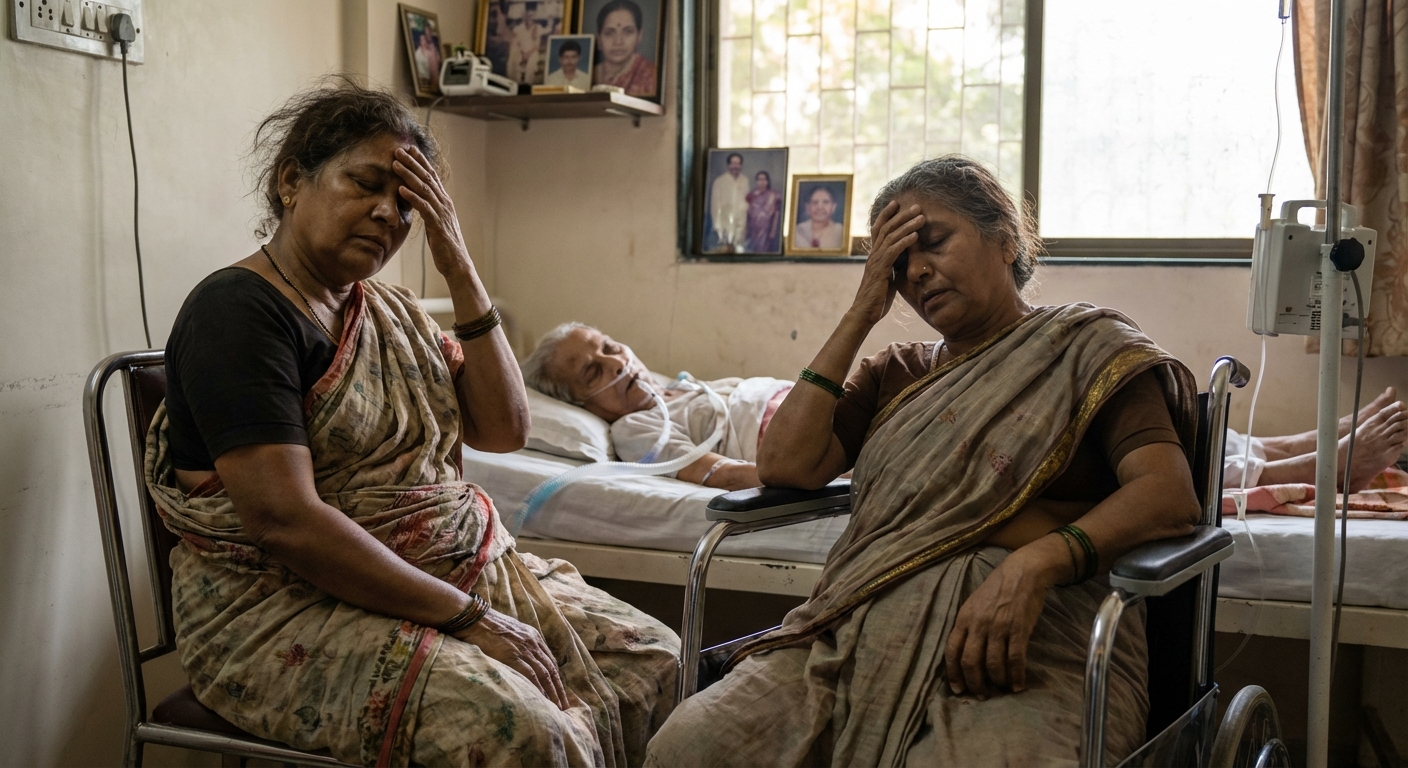
Caregiving is one of the most selfless acts of love a person can offer. Whether you are caring for an aging parent, a spouse with a chronic illness, a child with special needs, or a family member recovering from surgery, your dedication speaks volumes about your character and commitment. Yet, in the process of pouring yourself into the wellbeing of another, you may find yourself running on empty.
In my fifteen years of clinical practice in Hyderabad, I have witnessed countless caregivers who arrive at my office completely depleted. They often feel guilty for even acknowledging their own struggles, believing that their needs should always come second. This article is for you - the silent warriors who give so much of yourselves every single day. It is time to understand caregiver burnout, recognize its signs, and learn how to sustain yourself through this challenging journey.
Understanding Caregiver Burnout
Caregiver burnout is a state of physical, emotional, and mental exhaustion that occurs when caregivers do not receive the help they need, or when they try to do more than they are physically, emotionally, or financially capable of doing. Unlike ordinary stress, which comes and goes, burnout is a chronic condition that develops gradually over time.
The nature of caregiving in India often adds unique pressures. Cultural expectations around family duty, the concept of seva (selfless service), and the stigma around seeking outside help can make caregivers feel they must handle everything themselves. While these values reflect the beautiful aspects of our culture, they can also create unrealistic expectations that contribute to burnout.
Recognizing the Signs of Caregiver Burnout
Burnout rarely announces itself dramatically. Instead, it creeps in slowly, often disguised as normal tiredness or temporary stress. Being aware of the warning signs can help you take action before reaching a crisis point.
Physical Signs
Your body often signals distress before your mind fully acknowledges it. Common physical symptoms include:
- Persistent fatigue that does not improve with rest
- Frequent headaches or body aches
- Changes in sleep patterns - either insomnia or sleeping excessively
- Weakened immune system leading to frequent illnesses
- Significant changes in weight or appetite
- Neglecting your own health needs and medical appointments
Emotional and Psychological Signs
The emotional toll of caregiving can be profound. Watch for these indicators:
- Feeling overwhelmed, helpless, or hopeless
- Increased irritability, impatience, or anger
- Withdrawal from friends, family, and activities you once enjoyed
- Feelings of resentment toward the person you are caring for
- Persistent sadness, anxiety, or depression
- Loss of interest in things that used to bring joy
- Difficulty concentrating or making decisions

Behavioral Signs
Changes in behavior often accompany burnout:
- Using alcohol, food, or medications to cope
- Neglecting your own responsibilities
- Cutting back on leisure activities
- Becoming increasingly isolated
- Having thoughts of harming yourself or the person in your care
The Emotional Toll: A Case Study
Let me share a story from my practice (with details changed to protect privacy). Meenakshi, a 52-year-old school teacher, came to see me after experiencing severe anxiety and panic attacks. For three years, she had been the primary caregiver for her mother-in-law who had Alzheimer's disease, while also managing her teaching responsibilities and supporting her two college-going children.
"I felt like I was drowning," Meenakshi told me during our first session. "Every morning, I would wake up feeling like a stone was sitting on my chest. I had no time for myself, no time for my husband, no time even to breathe. When I snapped at my mother-in-law one day for asking the same question repeatedly, I felt like the worst person in the world."
Meenakshi's experience illustrates how caregivers often suppress their own needs until they reach a breaking point. The guilt she felt for her momentary frustration was disproportionate to the years of tireless service she had provided. Through our work together, she learned that her feelings were valid and that caring for herself was not selfish - it was necessary.
Strategies for Self-Care and Prevention
Prevention and self-care are not luxuries for caregivers - they are essential components of sustainable caregiving. Here are practical strategies that can help:
1. Acknowledge Your Feelings
Give yourself permission to feel frustrated, sad, angry, or overwhelmed. These emotions do not make you a bad caregiver; they make you human. Journaling, talking to a trusted friend, or seeking professional support can provide healthy outlets for these feelings.
2. Set Realistic Expectations
You cannot do everything, and that is acceptable. Identify what absolutely must be done versus what would be nice to do. Learn to say no to non-essential requests and delegate tasks when possible.

3. Maintain Your Physical Health
Your physical health directly impacts your ability to care for others. Prioritize:
- Regular meals with nutritious food
- Adequate sleep (7-8 hours when possible)
- Physical activity, even if it is just a 15-minute walk
- Regular health check-ups
- Taking prescribed medications consistently
4. Stay Connected
Isolation is one of the greatest risks for caregivers. Make conscious efforts to:
- Maintain relationships with friends and family
- Join a caregiver support group (many are available online)
- Stay connected to your community through religious or social organizations
- Accept help when it is offered
5. Take Regular Breaks
Respite is not optional - it is essential. Even short breaks can help prevent burnout:
- Arrange for family members to take over caregiving duties periodically
- Explore respite care services in your area
- Use the time to do something purely for yourself
- Consider hiring help for specific tasks like cooking or cleaning
6. Practice Stress-Reduction Techniques
Incorporate stress management into your daily routine:
- Deep breathing exercises
- Progressive muscle relaxation
- Meditation or prayer
- Yoga or gentle stretching
- Listening to music or engaging in hobbies
When to Seek Professional Support
Sometimes self-care strategies are not enough, and that is perfectly acceptable. Consider seeking professional help if you experience:
- Persistent feelings of sadness or hopelessness
- Anxiety that interferes with daily functioning
- Thoughts of self-harm or harming others
- Difficulty performing basic daily tasks
- Physical symptoms that do not improve with rest
- Relationship problems related to caregiving stress
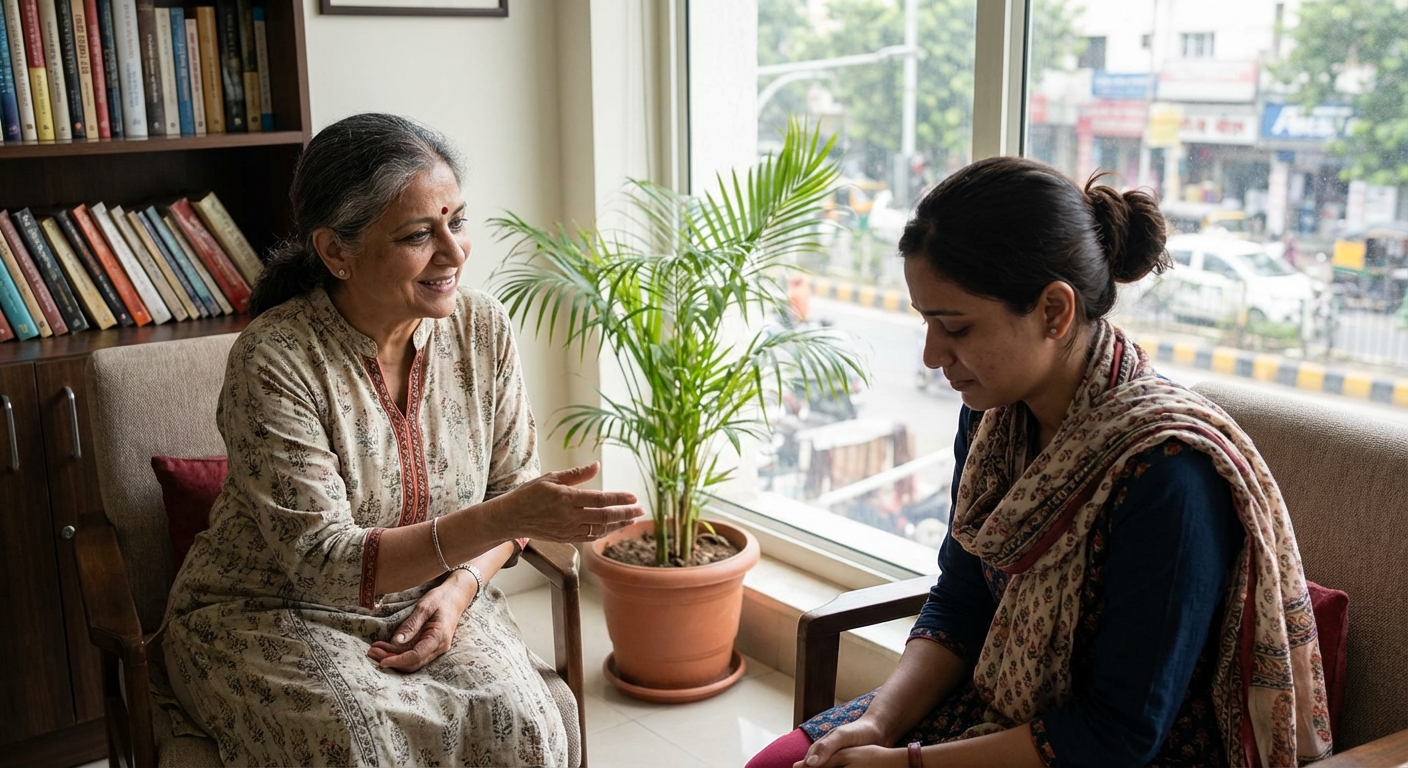
A mental health professional can provide:
- A safe space to express your feelings without judgment
- Strategies tailored to your specific situation
- Treatment for depression, anxiety, or other conditions
- Help with communication and boundary-setting
- Guidance on navigating family dynamics
Through our sessions, Ramesh came to understand that seeking help was not a sign of weakness but of wisdom. He learned to involve his siblings more actively in caregiving, communicate his needs to his wife, and set boundaries at work. Most importantly, he learned that taking care of himself enabled him to be a better caregiver to his father.
Building a Support Network
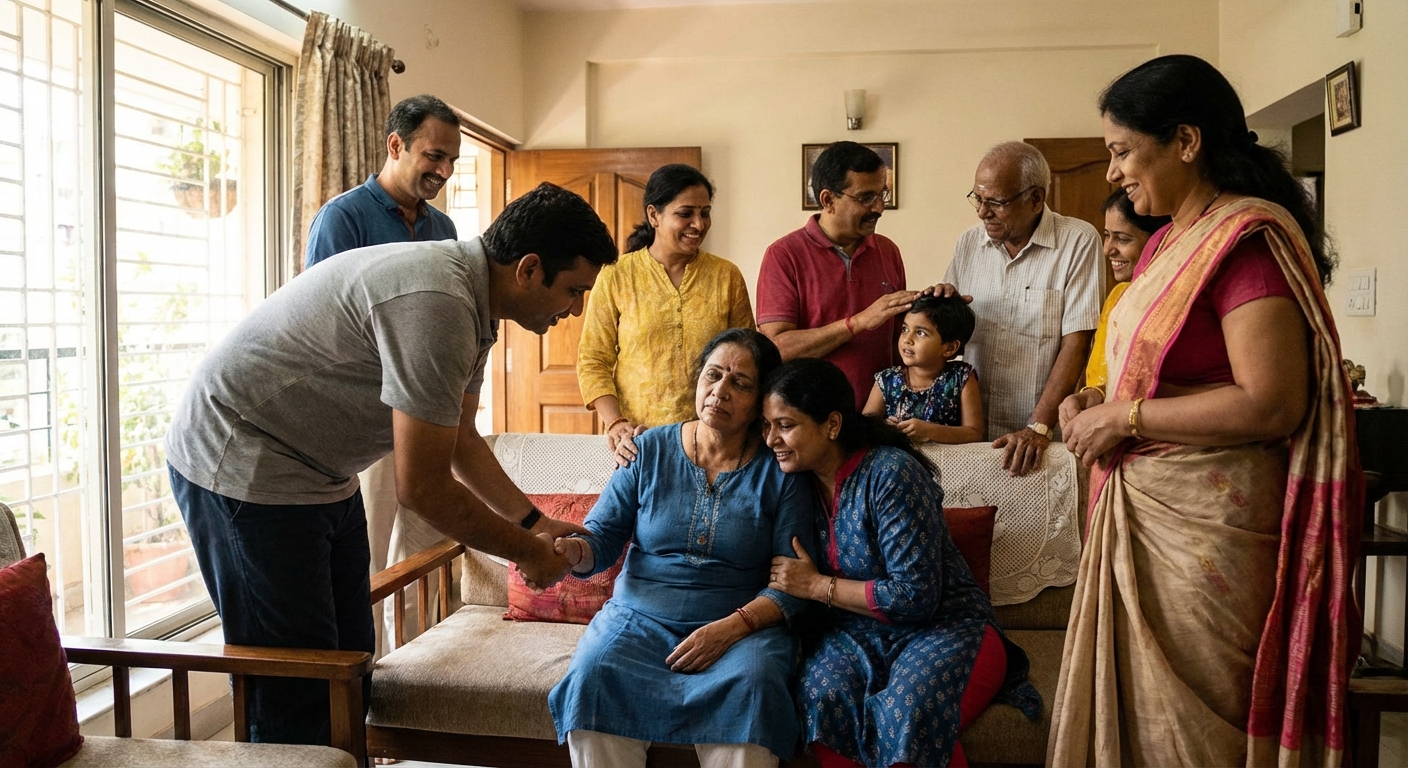
No caregiver should carry the burden alone. Building a support network is crucial:
Family and Friends
- Have honest conversations about sharing responsibilities
- Create a caregiving schedule that distributes tasks
- Accept offers of help graciously
- Be specific about what kind of help you need
Community Resources
- Explore home health aide services
- Look into adult day care programs
- Connect with disease-specific organizations (Alzheimer's Association, cancer support groups)
- Investigate government schemes and benefits for caregivers and patients
Professional Support
- Consult with healthcare providers about the care recipient's needs
- Seek mental health support for yourself
- Consider family counseling to improve communication
- Work with a financial advisor if caregiving affects your finances
A Final Word of Encouragement
If you are a caregiver reading this article, I want you to know that your work matters immensely. The love and dedication you show every day make a profound difference in someone's life. But please remember this truth: you cannot pour from an empty cup.
Taking care of yourself is not an act of selfishness - it is an act of wisdom and love. When you nurture your own wellbeing, you ensure that you can continue to be present for those who depend on you. You deserve care and compassion just as much as the person you are caring for.
The journey of caregiving is rarely easy, but it does not have to be walked alone. Reach out, seek support, and give yourself permission to be human.
---If you are experiencing caregiver burnout or struggling with the emotional challenges of caregiving, I invite you to reach out for support. At my practice in Hyderabad, I offer a compassionate, confidential space where you can explore your feelings, develop coping strategies, and find the balance you need to care for yourself and your loved ones. Please feel free to contact me to schedule a consultation. Remember, seeking help is not a sign of weakness - it is a courageous step toward your own wellbeing and the wellbeing of those you love.
---Sudheer Sandra is a licensed psychologist and career counselor based in Hyderabad, India, with over 15 years of clinical experience. He specializes in anxiety, depression, relationship issues, and career counseling.