Career Counseling for Students: Making Informed Choices for Your Future

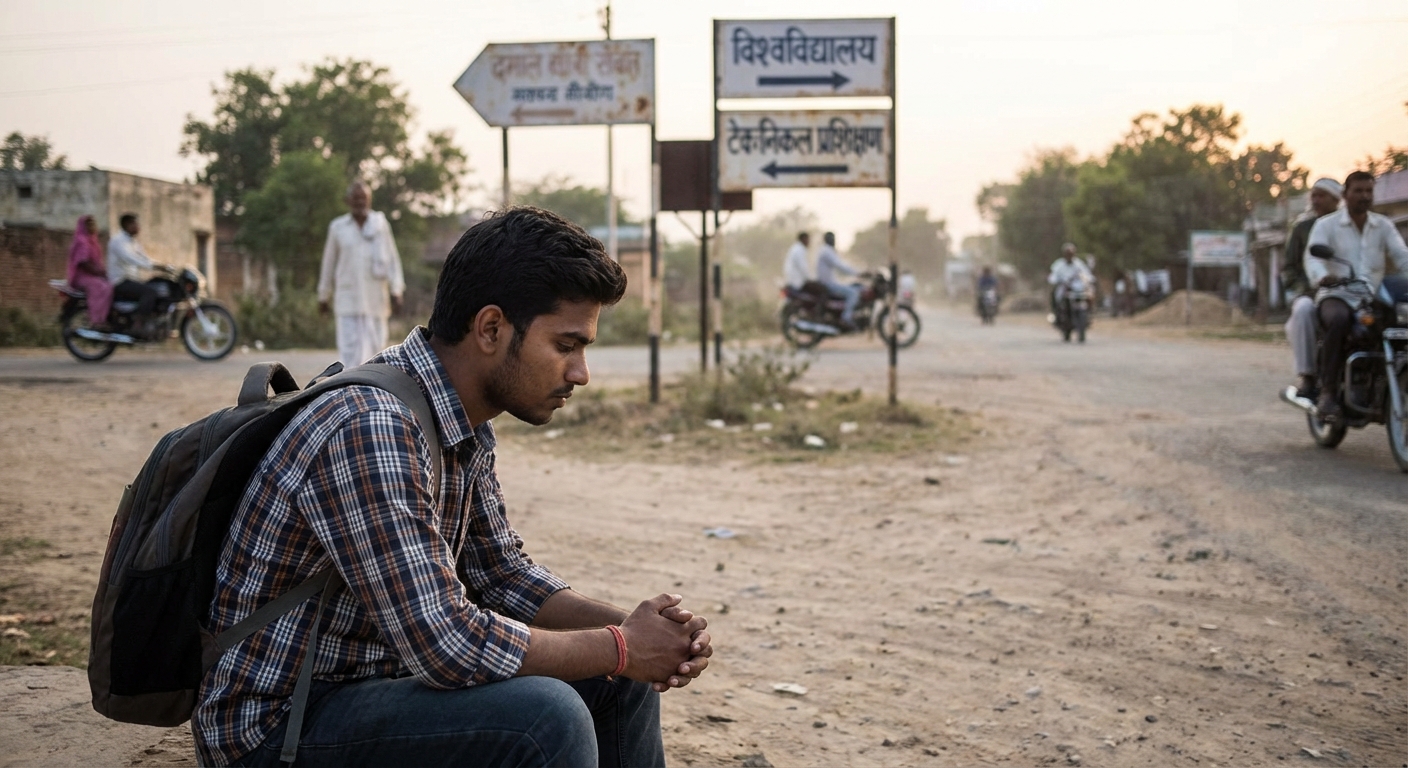
Standing at the threshold of adulthood, the question "What do you want to become?" carries immense weight for students in India. This seemingly simple question often triggers anxiety, confusion, and sometimes even despair. As a psychologist who has worked with hundreds of students over the past fifteen years, I have witnessed firsthand how the pressure of career decisions can affect young minds. The good news is that with proper guidance and self-reflection, making career choices does not have to be overwhelming.
The Crisis of Career Confusion in India
Every year, millions of students in India complete their board examinations and face the daunting task of choosing their career paths. The statistics are sobering: studies suggest that nearly 60% of Indian students feel confused about their career choices, and a significant number end up in professions that do not align with their interests or aptitudes.
Consider the case of Arjun Reddy (name changed), a 17-year-old student who came to my Hyderabad clinic last year. Arjun was experiencing severe anxiety and sleep disturbances. When we explored the root cause, it became clear that he was torn between his passion for environmental science and his family's expectation that he pursue engineering. "Everyone in my family is either a doctor or an engineer," he told me during our first session. "I feel like I am disappointing them by wanting something different."
Arjun's story is not unique. It represents a pattern I see repeatedly in my practice, where students struggle to reconcile their authentic interests with external expectations.
Why Career Counseling Matters
Career counseling is not merely about taking aptitude tests and matching students to professions. It is a comprehensive process that helps young people understand themselves deeply, explore possibilities they may not have considered, and develop the confidence to make informed decisions.

The Three Pillars of Effective Career Counseling
1. Self-Assessment and Discovery
The foundation of good career counseling lies in helping students understand who they are. This involves exploring:
- Interests: What activities naturally engage and energize you?
- Aptitudes: What skills come naturally to you, and which ones can you develop?
- Values: What matters most to you in life and work?
- Personality traits: Are you introverted or extroverted? Do you prefer structure or flexibility?
2. Exploring Career Options
The career landscape in India has transformed dramatically over the past decade. Beyond the traditional paths of medicine, engineering, and civil services, students today have access to careers that did not exist a generation ago. From data science and artificial intelligence to sustainable development and digital content creation, the options are vast and growing.
Effective career counseling involves:
- Researching emerging fields and their growth potential
- Understanding the educational requirements for different careers
- Connecting with professionals in fields of interest
- Evaluating the lifestyle implications of various career choices
Perhaps the most valuable aspect of career counseling is helping students develop the skills to make thoughtful decisions. This includes:
- Weighing pros and cons systematically
- Understanding that career paths are rarely linear
- Building resilience to handle uncertainty
- Learning to trust one's own judgment while remaining open to guidance
The Challenge of Parental Expectations

One of the most sensitive aspects of career counseling in India involves navigating family expectations. Parents often have strong opinions about their children's careers, and these opinions come from a place of love and concern. They have worked hard to provide opportunities and want to ensure their children have secure, respectable futures.
However, when parental expectations clash with a student's authentic interests, the result can be psychological distress, poor academic performance, and ultimately, career dissatisfaction.
A Case of Conflicting Dreams
Karthik Nair (name changed) came to me during his second year of MBBS. He was struggling academically and experiencing symptoms of depression. As we worked together, it emerged that Karthik had always wanted to be a musician. He had learned classical Carnatic music from childhood and had genuine talent. However, his family had insisted on medicine, viewing music as a hobby rather than a viable career.
"I feel like I am living someone else's life," Karthik confessed during one of our sessions.
Working with Karthik and eventually his family, we explored the possibility of integrating his passion for music with his medical education. Today, Karthik has completed his MBBS and is pursuing music therapy certification. He has found a way to honor both his family's investment in his education and his own creative calling.
Bridging the Gap Between Generations
When I work with families facing career conflicts, I focus on:
- Creating safe spaces for communication: Often, family members have never truly heard each other's perspectives
- Providing objective information: Parents may have outdated notions about certain careers
- Highlighting transferable skills: Helping families see how different paths can lead to success
- Addressing underlying fears: Often, resistance to unconventional careers stems from fear of instability or social judgment
The Self-Assessment Process

Understanding yourself is the first step toward making informed career choices. Here are some approaches I recommend to my clients:
Reflective Exercises
The Peak Experience Exercise: Think about three to five moments in your life when you felt most alive, engaged, and fulfilled. What were you doing? What skills were you using? What values were being honored?
The Ideal Day Visualization: Imagine your ideal workday five years from now. Where are you? What are you doing? Who are you working with? What problems are you solving?
The Legacy Question: What do you want to be remembered for? What impact do you want to have on the world?
Formal Assessments
While self-reflection is valuable, formal career assessments can provide additional insights. These typically include:
- Interest inventories: Such as the Strong Interest Inventory or Holland's RIASEC model
- Aptitude tests: Measuring verbal, numerical, spatial, and mechanical abilities
- Personality assessments: Such as the Myers-Briggs Type Indicator or Big Five personality tests
- Values clarification exercises: Identifying what matters most in work and life
Making the Final Decision
After self-assessment and exploration, the decision-making phase begins. This is where many students feel stuck. They may have identified several options that seem appealing but struggle to commit to one path.
Strategies for Decision-Making
The Two-Year Test: Ask yourself, "If I pursue this path for two years and discover it is not right for me, will I have gained valuable skills and experiences?" Most educational paths provide transferable skills, reducing the risk of any single decision.
The Regret Minimization Framework: Imagine yourself at age 80, looking back on your life. Which decision would you regret not having made? This long-term perspective often clarifies priorities.
The Pilot Project Approach: Before committing fully, find ways to test your interest. Internships, volunteer work, online courses, and informational interviews can provide valuable real-world insights.
The Changing Landscape of Careers

Students today must prepare for a world where career paths are increasingly non-linear. The concept of a single "job for life" is becoming obsolete. Instead, successful professionals will likely have multiple careers, continuously learning and adapting.
This reality can be anxiety-provoking, but it can also be liberating. It means that the pressure to make the "perfect" choice at age 17 or 18 is somewhat misplaced. What matters more is developing:
- Adaptability: The ability to learn new skills and pivot when necessary
- Self-awareness: Knowing your strengths, weaknesses, and values
- Resilience: The capacity to handle setbacks and uncertainty
- Curiosity: A genuine interest in learning and growth
When to Seek Professional Help
Consider seeking career counseling if you:
- Feel overwhelmed by career decisions to the point of anxiety or depression
- Have significant conflicts with family members about your future
- Feel completely lost about your interests and aptitudes
- Are considering dropping out of a course or changing streams
- Want objective, professional guidance in making important decisions
Conclusion: Your Future, Your Choice
The journey of career decision-making is deeply personal. While input from family, teachers, and counselors is valuable, ultimately, you are the one who will live with the consequences of your choices. This is both a responsibility and a privilege.
Remember that career counseling is not about finding the one "right" answer. It is about understanding yourself better, expanding your awareness of possibilities, and developing the confidence to make thoughtful decisions. The goal is not perfection but alignment, finding a path that resonates with who you are and who you want to become.
As Arjun, the young man I mentioned at the beginning of this article, told me after several months of counseling, "I finally feel like I am choosing my life instead of just letting it happen to me." Today, Arjun is pursuing a degree in environmental engineering, a path that honors both his passion for environmental science and his family's respect for technical education. It was not the original plan, but it is his plan, made with clarity, confidence, and self-awareness.
---If you are a student struggling with career decisions, or a parent concerned about your child's future choices, I invite you to schedule a consultation at my practice in Hyderabad. Together, we can explore your unique strengths, interests, and values, and develop a path forward that feels authentic and achievable. Career decisions do not have to be made alone. Professional guidance can make all the difference in transforming confusion into clarity.
To schedule an appointment, please contact my clinic in Hyderabad. I offer both in-person sessions and online consultations for those who cannot visit in person.
---Sudheer Sandra is a licensed psychologist and career counselor based in Hyderabad, India, with over 15 years of clinical experience. He specializes in anxiety, depression, relationship issues, and career counseling. His approach combines evidence-based psychological techniques with a deep understanding of the unique pressures facing Indian students and families.